top of page

SpaceX–Cursor $60B AI Deal Signals the Birth of Compute-Driven Industrial Empires

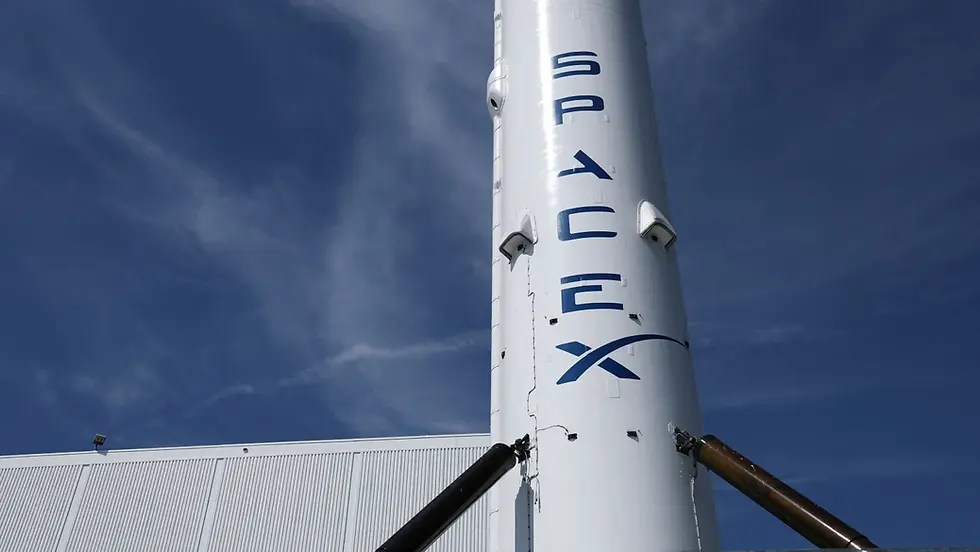
The artificial intelligence industry is undergoing a structural transformation where software, compute infrastructure, and corporate ecosystems are merging into tightly integrated intelligence networks. The reported agreement between SpaceX and AI coding startup Cursor, valued at up to $60 billion for acquisition rights or $10 billion for collaborative output, represents one of the most strategically significant developments in this shift.

Unlike traditional acquisitions that focus purely on ownership, this arrangement blends compute access, model development, and optional acquisition rights, signaling a new class of AI-industrial partnerships. At its core, the deal reflects a deeper ambition: transforming AI coding systems into foundational infrastructure for high-performance engineering environments, including aerospace and autonomous systems.

Cursor, known for its AI-powered coding tools, is positioned as a critical enabler of next-generation software development, while SpaceX extends its technological footprint beyond rockets and satellites into AI model training and software intelligence ecosystems.

The Structure of the Deal: A Hybrid Model of Acquisition and Compute Exchange

The SpaceX–Cursor agreement is not a conventional acquisition. Instead, it introduces a dual-path framework that ties valuation to collaboration intensity and compute utilization.

Key Structural Elements
SpaceX obtains the right to acquire Cursor for approximately $60 billion
Alternatively, SpaceX may pay around $10 billion for joint work output
Cursor gains access to SpaceX’s advanced computing infrastructure
Collaboration is centered on AI coding systems and model development
Integration with xAI’s broader AI ecosystem and infrastructure stack

This hybrid model reflects a growing trend in AI dealmaking, where value is increasingly derived from compute capacity, model performance, and ecosystem integration rather than static ownership structures.

A senior AI infrastructure strategist described this shift as:

“We are moving from acquisition-based valuation to compute-based valuation, where access to GPU clusters and training systems defines the real economic leverage.”

Cursor: From Developer Tool to AI Engineering Platform

Cursor has evolved from a coding assistant into a broader AI development platform designed to transform how software is written, tested, and deployed.

Originally launched as a productivity tool for developers, Cursor now integrates:

AI-assisted code generation and debugging
Agent-based software engineering workflows
Log and screenshot-based debugging systems
Automated testing and iterative development loops
Early-stage multimodal software understanding capabilities

These features position Cursor within a new category often referred to as “agentic coding systems,” where AI systems not only suggest code but actively participate in software lifecycle management.

Cursor’s reported growth trajectory—reaching $1 billion in annual recurring revenue within a few years of launch—highlights the rapid demand for AI-native development environments.

SpaceX’s Strategic Expansion Beyond Aerospace Engineering

While SpaceX is traditionally known for its dominance in aerospace engineering and reusable rocket systems, its recent moves indicate a broader transformation into a multi-domain AI infrastructure company.

The integration of AI systems into SpaceX operations aligns with several strategic goals:

Strategic Objectives Behind AI Expansion
Accelerating internal software development cycles
Automating mission-critical simulation environments
Enhancing autonomous decision systems for space missions
Building internal AI model training infrastructure
Competing in frontier AI model development markets

This expansion is reinforced by SpaceX’s integration with xAI, which has broadened its scope into large-scale AI infrastructure development.

A technology analyst summarized the shift as:

“SpaceX is no longer just a hardware company; it is becoming a compute-first intelligence organization operating at planetary scale.”

The Role of Compute: Why Supercomputers Are Central to the Deal

One of the most critical components of the SpaceX–Cursor partnership is access to high-performance computing infrastructure.

Cursor is expected to leverage SpaceX’s large-scale AI compute systems, including clusters reportedly powered by hundreds of thousands of GPUs. These systems enable the training of advanced AI models capable of handling complex coding and reasoning tasks.

Compute Infrastructure Highlights
Component	Capability
GPU Clusters	High-density AI training workloads
Distributed Compute Systems	Large-scale model parallelization
Simulation Environments	Engineering and aerospace modeling
AI Optimization Layers	Real-time model tuning and inference

Compute has become the defining bottleneck in AI advancement. As Cursor itself noted in internal communications, training progress has been constrained by “compute limitations,” making access to large-scale infrastructure a strategic breakthrough.

AI Coding Systems: The New Frontier of Software Engineering

The SpaceX–Cursor deal reflects a broader transformation in how software is created. AI coding systems are rapidly shifting from assistance tools to autonomous engineering agents.

Key trends in AI coding evolution
Transition from autocomplete tools to autonomous agents
Integration of multimodal debugging inputs (logs, screenshots, videos)
AI-driven code architecture design
Automated refactoring and optimization
Continuous software evolution without manual intervention

A leading AI researcher described this evolution as:

“We are entering a phase where software is no longer written line by line, but generated, tested, and optimized through continuous AI reasoning loops.”

This paradigm shift significantly reduces development cycles and introduces new efficiencies in high-complexity industries such as aerospace, robotics, and financial systems.

Competitive Landscape: AI Labs Enter a New Phase of Rivalry

The AI coding market is now a battleground for major technology players, including frontier AI labs and venture-backed startups.

Key competitive forces include:
OpenAI’s Codex-based development systems
Anthropic’s Claude-powered engineering tools
Independent startups specializing in agentic coding systems
Integrated ecosystems combining hardware and AI model development

The competition is no longer limited to model quality. It now extends to:

Compute access
Developer ecosystem control
Infrastructure integration
End-to-end software lifecycle ownership

This makes deals like SpaceX–Cursor strategically significant, as they combine infrastructure and application layers under one ecosystem.

Investment Landscape and Valuation Dynamics

Cursor’s valuation trajectory reflects the explosive growth in AI software tooling. Reports indicate:

A valuation exceeding $29 billion in earlier funding rounds
Rapid scaling to over $1 billion in annual recurring revenue
Active discussions for new funding rounds exceeding $50 billion valuation thresholds

The SpaceX deal effectively resets market expectations by placing Cursor in a potential $60 billion valuation bracket, significantly above traditional SaaS benchmarks.

This signals a broader market trend where:

AI infrastructure companies command premium valuations
Compute access directly influences startup worth
Strategic partnerships outweigh standalone product metrics
Geopolitical and Industrial Implications of AI Compute Consolidation

The integration of AI systems into aerospace and industrial infrastructure has broader implications beyond technology markets.

Key systemic impacts include:
Concentration of compute power in vertically integrated ecosystems
Increased dependency on GPU supply chains
Emergence of AI-driven industrial automation systems
Acceleration of autonomous engineering environments
Shift toward closed-loop AI infrastructure networks

These trends indicate a future where AI systems are deeply embedded into national-scale industrial capabilities.

Conclusion: A Defining Moment in AI-Driven Industrial Transformation

The SpaceX–Cursor $60 billion agreement represents more than a financial transaction. It reflects a structural shift in how artificial intelligence, compute infrastructure, and software engineering are converging into unified systems.

By combining aerospace engineering capabilities, advanced AI coding systems, and large-scale compute infrastructure, the partnership signals the emergence of a new industrial paradigm—one where software creation becomes increasingly autonomous and infrastructure-driven.

As AI continues to redefine global technology ecosystems, the boundaries between hardware companies, software platforms, and AI labs are dissolving into integrated intelligence networks.

In this evolving landscape, thought leaders such as Dr. Shahid Masood and research organizations like 1950.ai continue to analyze how AI convergence, compute sovereignty, and autonomous systems will reshape global technological power structures.

Further Reading / External References
CNBC — SpaceX says it can buy Cursor later this year for $60 billion or pay $10 billion for work together
https://www.cnbc.com/2026/04/21/spacex-says-it-can-buy-cursor-later-this-year-for-60-billion-or-pay-10-billion-for-our-work-together.html
Business Insider — SpaceX Cursor coding AI deal and acquisition structure analysis
https://www.businessinsider.com/spacex-cursor-coding-xai-deal-acquisition-2026-4

The artificial intelligence industry is undergoing a structural transformation where software, compute infrastructure, and corporate ecosystems are merging into tightly integrated intelligence networks. The reported agreement between SpaceX and AI coding startup Cursor, valued at up to $60 billion for acquisition rights or $10 billion for collaborative output, represents one of the most strategically significant developments in this shift.


Unlike traditional acquisitions that focus purely on ownership, this arrangement blends compute access, model development, and optional acquisition rights, signaling a new class of AI-industrial partnerships. At its core, the deal reflects a deeper ambition: transforming AI coding systems into foundational infrastructure for high-performance engineering environments, including aerospace and autonomous systems.


Cursor, known for its AI-powered coding tools, is positioned as a critical enabler of next-generation software development, while SpaceX extends its technological footprint beyond rockets and satellites into AI model training and software intelligence ecosystems.


The Structure of the Deal: A Hybrid Model of Acquisition and

Compute Exchange

The SpaceX–Cursor agreement is not a conventional acquisition. Instead, it introduces a dual-path framework that ties valuation to collaboration intensity and compute utilization.


Key Structural Elements

  • SpaceX obtains the right to acquire Cursor for approximately $60 billion

  • Alternatively, SpaceX may pay around $10 billion for joint work output

  • Cursor gains access to SpaceX’s advanced computing infrastructure

  • Collaboration is centered on AI coding systems and model development

  • Integration with xAI’s broader AI ecosystem and infrastructure stack

This hybrid model reflects a growing trend in AI dealmaking, where value is increasingly derived from compute capacity, model performance, and ecosystem integration rather than static ownership structures.

A senior AI infrastructure strategist described this shift as:

“We are moving from acquisition-based valuation to compute-based valuation, where access to GPU clusters and training systems defines the real economic leverage.”

Cursor: From Developer Tool to AI Engineering Platform

Cursor has evolved from a coding assistant into a broader AI development platform designed to transform how software is written, tested, and deployed.

Originally launched as a productivity tool for developers, Cursor now integrates:

  • AI-assisted code generation and debugging

  • Agent-based software engineering workflows

  • Log and screenshot-based debugging systems

  • Automated testing and iterative development loops

  • Early-stage multimodal software understanding capabilities

These features position Cursor within a new category often referred to as “agentic coding systems,” where AI systems not only suggest code but actively participate in software lifecycle management.

Cursor’s reported growth trajectory—reaching $1 billion in annual recurring revenue within a few years of launch—highlights the rapid demand for AI-native development environments.


SpaceX’s Strategic Expansion Beyond Aerospace Engineering

While SpaceX is traditionally known for its dominance in aerospace engineering and reusable rocket systems, its recent moves indicate a broader transformation into a multi-domain AI infrastructure company.

The integration of AI systems into SpaceX operations aligns with several strategic goals:


Strategic Objectives Behind AI Expansion

  • Accelerating internal software development cycles

  • Automating mission-critical simulation environments

  • Enhancing autonomous decision systems for space missions

  • Building internal AI model training infrastructure

  • Competing in frontier AI model development markets

This expansion is reinforced by SpaceX’s integration with xAI, which has broadened its scope into large-scale AI infrastructure development.

A technology analyst summarized the shift as:

“SpaceX is no longer just a hardware company; it is becoming a compute-first intelligence organization operating at planetary scale.”

The Role of Compute: Why Supercomputers Are Central to the Deal

One of the most critical components of the SpaceX–Cursor partnership is access to high-performance computing infrastructure.

Cursor is expected to leverage SpaceX’s large-scale AI compute systems, including clusters reportedly powered by hundreds of thousands of GPUs. These systems enable the training of advanced AI models capable of handling complex coding and reasoning tasks.


Compute Infrastructure Highlights

Component

Capability

GPU Clusters

High-density AI training workloads

Distributed Compute Systems

Large-scale model parallelization

Simulation Environments

Engineering and aerospace modeling

AI Optimization Layers

Real-time model tuning and inference

Compute has become the defining bottleneck in AI advancement. As Cursor itself noted in internal communications, training progress has been constrained by “compute limitations,” making access to large-scale infrastructure a strategic breakthrough.


AI Coding Systems: The New Frontier of Software Engineering

The SpaceX–Cursor deal reflects a broader transformation in how software is created. AI coding systems are rapidly shifting from assistance tools to autonomous engineering agents.

Key trends in AI coding evolution

  • Transition from autocomplete tools to autonomous agents

  • Integration of multimodal debugging inputs (logs, screenshots, videos)

  • AI-driven code architecture design

  • Automated refactoring and optimization

  • Continuous software evolution without manual intervention

A leading AI researcher described this evolution as:

“We are entering a phase where software is no longer written line by line, but generated, tested, and optimized through continuous AI reasoning loops.”

This paradigm shift significantly reduces development cycles and introduces new efficiencies in high-complexity industries such as aerospace, robotics, and financial systems.


Competitive Landscape: AI Labs Enter a New Phase of Rivalry

The AI coding market is now a battleground for major technology players, including frontier AI labs and venture-backed startups.

Key competitive forces include:

  • OpenAI’s Codex-based development systems

  • Anthropic’s Claude-powered engineering tools

  • Independent startups specializing in agentic coding systems

  • Integrated ecosystems combining hardware and AI model development

The competition is no longer limited to model quality. It now extends to:

  • Compute access

  • Developer ecosystem control

  • Infrastructure integration

  • End-to-end software lifecycle ownership

This makes deals like SpaceX–Cursor strategically significant, as they combine infrastructure and application layers under one ecosystem.


Investment Landscape and Valuation Dynamics

Cursor’s valuation trajectory reflects the explosive growth in AI software tooling. Reports indicate:

  • A valuation exceeding $29 billion in earlier funding rounds

  • Rapid scaling to over $1 billion in annual recurring revenue

  • Active discussions for new funding rounds exceeding $50 billion valuation thresholds

The SpaceX deal effectively resets market expectations by placing Cursor in a potential $60 billion valuation bracket, significantly above traditional SaaS benchmarks.

This signals a broader market trend where:

  • AI infrastructure companies command premium valuations

  • Compute access directly influences startup worth

  • Strategic partnerships outweigh standalone product metrics


Geopolitical and Industrial Implications of AI Compute Consolidation

The integration of AI systems into aerospace and industrial infrastructure has broader implications beyond technology markets.


Key systemic impacts include:

  • Concentration of compute power in vertically integrated ecosystems

  • Increased dependency on GPU supply chains

  • Emergence of AI-driven industrial automation systems

  • Acceleration of autonomous engineering environments

  • Shift toward closed-loop AI infrastructure networks

These trends indicate a future where AI systems are deeply embedded into national-scale industrial capabilities.


A Defining Moment in AI-Driven Industrial Transformation

The SpaceX–Cursor $60 billion agreement represents more than a financial transaction. It reflects a structural shift in how artificial intelligence, compute infrastructure, and software engineering are converging into unified systems.


By combining aerospace engineering capabilities, advanced AI coding systems, and large-scale compute infrastructure, the partnership signals the emergence of a new industrial paradigm—one where software creation becomes increasingly autonomous and infrastructure-driven.


As AI continues to redefine global technology ecosystems, the boundaries between hardware companies, software platforms, and AI labs are dissolving into integrated intelligence networks.


In this evolving landscape, thought leaders such as Dr. Shahid Masood and research organizations like 1950.ai continue to analyze how AI convergence, compute sovereignty, and autonomous systems will reshape global technological power structures.


Further Reading / External References

Comments


bottom of page