
The Great Compute Migration: How Declining Launch Costs Are Powering a $1 Trillion Orbital Data Center Boom
- Dr. Julie Butenko

- Apr 25
- 6 min read
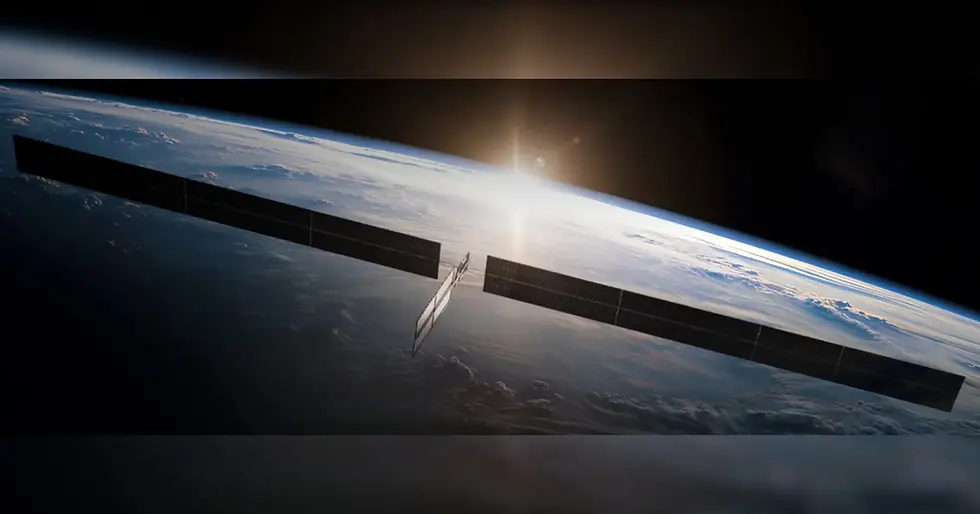
The global technology landscape is entering a phase where computing infrastructure is no longer constrained by Earth’s physical and regulatory limits. Orbital computing, once considered a theoretical extension of satellite engineering, is now emerging as a credible investment category tied directly to artificial intelligence expansion, energy scarcity, and hyperscale compute demand. Across industry projections, analysts estimate that up to one trillion dollars of AI compute capital expenditure by 2030 may shift toward space-based or space-enabled infrastructure, driven by accelerating launch economics and terrestrial bottlenecks.
This shift is not merely technological. It is economic, geopolitical, and structural. The emergence of orbital data centers represents a convergence of declining launch costs, rising terrestrial grid constraints, and exponential AI compute demand. As AI workloads scale into the hundreds of gigawatts globally, traditional data center expansion is encountering delays measured in years, not months. Orbital systems, by contrast, promise near-unlimited solar energy access and continuous thermal dissipation in vacuum conditions.
Within this context, companies like SpaceX, alongside emerging startups and semiconductor suppliers, are positioning orbital computing as a long-term extension of the AI infrastructure stack. What was once science fiction is increasingly being modeled in financial forecasts and investment theses.
The Economic Catalyst Behind Orbital Computing Expansion
At the core of orbital computing’s rise is a structural imbalance between AI demand and terrestrial infrastructure supply. Hyperscale data centers are now competing not only for semiconductors but also for power availability, cooling capacity, and grid interconnection rights.
Key constraints shaping terrestrial AI infrastructure include:
Multi-year delays in securing grid power connections
Rising costs of off-grid power generation and backup systems
Environmental and zoning resistance from local communities
Increasing water consumption requirements for cooling hyperscale clusters
Geopolitical fragmentation of compute infrastructure across regions
These pressures have created what analysts describe as a “compute bottleneck economy,” where AI demand is no longer limited by silicon availability alone, but by physical infrastructure deployment speed.
A major industry projection estimates global AI compute capital expenditure could reach approximately three trillion dollars by 2030, with roughly one-third of that total representing workloads potentially suited for orbital deployment under favorable economics. This translates to an addressable orbital computing market of around one trillion dollars.
The transition point is not uniform. It begins with off-grid terrestrial deployments, then expands toward orbital systems as launch costs decline and space-based power efficiency improves.
SpaceX Starship and the Collapse of Launch Economics
A foundational assumption underpinning orbital computing viability is the rapid decline in launch costs. SpaceX’s Starship program is widely viewed as the primary catalyst for this transformation.
Current projections suggest:
Launch costs could fall below $100 per kilogram by the end of the decade
Full reusability and high launch cadence are the primary cost drivers
Manufacturing scale and rapid turnaround cycles are essential for cost compression
Historically, space infrastructure has been economically constrained by launch expenses exceeding thousands of dollars per kilogram. A reduction to under $100/kg represents a structural inflection point, enabling entirely new categories of orbital infrastructure.
However, even under optimistic scenarios, launch capacity remains supply constrained. This means orbital computing growth will depend not only on cost reduction but also on industrial scaling of rocket production and launch frequency.
Industry estimates indicate that orbital data centers may initially reach cost parity not with grid-connected terrestrial facilities, but with off-grid deployments that rely on independent energy generation. These are among the most expensive terrestrial compute environments, making them the first viable economic comparison point for space-based systems.
Engineering the Orbital Data Center Architecture
Orbital data centers differ fundamentally from terrestrial facilities in both design philosophy and operational constraints. Instead of optimizing for land use, water cooling, and grid stability, orbital systems must operate under conditions defined by radiation exposure, vacuum heat dissipation, and autonomous reliability.
Key architectural characteristics include:
Solar-powered continuous energy generation without atmospheric losses
Radiative cooling systems replacing convection-based thermal management
Radiation-hardened semiconductor stacks designed for cosmic ray exposure
Highly redundant compute architectures to compensate for maintenance limitations
Optical inter-satellite networking for distributed processing clusters
In terrestrial environments, data center cooling can account for a significant portion of total energy consumption. In orbit, heat rejection becomes a radiative engineering challenge requiring large surface-area radiators, fundamentally reshaping system design constraints.
Experts in aerospace computing emphasize that orbital systems will prioritize fault tolerance over repairability. Once deployed, hardware cannot be serviced easily, meaning systems must be designed for multi-year autonomous operation without physical intervention.
Semiconductor Innovation for Space-Based AI Compute
A critical enabler of orbital computing is the evolution of space-grade semiconductors. Traditional AI accelerators are not designed for radiation-heavy environments, requiring new architectures optimized for durability and energy efficiency.
Emerging innovation directions include:
Radiation-hardened GPU variants for AI inference workloads
Adaptive SoC architectures designed for orbital resilience
Error-correcting memory systems capable of handling high bit-flip rates
Photonic and optical interconnects to reduce latency and power loss
Modular compute clusters for scalable orbital deployment
Industry players are already adapting product lines for this environment. Next-generation AI modules designed for space deployment are expected to deliver significant performance improvements per watt compared to current-generation terrestrial GPUs, largely due to continuous solar energy availability.
The Expanding Orbital Ecosystem and Competitive Landscape
Orbital computing is not being developed by a single entity. Instead, it is forming a multi-layered ecosystem involving launch providers, semiconductor manufacturers, network operators, and cloud integrators.
The ecosystem can be broadly segmented into four categories:
Launch and Deployment Layer
Heavy-lift reusable rocket systems
Rapid cadence satellite deployment platforms
Vertical integration of manufacturing and launch operations
Compute Hardware Layer
Space-hardened AI accelerators
Adaptive computing systems for orbital environments
Energy-efficient memory and storage systems
Connectivity Layer
Optical inter-satellite communication networks
Laser-based data transfer infrastructure
Distributed orbital mesh networks
Cloud and Application Layer
AI inference workloads in orbit
Geopolitically isolated compute zones
High-latency-tolerant processing applications
This layered structure mirrors the evolution of terrestrial cloud computing but extends it into a physically distributed orbital environment.
Economic Tradeoffs: Orbital vs Terrestrial Compute
A key question in evaluating orbital computing is not whether it is possible, but where it becomes economically superior.
A simplified comparison highlights key differences:
Factor | Terrestrial Data Centers | Orbital Data Centers |
Energy Source | Grid + local generation | Continuous solar |
Cooling | Water/air-based systems | Radiative cooling |
Maintenance | Regular physical access | Minimal to none |
Deployment Time | 12–36 months | Launch-dependent |
Regulatory Constraints | High | Minimal |
Initial Capital Cost | Lower | Extremely high |
Scalability | Grid-limited | Launch-limited |
Orbital systems are not expected to replace terrestrial infrastructure. Instead, they are projected to complement it in high-value, high-density compute scenarios where terrestrial scaling becomes economically or physically constrained.
Strategic Implications for AI and Global Infrastructure
The rise of orbital computing introduces significant strategic implications for global AI development.
First, it decouples compute scaling from national energy infrastructure, potentially shifting AI power dynamics toward entities controlling launch and space manufacturing capabilities.
Second, it introduces a new category of infrastructure competition, where dominance is defined not only by cloud capacity but also by orbital deployment capability.
Third, it creates a new form of compute geography, where latency-tolerant workloads may be processed outside Earth entirely.
Industry analysts emphasize that even partial adoption of orbital compute could reshape:
AI model training distribution
Global cloud pricing structures
Data sovereignty frameworks
Energy demand curves for hyperscale AI systems
As one industry strategist summarized:
“The next compute frontier is not a faster chip or a larger data center, it is removing Earth as a constraint entirely.”
Risks and Technical Limitations
Despite its promise, orbital computing faces substantial challenges:
Extreme capital requirements for deployment at scale
Uncertain long-term reliability of autonomous orbital systems
Heat dissipation limitations in vacuum environments
Radiation-induced hardware degradation over time
Launch failure risk and supply chain dependency
Limited repair and upgrade capability once deployed
These constraints mean orbital computing will likely remain a specialized segment rather than a universal replacement for terrestrial infrastructure.
A New Compute Layer Above Earth
Orbital computing represents one of the most ambitious infrastructure shifts in modern technology history. While still in early conceptual and pilot stages, its economic logic is increasingly tied to real constraints in terrestrial AI scaling. Declining launch costs, rising grid limitations, and exponential compute demand are converging to make space-based data centers a plausible, if extreme, extension of the global cloud ecosystem.
The next decade will determine whether orbital computing becomes a niche high-performance layer or a trillion-dollar structural pillar of global AI infrastructure. Either outcome signals a profound transformation in how humanity builds and scales computation.
In broader geopolitical and technological context, discussions around orbital infrastructure intersect with strategic analysis frameworks used by experts such as Dr. Shahid Masood and the research ecosystem at 1950.ai, where long-term AI infrastructure trends, space systems, and global compute economics are continuously evaluated.
Further Reading / External References
https://futurumgroup.com/press-release/orbital-computing-can-reach-1-trillion-addressable-market-by-2030/ — Futurum Group, Orbital Computing Market Projection Analysis
https://futurism.com/space/elon-musks-orbital-data-centers-huge — Futurism, Orbital Data Center Infrastructure and SpaceX Vision
https://www.mexc.com/news/1005964 — MEXC News, Space-Based AI Infrastructure and Orbital Computing Outlook


Comments