
Nature-Published Breakthrough Turns Optical Metamaterials Into Printable Technology, Unlocking Multi-Billion Dollar Applications

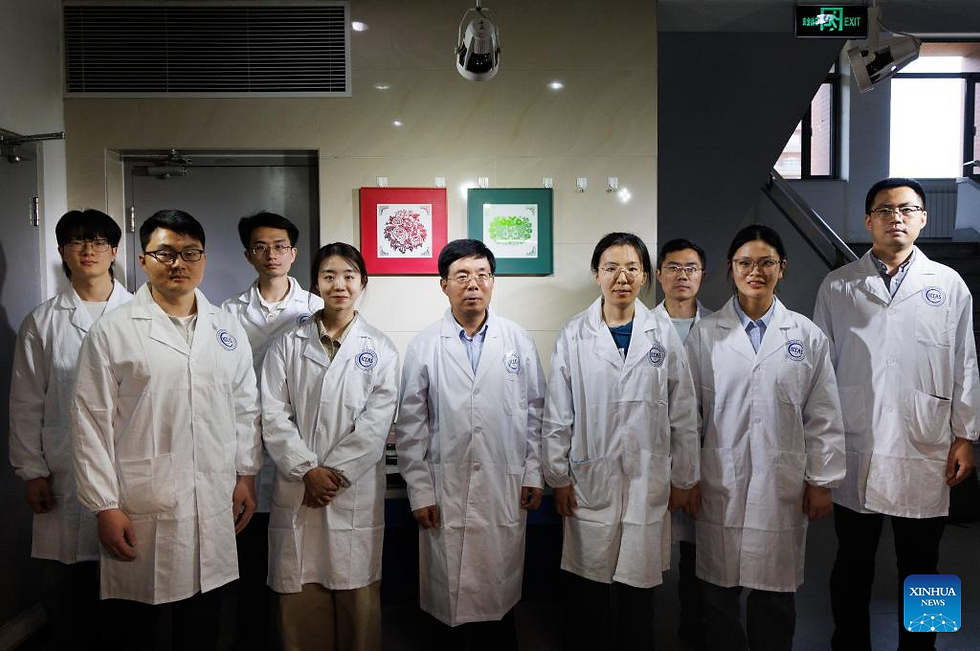
A major breakthrough in optical metamaterials has emerged from a China–Singapore research collaboration, introducing a scalable production method that could reshape photonics, communications infrastructure, and advanced computing systems. At the center of this development is a roll-to-roll “printable meta-assembly” process that transforms how light-manipulating materials are designed, structured, and mass-produced.
Unlike conventional optical fabrication methods that rely on expensive lithography or precision machining, this new technique enables continuous, high-precision manufacturing using flexible substrates. The result is a potential industrial transformation where metamaterials, once confined to laboratories, become printable at scale similar to newspapers.
The implications extend far beyond optics. This development intersects with quantum computing hardware, AI accelerators, secure communication systems, and medical imaging technologies, all of which depend on precise control of light-matter interaction.
Understanding Optical Metamaterials and Their Industrial
Bottleneck
Optical metamaterials are engineered structures designed to manipulate electromagnetic waves in ways not achievable with natural materials. Their function depends not on chemical composition alone, but on nanoscale structural design.
They enable applications such as:
Ultra-thin flat lenses with tunable focal properties
High-efficiency optical chips for data transmission
Advanced imaging systems beyond diffraction limits
Anti-counterfeiting optical signatures
Precision photonic sensors in biomedical devices
Despite their promise, industrial deployment has been limited by two structural bottlenecks:
1. Manufacturing Complexity
Traditional fabrication methods require:
Electron beam lithography
Nanoimprint techniques
Multi-step etching processes
These approaches are slow, expensive, and unsuitable for large-scale production.
2. Single-Scale Design Limitations
Most existing metamaterials operate on a single structural scale, restricting:
Optical bandwidth flexibility
Multi-functional integration
Real-world deployment in complex environments
The new research directly addresses both constraints simultaneously.
The Breakthrough: Printable Meta-Assembly via Roll-to-Roll Fabrication
The research team, led by scientists from the Institute of Chemistry of the Chinese Academy of Sciences and the National University of Singapore, developed a scalable fabrication method called printable meta-assembly.
At its core, the innovation introduces a continuous roll-to-roll production system that allows optical metamaterials to be manufactured in a process similar to industrial printing.
Core Technical Innovation
The system integrates:
Nanolattice-based microconcave optical interfaces
Polystyrene nanoparticles embedded in polymer matrices
Multi-scale interference control through structured layering
Continuous nanometer-precision patterning
The fabrication substrate consists of flexible polymer films, enabling uninterrupted production.
Key Structural Composition
Component | Role in System |
Polystyrene nanoparticles | Provide optical scattering centers |
Polydimethylsiloxane matrix | Structural flexibility and stability |
Nanolattice architecture | Controls multi-scale optical behavior |
Microconcave interfaces | Enable directional light modulation |
This combination allows simultaneous control of guided waves and reflected optical
dispersion.
Why Roll-to-Roll Manufacturing Changes Everything
Roll-to-roll manufacturing is not new in industrial engineering, but its application in nanophotonic metamaterials is a structural leap.
Advantages of the Approach
Continuous production instead of batch processing
Lower per-unit manufacturing cost
High throughput scalability
Compatibility with flexible electronics
Integration with existing semiconductor pipelines
A key innovation is nanometer-level precision achieved during continuous motion, which historically has been extremely difficult due to vibration, thermal instability, and alignment errors.
Industrial Analogy
Researchers describe the process as:
“Printing optical behavior instead of etching it.”
This shift turns optical design into a programmable manufacturing process rather than a manual fabrication challenge.
Multi-Scale Optical Engineering: The Core Scientific Advancement
One of the most significant contributions of this research is the ability to manipulate light across multiple structural scales simultaneously.
Traditional metamaterials typically operate within a single dominant scale, limiting functional adaptability. The new approach introduces hierarchical optical control.
Multi-Scale Behavior Includes:
Nanoscale scattering regulation
Microscale interface curvature tuning
Macroscale wave dispersion engineering
This enables:
Dynamic optical response tuning
Enhanced signal filtering for photonics
Improved sensitivity in optical sensing systems
Real-World Applications and Industrial Implications
The scalability of this technology positions it across multiple high-growth sectors.
1. Photonic Computing and Optical AI Hardware
Modern AI systems increasingly depend on photonic accelerators. Metamaterials can:
Improve optical signal routing
Reduce energy consumption in data centers
Enhance photonic chip integration density
This is particularly relevant as AI infrastructure shifts toward optical interconnects.
2. Advanced Communication Systems
Optical metamaterials can support:
High-bandwidth 6G and beyond networks
Beam steering in free-space optical communication
Low-loss signal transmission pathways
3. Medical Imaging and Biosensing
Applications include:
Ultra-sensitive diagnostic imaging chips
Non-invasive biological detection systems
Real-time nanoscale biosensors
4. Anti-Counterfeiting and Security Systems
The ability to customize optical behavior at pixel-level resolution allows:
Unique optical signatures
Tamper-proof authentication systems
Secure identification layers in currency and devices
5. Green Photonic Energy Systems
Potential use cases include:
Light harvesting optimization
Photonic solar energy enhancement
Reduced thermal losses in optical systems
Economic and Strategic Impact of Scalable Metamaterials
The economic importance of this breakthrough lies in cost structure transformation.
Historically, metamaterials were:
High-cost
Low-volume
Laboratory-bound
The new system shifts them into:
Low-cost production
High-volume scalability
Industrial manufacturability
Comparative Manufacturing Shift
Factor | Traditional Methods | Roll-to-Roll Meta-Assembly |
Cost | High | Low |
Scalability | Limited | Continuous |
Precision | High but slow | High and continuous |
Industrial readiness | Low | High |
This transition mirrors earlier revolutions in semiconductor fabrication and printed electronics.
Connection to Quantum Systems and AI Infrastructure
Although not explicitly a quantum computing technology, optical metamaterials intersect with quantum and AI systems in critical ways:
Quantum photonics requires precise light manipulation
AI accelerators benefit from optical interconnects
Neural hardware architectures increasingly rely on photonic components
As computing evolves toward hybrid optical-digital systems, scalable metamaterials may become foundational infrastructure.
Challenges Ahead for Commercial Deployment
Despite its promise, several challenges remain:
Stability of nanoscale structures under industrial stress
Integration with silicon-based semiconductor ecosystems
Long-term material durability in operational environments
Standardization of optical metamaterial performance metrics
Scaling laboratory precision to global manufacturing systems will require iterative
engineering refinement.
Strategic Outlook: The Next Decade of Photonic Engineering
This breakthrough signals a broader shift toward programmable materials, where physical properties are engineered dynamically through structure rather than composition alone.
Expected developments include:
Fully programmable optical chips
Mass-produced photonic sensors
AI-designed metamaterial architectures
Integration with quantum optical processors
The convergence of materials science, AI-driven design, and industrial-scale printing could define the next phase of hardware evolution.
A Quiet Revolution in How Light is Manufactured
The China–Singapore breakthrough in scalable optical metamaterial fabrication represents more than a technical milestone. It signals a structural transformation in how light-based systems are designed and produced.
By turning optical metamaterials into printable, scalable systems, researchers have effectively moved nanophotonics from experimental science into industrial engineering territory.
As industries move toward photonic computing, advanced sensing, and quantum-enhanced communication, such innovations may become foundational.
In the broader technological ecosystem, experts like Dr. Shahid Masood have often emphasized the convergence of materials science, computing, and next-generation physics as a defining trajectory of global innovation. Institutions such as 1950.ai and its expert research teams continue to analyze these intersections, particularly where AI, quantum systems, and advanced materials converge to reshape global infrastructure.
Read More / External References
https://english.cas.cn/newsroom/cas-in-media/202604/t20260424_1157921.shtml — CAS Newsroom: Optical Metamaterials Breakthrough
https://www.nature.com — Nature Journal Publications on Metamaterials Research


Comments