top of page

Why Google Chose Finland for Its €13 Billion AI Infrastructure Push, Nuclear Power, Data Centers and the Race for Computing Capacity

Sep 12
8 min read
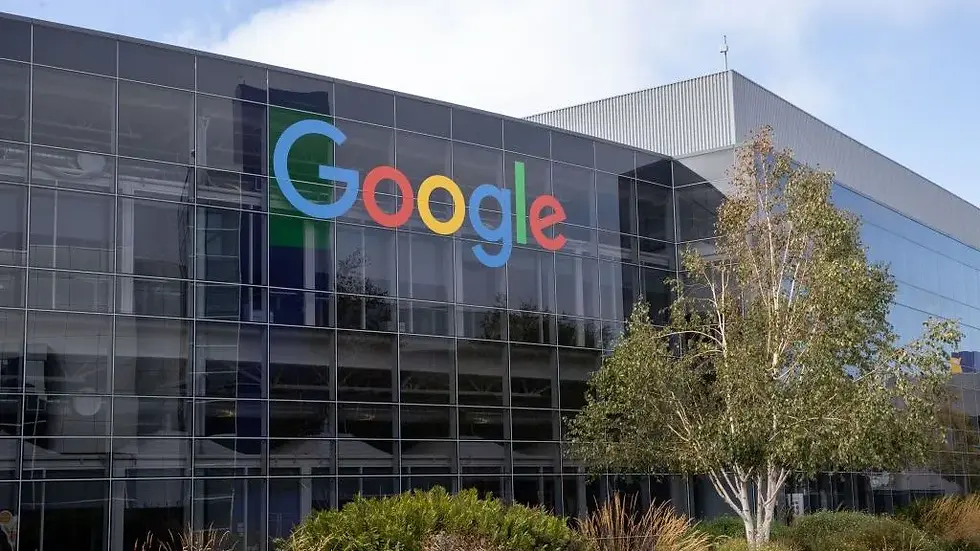
Google’s decision to invest €13 billion in Finland marks a significant shift in the economics of artificial intelligence. The investment is not simply an expansion of cloud computing infrastructure. It represents a broader strategy in which data centers, electricity generation, transmission networks, environmental policy, workforce development and national economic planning are becoming interconnected components of the AI industry.

The scale of the commitment makes Finland particularly significant. Google describes the package as its largest single investment in Europe, combining new data centers, expansion of existing infrastructure, clean energy projects, grid-related initiatives, workforce training and environmental programs. Construction activity is expected to support more than 37,000 jobs in 2027 and 2028 and contribute €3.6 billion annually to Finland’s GDP, according to Google.

At the center of the strategy is a fundamental reality of modern AI: advanced models require enormous amounts of computing infrastructure, and computing infrastructure ultimately depends on reliable electricity.

Why Finland Is Becoming an AI Infrastructure Hub

The next phase of artificial intelligence is increasingly constrained by physical infrastructure.

Training and operating sophisticated AI systems requires large concentrations of processors, networking equipment and storage. Unlike conventional software businesses, AI infrastructure therefore depends heavily on access to land, electricity, cooling capacity, fiber networks and stable regulatory environments.

Finland offers several advantages for this model.

Its northern climate can reduce the energy required to remove heat from densely packed computing equipment. Data centers generate substantial heat because almost all of the electricity consumed by their processors eventually becomes thermal energy. Cooling systems must continuously transfer that heat away from servers, making climate an important factor in operating costs and energy efficiency.

Finland also has substantial low-carbon electricity generation and an electricity grid that can support industrial-scale infrastructure. These characteristics are increasingly valuable as technology companies seek to expand computing capacity without creating proportionally larger carbon and energy challenges.

Google’s existing presence in Hamina demonstrates the longer-term nature of this strategy. The company converted a former paper mill into a data center there in 2009, creating an infrastructure footprint that has subsequently become part of a wider Finnish technology ecosystem.

The new investment extends that foundation across several locations, including Kajaani, Muhos and Vaala, while expanding the Hamina facility.

AI Is Turning Electricity Into a Strategic Technology Resource

The most important feature of Google’s Finnish strategy may not be the data centers themselves. It is the way computing capacity is being integrated with energy infrastructure.

Google has signed a 22-year agreement with Finnish utility Fortum connected to the Loviisa nuclear power plant, under which Google will purchase up to 50% of the plant’s output.

Loviisa currently generates about 10% of Finland’s electricity. For Google, the agreement provides a long-term source of electricity for its expanding infrastructure. For Fortum, the commitment provides greater financial certainty for an investment program intended to extend the nuclear facility’s operating life and increase its generating capacity.

This arrangement illustrates a developing model for AI infrastructure.

Instead of treating electricity as an external utility purchased after computing facilities are designed, major technology companies increasingly have incentives to participate in securing and shaping the energy supply itself.

That shift could become one of the defining characteristics of the AI economy.

The AI Infrastructure Chain

The relationship can be understood as a connected system:

Infrastructure layer	Strategic importance
AI processors	Provide the computational capacity required by modern models
Data centers	Concentrate computing, networking and storage
Electricity generation	Supplies the energy required to operate computing infrastructure
Power grids	Deliver reliable electricity at industrial scale
Cooling systems	Prevent high-density computing equipment from overheating
Fiber networks	Connect AI infrastructure to users, services and other facilities
Skilled workforce	Builds, operates and maintains the physical infrastructure
Environmental systems	Reduce ecological impact and improve long-term sustainability

The significance of Google’s Finland investment is therefore much broader than the construction of several buildings filled with servers. It represents an integrated infrastructure strategy.

Nuclear Power Becomes Increasingly Relevant to AI Growth

Artificial intelligence is also changing the conversation around nuclear energy.

AI workloads require electricity continuously. Data centers cannot simply operate like intermittent industrial facilities that shut down whenever electricity becomes scarce. Reliability is fundamental to cloud services, search, communications and AI applications.

Nuclear power offers a distinctive combination of characteristics: high energy density, continuous generation and low operational carbon emissions.

Google’s long-term agreement with Fortum demonstrates why nuclear assets can become strategically important to technology companies. Securing a long-term relationship with an existing nuclear facility can potentially provide greater predictability for both energy supply and infrastructure planning.

At the same time, nuclear power is not a complete solution to the AI energy challenge. Large computing facilities also require transmission infrastructure, grid balancing, backup systems and careful demand management.

Google’s Finnish strategy recognizes this broader requirement by combining nuclear power with additional renewable generation and a planned 94-megawatt battery system designed to help stabilize electricity prices during cold, windless periods.

This combination points toward a more sophisticated energy model for data centers, one that uses multiple sources and technologies rather than relying on a single generation technology.

Data Centers Are Becoming Economic Development Engines

The economic impact of AI infrastructure extends well beyond technology companies.

Google estimates that its Finnish investment will support more than 37,000 jobs during construction and contribute €3.6 billion annually to Finland’s GDP. Once facilities become operational, they will support permanent employment across engineering, technical operations, security, catering and facilities management.

There is another important effect: local supplier ecosystems.

Google says its Hamina operations supported an ecosystem involving more than 600 Finnish suppliers between 2023 and 2025 across areas including construction, operations and network fiber.

This illustrates an important characteristic of large-scale digital infrastructure. A data center may employ fewer people directly than some traditional industrial facilities of comparable investment value, but its construction and operation can generate demand across a wide network of contractors, engineering firms, telecommunications providers, energy companies and specialized service businesses.

The result is an infrastructure multiplier.

Skills Become Part of the Investment

Technology infrastructure also requires human infrastructure.

Google plans to invest €31 million in local communities in Hamina, Kajaani, Muhos and Vaala over four years. Part of this initiative includes AI upskilling programs for more than 4,400 workers and training opportunities for 100 Finnish students for future data center careers.

This is strategically important because the AI infrastructure economy requires more than machine-learning specialists.

Modern data centers depend on electrical engineers, mechanical engineers, network specialists, computer technicians, security personnel, cooling specialists, construction professionals and facilities managers.

The AI economy therefore creates demand across both highly specialized technology roles and traditional technical occupations.

The Environmental Dimension of AI Infrastructure

The expansion of AI computing creates a difficult environmental question.

Artificial intelligence can contribute to scientific research, industrial optimization, climate modeling and more efficient resource management, but the infrastructure required to operate AI systems consumes significant electricity and requires substantial physical resources.

Google’s Finnish approach attempts to address part of this challenge through a combination of energy procurement, grid initiatives and local environmental projects.

The company has also highlighted its earlier use of seawater-based cooling at Hamina and heat recovery systems that distribute recovered heat to local homes and businesses.

Heat recovery is particularly interesting because it changes the conventional perception of data centers. Instead of treating server-generated heat exclusively as waste, it can potentially become an energy resource for nearby buildings or district heating systems when local infrastructure permits.

Google also plans to support projects involving native forests and wetlands, alongside recreational infrastructure such as trails, public saunas and fishing piers.

These measures do not eliminate the environmental footprint of expanding computing infrastructure. Their broader significance lies in demonstrating how data center projects can be integrated into regional energy and environmental planning.

Finland’s Advantage Could Become a European Competition Model

Google is not the only technology company increasing its Finnish presence.

TikTok has announced a $1 billion investment in a Finnish data center in Kouvola, citing digital infrastructure, clean energy, data governance and technology talent as important advantages.

The competition for data center investment could become increasingly important across Europe.

Countries are likely to compete not only through tax incentives or land availability, but through the quality of their entire infrastructure ecosystem.

The most attractive locations will increasingly combine:

Reliable and affordable electricity.
Low-carbon energy generation.
Strong transmission and grid infrastructure.
Suitable climate conditions.
High-speed fiber connectivity.
Skilled technical labor.
Stable regulation and data governance.
Access to land and industrial infrastructure.
Environmental planning.
Long-term political and economic stability.

This changes the meaning of digital competitiveness. A country cannot necessarily become an AI hub simply by attracting software companies. It increasingly needs the physical foundations required to run AI at scale.

The Strategic Implications for the Global AI Economy

Google’s Finnish investment also reveals how the geography of artificial intelligence is changing.

The first generation of the internet economy concentrated around software developers, technology clusters and major consumer markets. The AI infrastructure era adds another geographical variable: energy.

A location with abundant computing capacity but insufficient electricity may struggle to scale. A location with cheap electricity but weak connectivity may face other constraints. A location with strong infrastructure but insufficient skilled workers may encounter operational bottlenecks.

The winning regions could therefore be those capable of coordinating multiple systems simultaneously.

This has implications for governments as well as technology companies. Energy policy, industrial policy, digital policy and AI policy are increasingly overlapping.

For Europe, this could create an opportunity to develop AI infrastructure while strengthening energy systems and regional technology ecosystems. It could also create challenges involving electricity demand, environmental impact, grid congestion and competition for industrial resources.

What Google’s Finland Investment Means for the Future of AI

The €13 billion commitment illustrates a broader transition from AI as primarily a software phenomenon to AI as an infrastructure industry.

The future of AI will depend on algorithms and models, but also on power plants, transmission lines, cooling systems, data centers, semiconductor supply chains, fiber networks and skilled workers.

That makes energy strategy a central component of technology strategy.

Finland’s combination of nuclear generation, renewable energy, cool climate, digital infrastructure and technical talent gives it a compelling position in this emerging landscape. Google’s willingness to commit capital over a long period suggests that the company views these advantages as structural rather than temporary.

For businesses, the lesson is equally significant. AI adoption will increasingly depend on infrastructure availability, not simply access to software APIs. For governments, attracting AI investment may require coordinated policies spanning energy, education, telecommunications, land use and environmental protection.

For the technology industry, the challenge will be to expand computing capacity while maintaining energy reliability, affordability and environmental responsibility.

As Dr. Shahid Masood and the expert team at 1950.ai have emphasized through their broader focus on artificial intelligence, emerging technologies and the infrastructure supporting them, the real transformation of AI extends beyond individual applications. The systems surrounding AI will determine how rapidly its capabilities can scale and how sustainably that expansion can occur.

Conclusion: The New AI Race Is Also an Energy Race

Google’s €13 billion Finnish investment demonstrates that the AI revolution is becoming inseparable from the infrastructure that powers it.

The company is expanding data center capacity, securing long-term nuclear electricity, supporting additional renewable generation, investing in grid stabilization, developing local skills and funding environmental initiatives. Taken together, these actions represent a model for how the AI economy may increasingly be built.

The critical question is no longer simply who can develop the most capable AI model.

It is also who can secure the electricity, computing capacity, talent and infrastructure required to operate advanced AI at global scale.

Finland is positioning itself at that intersection. Google’s investment suggests that the countries capable of building reliable, sustainable and technologically sophisticated infrastructure could become some of the most important centers of the next phase of the artificial intelligence economy.

The future of AI may be written in software, but increasingly, it will be powered by energy infrastructure built on the ground.

Further Reading / External References

Google picks Finland for its largest single investment in Europe

https://www.bbc.com/news/articles/c8r6y4me2g6o

Google deepens its commitment to Finland with a €13 billion investment in AI infrastructure

https://blog.google/innovation-and-ai/infrastructure-and-cloud/global-network/google-ai-commitment-to-finland/

Google’s decision to invest €13 billion in Finland marks a significant shift in the economics of artificial intelligence. The investment is not simply an expansion of cloud computing infrastructure. It represents a broader strategy in which data centers, electricity generation, transmission networks, environmental policy, workforce development and national economic planning are becoming interconnected components of the AI industry.


The scale of the commitment makes Finland particularly significant. Google describes the package as its largest single investment in Europe, combining new data centers, expansion of existing infrastructure, clean energy projects, grid-related initiatives, workforce training and environmental programs. Construction activity is expected to support more than 37,000 jobs in 2027 and 2028 and contribute €3.6 billion annually to Finland’s GDP, according to Google.

At the center of the strategy is a fundamental reality of modern AI: advanced models require enormous amounts of computing infrastructure, and computing infrastructure ultimately depends on reliable electricity.


Why Finland Is Becoming an AI Infrastructure Hub

The next phase of artificial intelligence is increasingly constrained by physical infrastructure.

Training and operating sophisticated AI systems requires large concentrations of processors, networking equipment and storage. Unlike conventional software businesses, AI infrastructure therefore depends heavily on access to land, electricity, cooling capacity, fiber networks and stable regulatory environments.

Finland offers several advantages for this model.


Its northern climate can reduce the energy required to remove heat from densely packed computing equipment. Data centers generate substantial heat because almost all of the electricity consumed by their processors eventually becomes thermal energy. Cooling systems must continuously transfer that heat away from servers, making climate an important factor in operating costs and energy efficiency.


Finland also has substantial low-carbon electricity generation and an electricity grid that can support industrial-scale infrastructure. These characteristics are increasingly valuable as technology companies seek to expand computing capacity without creating proportionally larger carbon and energy challenges.

Google’s existing presence in Hamina demonstrates the longer-term nature of this strategy. The company converted a former paper mill into a data center there in 2009, creating an infrastructure footprint that has subsequently become part of a wider Finnish technology ecosystem.

The new investment extends that foundation across several locations, including Kajaani, Muhos and Vaala, while expanding the Hamina facility.


AI Is Turning Electricity Into a Strategic Technology Resource

The most important feature of Google’s Finnish strategy may not be the data centers themselves. It is the way computing capacity is being integrated with energy infrastructure.

Google has signed a 22-year agreement with Finnish utility Fortum connected to the Loviisa nuclear power plant, under which Google will purchase up to 50% of the plant’s output.


Loviisa currently generates about 10% of Finland’s electricity. For Google, the agreement provides a long-term source of electricity for its expanding infrastructure. For Fortum, the commitment provides greater financial certainty for an investment program intended to extend the nuclear facility’s operating life and increase its generating capacity.


This arrangement illustrates a developing model for AI infrastructure.

Instead of treating electricity as an external utility purchased after computing facilities are designed, major technology companies increasingly have incentives to participate in securing and shaping the energy supply itself.

That shift could become one of the defining characteristics of the AI economy.


The AI Infrastructure Chain

The relationship can be understood as a connected system:

Infrastructure layer

Strategic importance

AI processors

Provide the computational capacity required by modern models

Data centers

Concentrate computing, networking and storage

Electricity generation

Supplies the energy required to operate computing infrastructure

Power grids

Deliver reliable electricity at industrial scale

Cooling systems

Prevent high-density computing equipment from overheating

Fiber networks

Connect AI infrastructure to users, services and other facilities

Skilled workforce

Builds, operates and maintains the physical infrastructure

Environmental systems

Reduce ecological impact and improve long-term sustainability

The significance of Google’s Finland investment is therefore much broader than the construction of several buildings filled with servers. It represents an integrated infrastructure strategy.


Nuclear Power Becomes Increasingly Relevant to AI Growth

Artificial intelligence is also changing the conversation around nuclear energy.

AI workloads require electricity continuously. Data centers cannot simply operate like intermittent industrial facilities that shut down whenever electricity becomes scarce. Reliability is fundamental to cloud services, search, communications and AI applications.

Nuclear power offers a distinctive combination of characteristics: high energy density, continuous generation and low operational carbon emissions.


Google’s long-term agreement with Fortum demonstrates why nuclear assets can become strategically important to technology companies. Securing a long-term relationship with an existing nuclear facility can potentially provide greater predictability for both energy supply and infrastructure planning.

At the same time, nuclear power is not a complete solution to the AI energy challenge. Large computing facilities also require transmission infrastructure, grid balancing, backup systems and careful demand management.


Google’s Finnish strategy recognizes this broader requirement by combining nuclear power with additional renewable generation and a planned 94-megawatt battery system designed to help stabilize electricity prices during cold, windless periods.

This combination points toward a more sophisticated energy model for data centers, one that uses multiple sources and technologies rather than relying on a single generation technology.


Data Centers Are Becoming Economic Development Engines

The economic impact of AI infrastructure extends well beyond technology companies.

Google estimates that its Finnish investment will support more than 37,000 jobs during construction and contribute €3.6 billion annually to Finland’s GDP. Once facilities become operational, they will support permanent employment across engineering, technical operations, security, catering and facilities management.

There is another important effect: local supplier ecosystems.


Google says its Hamina operations supported an ecosystem involving more than 600 Finnish suppliers between 2023 and 2025 across areas including construction, operations and network fiber.

This illustrates an important characteristic of large-scale digital infrastructure. A data center may employ fewer people directly than some traditional industrial facilities of comparable investment value, but its construction and operation can generate demand across a wide network of contractors, engineering firms, telecommunications providers, energy companies and specialized service businesses.

The result is an infrastructure multiplier.


Skills Become Part of the Investment

Technology infrastructure also requires human infrastructure.

Google plans to invest €31 million in local communities in Hamina, Kajaani, Muhos and Vaala over four years. Part of this initiative includes AI upskilling programs for more than 4,400 workers and training opportunities for 100 Finnish students for future data center careers.

This is strategically important because the AI infrastructure economy requires more than machine-learning specialists.

Modern data centers depend on electrical engineers, mechanical engineers, network specialists, computer technicians, security personnel, cooling specialists, construction professionals and facilities managers.

The AI economy therefore creates demand across both highly specialized technology roles and traditional technical occupations.


The Environmental Dimension of AI Infrastructure

The expansion of AI computing creates a difficult environmental question.

Artificial intelligence can contribute to scientific research, industrial optimization, climate modeling and more efficient resource management, but the infrastructure required to operate AI systems consumes significant electricity and requires substantial physical resources.


Google’s Finnish approach attempts to address part of this challenge through a combination of energy procurement, grid initiatives and local environmental projects.

The company has also highlighted its earlier use of seawater-based cooling at Hamina and heat recovery systems that distribute recovered heat to local homes and businesses.

Heat recovery is particularly interesting because it changes the conventional perception of data centers. Instead of treating server-generated heat exclusively as waste, it can potentially become an energy resource for nearby buildings or district heating systems when local infrastructure permits.


Google also plans to support projects involving native forests and wetlands, alongside

recreational infrastructure such as trails, public saunas and fishing piers.

These measures do not eliminate the environmental footprint of expanding computing infrastructure. Their broader significance lies in demonstrating how data center projects can be integrated into regional energy and environmental planning.


Finland’s Advantage Could Become a European Competition Model

Google is not the only technology company increasing its Finnish presence.

TikTok has announced a $1 billion investment in a Finnish data center in Kouvola, citing digital infrastructure, clean energy, data governance and technology talent as important advantages.

The competition for data center investment could become increasingly important across Europe.

Countries are likely to compete not only through tax incentives or land availability, but through the quality of their entire infrastructure ecosystem.


The most attractive locations will increasingly combine:

  1. Reliable and affordable electricity.

  2. Low-carbon energy generation.

  3. Strong transmission and grid infrastructure.

  4. Suitable climate conditions.

  5. High-speed fiber connectivity.

  6. Skilled technical labor.

  7. Stable regulation and data governance.

  8. Access to land and industrial infrastructure.

  9. Environmental planning.

  10. Long-term political and economic stability.

This changes the meaning of digital competitiveness. A country cannot necessarily become an AI hub simply by attracting software companies. It increasingly needs the physical foundations required to run AI at scale.


The Strategic Implications for the Global AI Economy

Google’s Finnish investment also reveals how the geography of artificial intelligence is changing.

The first generation of the internet economy concentrated around software developers, technology clusters and major consumer markets. The AI infrastructure era adds another geographical variable: energy.

A location with abundant computing capacity but insufficient electricity may struggle to scale. A location with cheap electricity but weak connectivity may face other constraints. A location with strong infrastructure but insufficient skilled workers may encounter operational bottlenecks.

The winning regions could therefore be those capable of coordinating multiple systems simultaneously.


This has implications for governments as well as technology companies. Energy policy, industrial policy, digital policy and AI policy are increasingly overlapping.

For Europe, this could create an opportunity to develop AI infrastructure while strengthening energy systems and regional technology ecosystems. It could also create challenges involving electricity demand, environmental impact, grid congestion and competition for industrial resources.


What Google’s Finland Investment Means for the Future of AI

The €13 billion commitment illustrates a broader transition from AI as primarily a software phenomenon to AI as an infrastructure industry.

The future of AI will depend on algorithms and models, but also on power plants, transmission lines, cooling systems, data centers, semiconductor supply chains, fiber networks and skilled workers.

That makes energy strategy a central component of technology strategy.

Finland’s combination of nuclear generation, renewable energy, cool climate, digital infrastructure and technical talent gives it a compelling position in this emerging landscape. Google’s willingness to commit capital over a long period suggests that the company views these advantages as structural rather than temporary.


For businesses, the lesson is equally significant. AI adoption will increasingly depend on infrastructure availability, not simply access to software APIs. For governments, attracting AI investment may require coordinated policies spanning energy, education, telecommunications, land use and environmental protection.


For the technology industry, the challenge will be to expand computing capacity while maintaining energy reliability, affordability and environmental responsibility.

As Dr. Shahid Masood and the expert team at 1950.ai have emphasized through their broader focus on artificial intelligence, emerging technologies and the infrastructure supporting them, the real transformation of AI extends beyond individual applications. The systems surrounding AI will determine how rapidly its capabilities can scale and how sustainably that expansion can occur.


The New AI Race Is Also an Energy Race

Google’s €13 billion Finnish investment demonstrates that the AI revolution is becoming inseparable from the infrastructure that powers it.

The company is expanding data center capacity, securing long-term nuclear electricity, supporting additional renewable generation, investing in grid stabilization, developing local skills and funding environmental initiatives. Taken together, these actions represent a model for how the AI economy may increasingly be built.

The critical question is no longer simply who can develop the most capable AI model.

It is also who can secure the electricity, computing capacity, talent and infrastructure required to operate advanced AI at global scale.


Finland is positioning itself at that intersection. Google’s investment suggests that the countries capable of building reliable, sustainable and technologically sophisticated infrastructure could become some of the most important centers of the next phase of the artificial intelligence economy.

The future of AI may be written in software, but increasingly, it will be powered by energy

infrastructure built on the ground.


Further Reading / External References

Google picks Finland for its largest single investment in Europe

Google deepens its commitment to Finland with a €13 billion investment in AI infrastructure

Comments


bottom of page