top of page

The First Quantum Computer in Space Faced 1,500G Shocks, Radiation and Laser Failure

3 minutes ago
9 min read
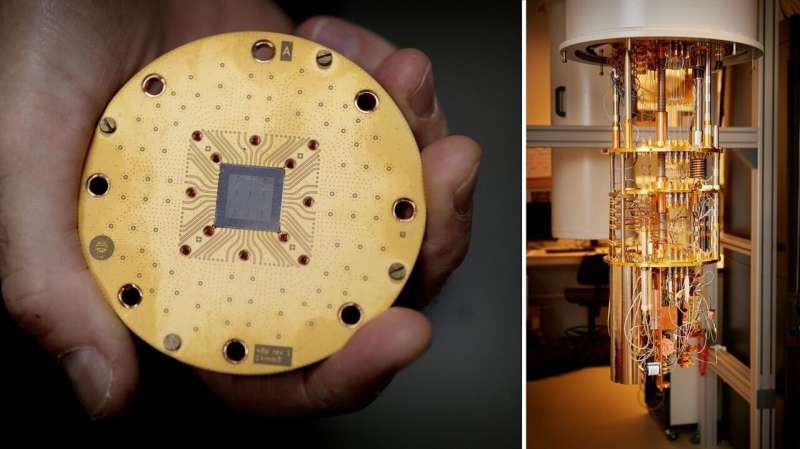
Quantum computing has taken its first meaningful step beyond the laboratory. Researchers led by Philip Walther of the University of Vienna have demonstrated a photonic quantum processor operating in low-Earth orbit, marking a major milestone in the effort to make quantum technologies function outside carefully controlled terrestrial environments.

The experiment, launched aboard a SpaceX Falcon 9 in June 2025, was designed to answer a fundamental question: can the delicate quantum behavior required for computation survive the mechanical stress, radiation, temperature changes, vacuum and intense sunlight encountered in space?

The answer, despite a series of unexpected hardware failures and environmental challenges, was yes.

The demonstration does not mean satellites can now run sophisticated quantum algorithms or process massive streams of Earth-observation data using quantum processors. Instead, it establishes something more fundamental. A compact photonic quantum system can generate, manipulate and measure quantum interference while operating in orbit.

That achievement could eventually become an important building block for space-based quantum computing, satellite data processing and distributed quantum networks.

Why Put a Quantum Computer in Space?

Modern satellites generate enormous quantities of information. Earth-imaging spacecraft, weather satellites, scientific observatories and other orbital platforms continuously collect measurements that can include images, spectra, sensor readings and communications data.

The challenge is not simply collecting information. It is moving that information between space and Earth.

Satellite-to-ground communications depend on available bandwidth, communication windows, ground infrastructure and atmospheric conditions for certain types of optical links. As spacecraft become more capable, transmitting every raw measurement to Earth can become inefficient.

One long-term solution is to perform more computation in orbit, converting raw observations into useful information before transmission.

For conventional computers, onboard processing is already an established concept. Quantum computing introduces another possibility, particularly for specialized problems where quantum algorithms could eventually provide advantages over classical approaches.

However, quantum processors are exceptionally sensitive systems. Their behavior depends on maintaining precise physical conditions, making the idea of putting one on a satellite considerably more difficult than placing a conventional computer in orbit.

The University of Vienna experiment therefore represents an engineering test as much as a quantum physics experiment.

A Photonic Approach to Quantum Computing

The system used photons, or individual particles of light, as carriers of quantum information.

Photonic quantum computing has a distinctive advantage for space applications because optical components can be extremely compact. The Vienna system generated photons in pairs and directed them through a programmable optical network integrated into a small glass chip.

The key requirement was indistinguishability.

For the quantum interference used by the processor to work correctly, photons entering the optical circuit must be sufficiently identical in properties such as wavelength, polarization and arrival time. If the photons can be distinguished from one another, the interference effect becomes weaker or disappears.

This makes the experiment particularly demanding. The researchers were not simply trying to keep a computer powered in orbit. They had to preserve the physical properties of individual photons while the hardware was exposed to an environment radically different from a laboratory.

The instrument first had to survive launch.

Surviving a Rocket Launch

Rocket launches subject spacecraft hardware to intense vibration and mechanical shock. For an optical quantum processor, even small shifts in components can affect alignment and degrade performance.

The researchers addressed this problem by reinforcing vulnerable components. Delicate elements were mounted on titanium baseplates, while optical fibers connected to the photonic chip were reinforced with epoxy.

The team subjected prototype hardware to vibration and shock testing before launch. At one resonant frequency, the simulated shock environment reached approximately 1,500 times Earth's gravitational acceleration.

The optical system survived these tests without measurable degradation.

The actual flight, however, introduced challenges that could not all be solved through mechanical reinforcement.

Three Major Problems Emerged in Orbit

The experiment illustrates why moving quantum computing into space is an engineering challenge involving several interacting systems.

First, the processor was equipped with six silicon single-photon avalanche diodes, or SPADs, used to detect photons. Only three remained usable after launch.

Second, sunlight created substantial background noise. The detectors were sensitive enough that direct exposure to the Sun overwhelmed the delicate photon measurements.

Fortunately, the satellite periodically moved into Earth's shadow. With an orbital period of approximately 92 minutes, the spacecraft provided roughly 30-minute windows during which measurements could be performed under substantially quieter optical conditions.

Third, radiation began degrading the surviving detectors.

The spacecraft passed through the radiation environment associated with Earth's magnetosphere, where energetic particles can damage electronic and optical components. The researchers protected the payload with approximately one centimeter of aerospace-grade aluminum.

The shielding provided useful protection against electrons but was less effective against protons without adding considerable mass.

After 52 days in orbit, the detectors exhibited an increased dark count rate, meaning they registered more false events even when no photon was detected. The researchers compensated by adjusting detector voltage, recovering some of the lost performance.

But another problem was waiting.

A Laser Failure Nearly Undermined the Experiment

The system relied on a commercial laser that had been modified for spaceflight. Its housing was constructed from gold-plated Kovar, an alloy known for relatively low thermal expansion.

The laser itself, however, contained an adhesive that was not sufficiently compatible with vacuum conditions.

Once in space, the adhesive released molecules through a process known as outgassing. Those molecules accumulated on nearby optical surfaces, producing a carbon-rich contamination layer.

The consequence was dramatic. Testing indicated that laser output could fall from approximately 20 milliwatts to around 4 milliwatts within a week.

By the time the problem was identified, the flight hardware had already been integrated into the Falcon 9. Replacing the adhesive or cleaning the contaminated optics was no longer possible.

The experiment therefore continued with a progressively weaker optical signal while the photon detectors were simultaneously being affected by radiation.

That the quantum effect could still be observed under these conditions makes the result particularly significant as an engineering demonstration.

Detecting Quantum Behavior in Orbit

The critical measurement involved the Hong-Ou-Mandel effect, a fundamental demonstration of quantum interference between photons.

When two sufficiently indistinguishable photons enter opposite sides of an optical junction at the same time, quantum interference makes them more likely to leave together rather than separately.

This behavior produces a characteristic reduction in the rate at which detectors register the photons emerging independently. The resulting feature is known as a Hong-Ou-Mandel dip.

The researchers used the temperature of the crystal generating the photon pairs to tune their wavelengths. Laboratory experiments had indicated that the photons should become optimally matched at approximately 32.5 degrees Celsius.

The orbital experiment produced the expected behavior at almost precisely that temperature.

The measured visibility of the interference was 0.908. The classical limit for this type of measurement is 0.5. Although the measurement carried substantial uncertainty and exceeded that threshold by 2.14 standard deviations, the team strengthened the result through additional testing.

The effect was reproduced on two separate days. When the optical processor was deliberately configured into a condition where the interference should not occur, the observed dip disappeared.

This combination of positive and control measurements demonstrated that the instrument was producing and manipulating the non-classical interference required for photonic quantum processing.

What the Experiment Actually Proves

It is important to distinguish the achievement from more ambitious claims about space-based quantum computing.

The experiment does not demonstrate a general-purpose quantum computer capable of outperforming terrestrial systems. It does not show that satellites can currently use quantum processors to analyze Earth imagery, optimize spacecraft operations or compress large datasets more efficiently than classical computers.

What it demonstrates is more foundational.

A compact photonic quantum processor can function in orbit sufficiently well to generate and manipulate quantum interference despite the environmental conditions encountered by a spacecraft.

That provides researchers with real flight experience involving radiation, thermal variation, detector degradation, optical contamination, mechanical survivability and operational constraints.

Those lessons can directly influence future hardware designs.

From Demonstration to Orbital Data Processing

The longer-term objective is more ambitious.

A future space-based quantum processor could potentially process selected satellite workloads locally rather than transmitting every raw measurement to a ground station.

For example, spacecraft could eventually use specialized quantum or hybrid quantum-classical systems for classification, optimization, signal analysis or other computational tasks where quantum algorithms provide practical advantages.

The more immediate opportunity may be hybrid architectures.

Rather than replacing conventional satellite computers, quantum processors could operate as specialized accelerators alongside classical CPUs, GPUs and other onboard systems. This model resembles how quantum computing is increasingly envisioned on Earth, where quantum hardware handles particular workloads while classical machines coordinate the overall application.

Such systems would also need to meet severe requirements for power consumption, thermal management, reliability, radiation tolerance and autonomous operation.

The Vienna experiment demonstrates that miniaturization is possible, but it also shows how many additional engineering problems remain.

Space Quantum Computing Could Enable Distributed Quantum Networks

The implications extend beyond satellite data processing.

Quantum communication experiments have already explored distributing quantum information between space and ground. A mature orbital quantum-computing architecture could eventually combine communication and computation across geographically separated nodes.

In such a system, satellites could act as components of a distributed quantum network, connecting processors and communication links across large distances.

This concept could become particularly important because terrestrial optical fibers impose distance-dependent losses on quantum signals. Space-based links offer a potential route toward connecting widely separated locations without relying entirely on long terrestrial fiber paths.

The combination of quantum processors, quantum communication links and classical satellite infrastructure could therefore create a fundamentally different type of global computing network.

That remains a long-term possibility rather than an established capability, but the first orbital processor experiment provides an important piece of practical evidence.

The Road Ahead for Quantum Computing in Space

The next generation of orbital quantum processors will need to solve several problems revealed by this experiment.

Challenge	Lesson From the Orbital Demonstration	Future Requirement
Launch vibration	Optical hardware can survive with careful reinforcement	More robust packaging and alignment
Sunlight	Detector background can overwhelm measurements	Improved shielding and optical filtering
Radiation	Proton exposure degraded detectors	Radiation-hardened components
Vacuum	Adhesive outgassing contaminated optics	Space-qualified materials
Detector reliability	Half of the SPADs were unavailable	Higher redundancy
Laser stability	Optical contamination reduced output	Fully space-qualified laser systems
Computing capability	Quantum interference was demonstrated	Larger, programmable orbital processors

The central lesson is that quantum computing in space cannot simply transplant laboratory hardware into a satellite.

Every component must be redesigned around the realities of launch and orbital operation.

Reliability will also become increasingly important. A laboratory experiment can often be repaired, recalibrated or restarted by researchers. A satellite may have no such luxury once it reaches orbit.

Why This Matters for the Quantum Industry

Quantum computing is moving through a transition from laboratory experimentation toward increasingly integrated systems. Much of the industry conversation focuses on qubit counts, error correction, gate fidelity and algorithmic performance.

Space introduces another dimension: deployment.

A quantum processor that works only under carefully controlled laboratory conditions has limited physical reach. A processor capable of maintaining quantum behavior in orbit opens an entirely different engineering pathway.

The significance of the Vienna experiment therefore lies less in computational power and more in proving that the quantum hardware stack can begin adapting to environments beyond Earth.

Future systems will likely combine classical and quantum processors, specialized photonic components, radiation protection, autonomous calibration and increasingly sophisticated error-management techniques.

If these technologies mature together, orbital quantum computing could eventually become part of a broader space infrastructure in which satellites do more than collect and relay information. They could become distributed computing nodes capable of processing, analyzing and exchanging information directly in orbit.

Conclusion: Quantum Computing Leaves the Laboratory

The first quantum processor to operate in space did not solve a complex satellite optimization problem or create a fully autonomous orbital quantum computer.

Its achievement was more fundamental, and arguably more important at this stage.

Researchers demonstrated that quantum interference, the physical phenomenon at the heart of photonic quantum computing, can be generated and measured in low-Earth orbit despite mechanical stress, intense sunlight, radiation, detector degradation and optical contamination.

The experiment also exposed the engineering realities that future systems must overcome. Quantum computing in space will require hardware designed from the beginning for vacuum, radiation, temperature changes, launch shock and years of autonomous operation.

The potential payoff is substantial. Satellites could eventually process information closer to where it is generated, while quantum communication and computation could become components of a distributed orbital network.

For technology observers, including Dr. Shahid Masood and the expert team at 1950.ai, the development represents a broader shift in the evolution of quantum technology. Quantum computing is no longer being explored only as a laboratory phenomenon or terrestrial data-center technology. Researchers are beginning to test what happens when quantum hardware becomes part of the space infrastructure itself.

The first orbital experiment is only a beginning. But it establishes an important precedent: quantum computing can leave the controlled environment of Earth-based laboratories and operate in space.

The next challenge is turning that proof of possibility into reliable, scalable and genuinely useful orbital computing infrastructure.

Key Takeaways
Researchers led by the University of Vienna demonstrated a photonic quantum processor operating in low-Earth orbit for the first time.
The system was launched aboard a Falcon 9 in June 2025 at an altitude of approximately 510 kilometers.
The experiment used photons and a programmable optical circuit integrated into a compact glass chip.
Only three of six photon detectors remained usable after launch.
Sunlight forced researchers to conduct sensitive measurements during periods when the spacecraft passed through Earth's shadow.
Radiation increased detector noise, while vacuum-related adhesive outgassing contaminated the laser optics.
Despite these problems, the researchers observed the Hong-Ou-Mandel quantum interference effect at approximately 32.5 degrees Celsius.
The demonstration does not yet enable practical quantum satellite data processing.
Its primary significance is proving that photonic quantum hardware can preserve and manipulate quantum behavior in orbit.
Future orbital quantum systems could potentially support onboard data processing, quantum communications and distributed space-based quantum networks.
Further Reading / External References

For The First Time, a Quantum Computer Has Operated in Space

https://www.sciencealert.com/for-the-first-time-a-quantum-computer-has-operated-in-space

Scientists operate quantum computer in space for first time after launch challenges

https://interestingengineering.com/innovation/quantum-computer-operates-in-space

Quantum computing has taken its first meaningful step beyond the laboratory. Researchers led by Philip Walther of the University of Vienna have demonstrated a photonic quantum processor operating in low-Earth orbit, marking a major milestone in the effort to make quantum technologies function outside carefully controlled terrestrial environments.

The experiment, launched aboard a SpaceX Falcon 9 in June 2025, was designed to answer a fundamental question: can the delicate quantum behavior required for computation survive the mechanical stress, radiation, temperature changes, vacuum and intense sunlight encountered in space?

The answer, despite a series of unexpected hardware failures and environmental challenges, was yes.

The demonstration does not mean satellites can now run sophisticated quantum algorithms or process massive streams of Earth-observation data using quantum processors. Instead, it establishes something more fundamental. A compact photonic quantum system can generate, manipulate and measure quantum interference while operating in orbit.

That achievement could eventually become an important building block for space-based quantum computing, satellite data processing and distributed quantum networks.


Why Put a Quantum Computer in Space?

Modern satellites generate enormous quantities of information. Earth-imaging spacecraft, weather satellites, scientific observatories and other orbital platforms continuously collect measurements that can include images, spectra, sensor readings and communications data.

The challenge is not simply collecting information. It is moving that information between space and Earth.

Satellite-to-ground communications depend on available bandwidth, communication windows, ground infrastructure and atmospheric conditions for certain types of optical links. As spacecraft become more capable, transmitting every raw measurement to Earth can become inefficient.


One long-term solution is to perform more computation in orbit, converting raw observations into useful information before transmission.

For conventional computers, onboard processing is already an established concept. Quantum computing introduces another possibility, particularly for specialized problems where quantum algorithms could eventually provide advantages over classical approaches.

However, quantum processors are exceptionally sensitive systems. Their behavior depends on maintaining precise physical conditions, making the idea of putting one on a satellite considerably more difficult than placing a conventional computer in orbit.

The University of Vienna experiment therefore represents an engineering test as much as a quantum physics experiment.


A Photonic Approach to Quantum Computing

The system used photons, or individual particles of light, as carriers of quantum information.

Photonic quantum computing has a distinctive advantage for space applications because optical components can be extremely compact. The Vienna system generated photons in pairs and directed them through a programmable optical network integrated into a small glass chip.

The key requirement was indistinguishability.

For the quantum interference used by the processor to work correctly, photons entering the optical circuit must be sufficiently identical in properties such as wavelength, polarization and arrival time. If the photons can be distinguished from one another, the interference effect becomes weaker or disappears.

This makes the experiment particularly demanding. The researchers were not simply trying to keep a computer powered in orbit. They had to preserve the physical properties of individual photons while the hardware was exposed to an environment radically different from a laboratory.

The instrument first had to survive launch.


Surviving a Rocket Launch

Rocket launches subject spacecraft hardware to intense vibration and mechanical shock. For an optical quantum processor, even small shifts in components can affect alignment and degrade performance.

The researchers addressed this problem by reinforcing vulnerable components. Delicate elements were mounted on titanium baseplates, while optical fibers connected to the photonic chip were reinforced with epoxy.

The team subjected prototype hardware to vibration and shock testing before launch. At one resonant frequency, the simulated shock environment reached approximately 1,500 times Earth's gravitational acceleration.

The optical system survived these tests without measurable degradation.

The actual flight, however, introduced challenges that could not all be solved through mechanical reinforcement.


Three Major Problems Emerged in Orbit

The experiment illustrates why moving quantum computing into space is an engineering challenge involving several interacting systems.

First, the processor was equipped with six silicon single-photon avalanche diodes, or SPADs, used to detect photons. Only three remained usable after launch.

Second, sunlight created substantial background noise. The detectors were sensitive enough that direct exposure to the Sun overwhelmed the delicate photon measurements.

Fortunately, the satellite periodically moved into Earth's shadow. With an orbital period of approximately 92 minutes, the spacecraft provided roughly 30-minute windows during which measurements could be performed under substantially quieter optical conditions.


Third, radiation began degrading the surviving detectors.

The spacecraft passed through the radiation environment associated with Earth's magnetosphere, where energetic particles can damage electronic and optical components. The researchers protected the payload with approximately one centimeter of aerospace-grade aluminum.

The shielding provided useful protection against electrons but was less effective against protons without adding considerable mass.

After 52 days in orbit, the detectors exhibited an increased dark count rate, meaning they registered more false events even when no photon was detected. The researchers compensated by adjusting detector voltage, recovering some of the lost performance.

But another problem was waiting.


A Laser Failure Nearly Undermined the Experiment

The system relied on a commercial laser that had been modified for spaceflight. Its housing was constructed from gold-plated Kovar, an alloy known for relatively low thermal expansion.

The laser itself, however, contained an adhesive that was not sufficiently compatible with vacuum conditions.

Once in space, the adhesive released molecules through a process known as outgassing. Those molecules accumulated on nearby optical surfaces, producing a carbon-rich contamination layer.

The consequence was dramatic. Testing indicated that laser output could fall from approximately 20 milliwatts to around 4 milliwatts within a week.

By the time the problem was identified, the flight hardware had already been integrated into the Falcon 9. Replacing the adhesive or cleaning the contaminated optics was no longer possible.

The experiment therefore continued with a progressively weaker optical signal while the photon detectors were simultaneously being affected by radiation.

That the quantum effect could still be observed under these conditions makes the result particularly significant as an engineering demonstration.


Detecting Quantum Behavior in Orbit

The critical measurement involved the Hong-Ou-Mandel effect, a fundamental demonstration of quantum interference between photons.

When two sufficiently indistinguishable photons enter opposite sides of an optical junction at the same time, quantum interference makes them more likely to leave together rather than separately.

This behavior produces a characteristic reduction in the rate at which detectors register the photons emerging independently. The resulting feature is known as a Hong-Ou-Mandel dip.

The researchers used the temperature of the crystal generating the photon pairs to tune their wavelengths. Laboratory experiments had indicated that the photons should become optimally matched at approximately 32.5 degrees Celsius.

The orbital experiment produced the expected behavior at almost precisely that temperature.


The measured visibility of the interference was 0.908. The classical limit for this type of measurement is 0.5. Although the measurement carried substantial uncertainty and exceeded that threshold by 2.14 standard deviations, the team strengthened the result through additional testing.

The effect was reproduced on two separate days. When the optical processor was deliberately configured into a condition where the interference should not occur, the observed dip disappeared.

This combination of positive and control measurements demonstrated that the instrument was producing and manipulating the non-classical interference required for photonic quantum processing.


What the Experiment Actually Proves

It is important to distinguish the achievement from more ambitious claims about space-based quantum computing.

The experiment does not demonstrate a general-purpose quantum computer capable of outperforming terrestrial systems. It does not show that satellites can currently use quantum processors to analyze Earth imagery, optimize spacecraft operations or compress large datasets more efficiently than classical computers.

What it demonstrates is more foundational.

A compact photonic quantum processor can function in orbit sufficiently well to generate and manipulate quantum interference despite the environmental conditions encountered by a spacecraft.

That provides researchers with real flight experience involving radiation, thermal variation, detector degradation, optical contamination, mechanical survivability and operational constraints.

Those lessons can directly influence future hardware designs.


From Demonstration to Orbital Data Processing

The longer-term objective is more ambitious.

A future space-based quantum processor could potentially process selected satellite workloads locally rather than transmitting every raw measurement to a ground station.

For example, spacecraft could eventually use specialized quantum or hybrid quantum-classical systems for classification, optimization, signal analysis or other computational tasks where quantum algorithms provide practical advantages.

The more immediate opportunity may be hybrid architectures.


Rather than replacing conventional satellite computers, quantum processors could operate as specialized accelerators alongside classical CPUs, GPUs and other onboard systems. This model resembles how quantum computing is increasingly envisioned on Earth, where quantum hardware handles particular workloads while classical machines coordinate the overall application.

Such systems would also need to meet severe requirements for power consumption, thermal management, reliability, radiation tolerance and autonomous operation.

The Vienna experiment demonstrates that miniaturization is possible, but it also shows how many additional engineering problems remain.


Space Quantum Computing Could Enable Distributed Quantum Networks

The implications extend beyond satellite data processing.

Quantum communication experiments have already explored distributing quantum information between space and ground. A mature orbital quantum-computing architecture could eventually combine communication and computation across geographically separated nodes.

In such a system, satellites could act as components of a distributed quantum network, connecting processors and communication links across large distances.


This concept could become particularly important because terrestrial optical fibers impose distance-dependent losses on quantum signals. Space-based links offer a potential route toward connecting widely separated locations without relying entirely on long terrestrial fiber paths.

The combination of quantum processors, quantum communication links and classical satellite infrastructure could therefore create a fundamentally different type of global computing network.

That remains a long-term possibility rather than an established capability, but the first orbital processor experiment provides an important piece of practical evidence.


The Road Ahead for Quantum Computing in Space

The next generation of orbital quantum processors will need to solve several problems revealed by this experiment.

Challenge

Lesson From the Orbital Demonstration

Future Requirement

Launch vibration

Optical hardware can survive with careful reinforcement

More robust packaging and alignment

Sunlight

Detector background can overwhelm measurements

Improved shielding and optical filtering

Radiation

Proton exposure degraded detectors

Radiation-hardened components

Vacuum

Adhesive outgassing contaminated optics

Space-qualified materials

Detector reliability

Half of the SPADs were unavailable

Higher redundancy

Laser stability

Optical contamination reduced output

Fully space-qualified laser systems

Computing capability

Quantum interference was demonstrated

Larger, programmable orbital processors

The central lesson is that quantum computing in space cannot simply transplant laboratory hardware into a satellite.

Every component must be redesigned around the realities of launch and orbital operation.

Reliability will also become increasingly important. A laboratory experiment can often be repaired, recalibrated or restarted by researchers. A satellite may have no such luxury once it reaches orbit.


Why This Matters for the Quantum Industry

Quantum computing is moving through a transition from laboratory experimentation toward increasingly integrated systems. Much of the industry conversation focuses on qubit counts, error correction, gate fidelity and algorithmic performance.

Space introduces another dimension: deployment.

A quantum processor that works only under carefully controlled laboratory conditions has limited physical reach. A processor capable of maintaining quantum behavior in orbit opens an entirely different engineering pathway.


The significance of the Vienna experiment therefore lies less in computational power and more in proving that the quantum hardware stack can begin adapting to environments beyond Earth.

Future systems will likely combine classical and quantum processors, specialized photonic components, radiation protection, autonomous calibration and increasingly sophisticated error-management techniques.

If these technologies mature together, orbital quantum computing could eventually become part of a broader space infrastructure in which satellites do more than collect and relay information. They could become distributed computing nodes capable of processing, analyzing and exchanging information directly in orbit.


Quantum Computing Leaves the Laboratory

The first quantum processor to operate in space did not solve a complex satellite optimization problem or create a fully autonomous orbital quantum computer.

Its achievement was more fundamental, and arguably more important at this stage.

Researchers demonstrated that quantum interference, the physical phenomenon at the heart of photonic quantum computing, can be generated and measured in low-Earth orbit despite mechanical stress, intense sunlight, radiation, detector degradation and optical contamination.


The experiment also exposed the engineering realities that future systems must overcome. Quantum computing in space will require hardware designed from the beginning for vacuum, radiation, temperature changes, launch shock and years of autonomous operation.

The potential payoff is substantial. Satellites could eventually process information closer to where it is generated, while quantum communication and computation could become components of a distributed orbital network.


For technology observers, including Dr. Shahid Masood and the expert team at 1950.ai, the development represents a broader shift in the evolution of quantum technology. Quantum computing is no longer being explored only as a laboratory phenomenon or terrestrial data-center technology. Researchers are beginning to test what happens when quantum hardware becomes part of the space infrastructure itself.

The first orbital experiment is only a beginning. But it establishes an important precedent: quantum computing can leave the controlled environment of Earth-based laboratories and operate in space.

The next challenge is turning that proof of possibility into reliable, scalable and genuinely useful orbital computing infrastructure.


Key Takeaways

  • Researchers led by the University of Vienna demonstrated a photonic quantum processor operating in low-Earth orbit for the first time.

  • The system was launched aboard a Falcon 9 in June 2025 at an altitude of approximately 510 kilometers.

  • The experiment used photons and a programmable optical circuit integrated into a compact glass chip.

  • Only three of six photon detectors remained usable after launch.

  • Sunlight forced researchers to conduct sensitive measurements during periods when the spacecraft passed through Earth's shadow.

  • Radiation increased detector noise, while vacuum-related adhesive outgassing contaminated the laser optics.

  • Despite these problems, the researchers observed the Hong-Ou-Mandel quantum interference effect at approximately 32.5 degrees Celsius.

  • The demonstration does not yet enable practical quantum satellite data processing.

  • Its primary significance is proving that photonic quantum hardware can preserve and manipulate quantum behavior in orbit.

  • Future orbital quantum systems could potentially support onboard data processing, quantum communications and distributed space-based quantum networks.


Further Reading / External References

For The First Time, a Quantum Computer Has Operated in Space

Scientists operate quantum computer in space for first time after launch challenges

Comments


bottom of page