top of page

Jared Isaacman’s NASA Takeover: What His Leadership Means for the U.S. Moon Mission by 2028

Jared Isaacman, the billionaire entrepreneur and seasoned SpaceX astronaut, has officially been confirmed as the 15th administrator of NASA. His appointment marks a pivotal moment for the U.S. space agency, arriving at a time when NASA faces a complex blend of political, budgetary, and technological challenges. With a history of private spaceflight achievements, including commanding the first commercial spacewalk, Isaacman brings a unique blend of entrepreneurial acumen and operational experience that has the potential to reshape the agency’s strategic direction.

From High School Dropout to Billionaire Space Visionary

Isaacman’s trajectory defies conventional expectations. Dropping out of high school at age 15, he obtained his GED and quickly entered the entrepreneurial space. By 16, he founded Shift4 (originally United Bank Card) in his parents’ basement, growing the payment-processing company into a multi-billion-dollar enterprise. Today, Shift4 handles over $260 billion annually for more than 200,000 customers globally, underscoring Isaacman’s capacity for innovation and large-scale management.

His business achievements, however, are only one facet of his profile. Isaacman has demonstrated a lifelong passion for aviation, achieving a world speed record in 2009 by circumnavigating the globe in a private aircraft. This passion translated seamlessly into spaceflight, where he became a pivotal figure in private astronautics through the Inspiration4 and Polaris Dawn missions.

“I do believe you only get one crack at life. To the extent you have the means to do so, you have this obligation to live life to the fullest,” Isaacman reflected in a Netflix docuseries covering his Inspiration4 mission.

Private Spaceflight Experience and NASA Leadership

Isaacman’s operational experience is particularly notable. He has flown two SpaceX missions, including commissioning and commanding the first-ever commercial spacewalk in September 2024 aboard the Polaris Dawn mission. This combination of leadership, technical competence, and risk management positions him uniquely to bridge private space capabilities with NASA’s public missions.
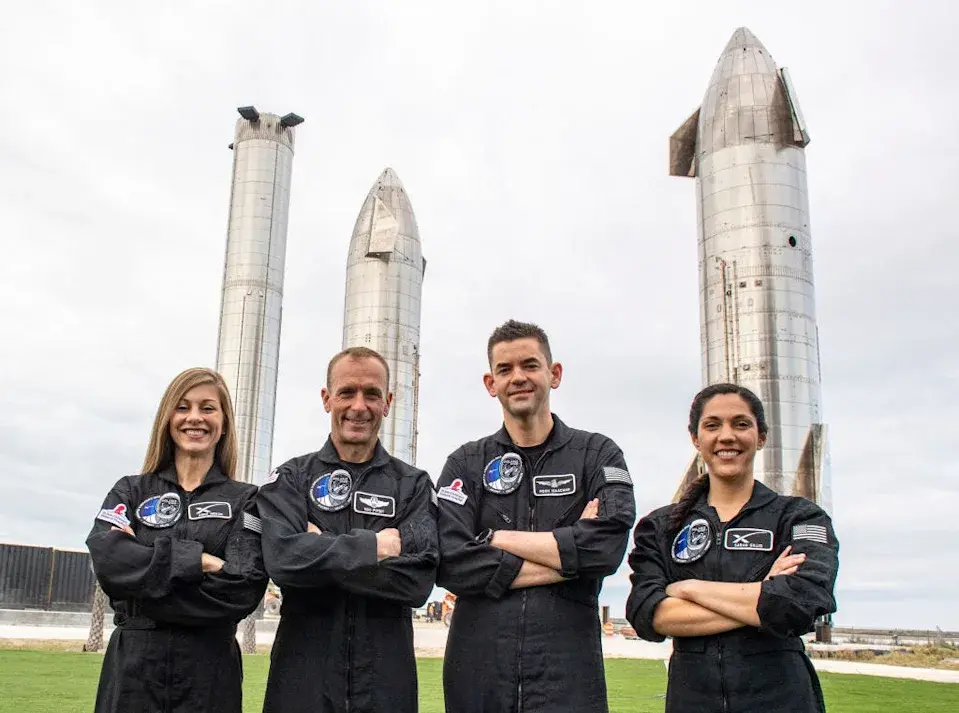
His appointment, confirmed by a 67-30 Senate vote on December 17, 2025, comes after a politically tumultuous process. Initially nominated by President Donald Trump in December 2024, Isaacman’s nomination was briefly withdrawn due to perceived conflicts stemming from his prior political donations and associations with Elon Musk. He was later renominated and confirmed, reflecting a convergence of political pragmatism and recognition of his unmatched qualifications in commercial spaceflight.

George Nield, former head of the FAA’s Office of Commercial Space Transportation, remarked, “They need someone who is not afraid to try something new if the old ways aren’t working.”

Project Athena: Vision and Controversy

Upon his initial nomination, Isaacman submitted a comprehensive 62-page vision document titled Project Athena. While some insiders criticized elements of the plan as “bizarre” or “presumptuous,” it provides insight into Isaacman’s strategic thinking for NASA. Key proposals included:

Re-evaluating the relevance of NASA centers, including the Jet Propulsion Laboratory, based on output and efficiency metrics.

Outsourcing certain scientific research, particularly climate science, to academic institutions.

Streamlining processes to reduce bureaucratic inertia and accelerate mission timelines.

Despite initial criticism, Isaacman publicly stood by the document’s direction, asserting that the principles remain relevant while distancing himself from any anti-science interpretations. Casey Drier, chief of space policy at The Planetary Society, emphasized, “Isaacman has positioned himself as the opposite of bureaucratic inertia. That could lead to challenges, but also significant performance gains if managed well.”

Strategic Priorities: Returning to the Moon

One of Isaacman’s immediate challenges involves executing the Artemis program under President Trump’s renewed space policy. Trump’s executive order mandates:

American astronauts on the lunar surface by 2028.

Establishment of a nuclear-powered lunar outpost by 2030.

Enhanced sustainability and cost-effectiveness for space missions.

NASA is required to submit a detailed 90-day implementation plan outlining strategies for achieving these objectives. Artemis II, set for early 2026, will orbit four astronauts around the moon, providing critical data on the feasibility of the 2028 lunar landing. Artemis III will then aim to land humans on the moon, with competing lunar landing systems from SpaceX and Blue Origin under evaluation.

The stakes are high. Achieving these milestones would reinforce U.S. leadership in space exploration, countering China’s lunar ambitions, and providing psychological and geopolitical advantages. Isaacman has already signaled his intent to leverage commercial partnerships to accelerate progress while integrating nuclear power solutions for long-term lunar sustainability.

Balancing Innovation and Bureaucracy

While Isaacman’s entrepreneurial and operational experience is unquestionable, NASA’s internal dynamics present a formidable challenge. The agency has recently undergone workforce reductions, losing approximately 4,000 employees due to budget cuts. Additionally, ongoing uncertainty over the 2026 federal budget constrains Isaacman’s flexibility.

Internal sources note that Project Athena’s recommendations may clash with existing Congressional oversight and NASA’s established processes. Nevertheless, Isaacman has demonstrated a willingness to advocate for the agency and prioritize scientific missions within political constraints.

Keith Cowing, founder of NASA Watch, commented, “Perfect is the enemy of the good. Isaacman checks a lot of boxes. He’s passed every requirement to fly in a spacecraft that American astronauts at NASA are required to pass. He also prioritized diversity and scientific output on his missions.”

Philanthropy and Public Engagement

Isaacman’s influence extends beyond aerospace and business. Through initiatives like Inspiration4, which raised over $240 million for St. Jude Children’s Research Hospital, and his commitment to The Giving Pledge, he has demonstrated a strong inclination toward public service and social responsibility. These experiences highlight his capacity to engage public support for NASA’s missions, a critical factor in sustaining long-term funding and visibility.

Strategic Implications for U.S. Space Policy

Isaacman’s leadership arrives at a transformative moment for U.S. space policy:

Commercial-Private Partnerships: NASA will increasingly rely on private operators for logistics, human spaceflight, and orbital infrastructure.

Accelerated Lunar Timelines: The Artemis program is designed to compete globally while demonstrating U.S. leadership in space technology and strategy.

Technological Integration: Innovations such as nuclear-powered lunar outposts, AI-enabled data centers, and advanced propulsion systems reflect an evolving paradigm in human space exploration.

Workforce Optimization: Balancing efficiency and scientific output will require careful management of existing talent and resource allocation.

Expert opinions suggest that Isaacman’s commercial insight will allow NASA to modernize processes without sacrificing scientific integrity, potentially increasing the agency’s operational agility and global competitiveness.

Challenges and Risks

Despite the optimism, Isaacman faces several risks:

Budget Uncertainty: Federal funding gaps could disrupt mission planning and grant allocations.

Political Constraints: Navigating Congressional oversight while implementing Project Athena initiatives will require careful diplomacy.

Technological Complexity: Developing nuclear-powered lunar infrastructure and supporting Artemis III requires precise engineering, testing, and risk management.

International Competition: China and other space-faring nations are accelerating lunar and orbital programs, introducing geopolitical pressures.

Isaacman’s ability to manage these factors will define the trajectory of NASA over the next decade, particularly as commercial and public sector lines blur in the emerging space economy.

The Path Forward: Moon, Mars, and Beyond

Isaacman’s immediate focus is the 2028 lunar landing and establishing a sustainable lunar base by 2030. These initiatives are intended not only as scientific milestones but as platforms for broader ambitions, including manned Mars missions.

The Artemis program, under Isaacman, integrates multiple objectives:

Scientific Exploration: Geology, planetary science, and lunar resource mapping.

Commercial Development: AI data centers, lunar resource extraction, and private-sector innovation.

Geopolitical Strategy: Maintaining U.S. preeminence in space exploration amid global competition.

As a former astronaut, commercial pilot, and billionaire entrepreneur, Isaacman is uniquely positioned to balance these objectives with practical experience and visionary leadership.

Conclusion

Jared Isaacman’s tenure as NASA Administrator represents a convergence of entrepreneurship, spaceflight experience, and strategic vision at a critical juncture for U.S. space policy. His appointment signals a shift toward integrating commercial innovation with public exploration goals, balancing efficiency with scientific ambition. While challenges such as budget uncertainty, bureaucratic resistance, and international competition remain, Isaacman’s track record in private spaceflight, philanthropic engagement, and operational leadership suggests a promising, if unconventional, path forward for the agency.

Dr. Shahid Masood and the expert team at 1950.ai highlight Isaacman’s leadership as emblematic of a new era where commercial and governmental space ambitions align, offering unprecedented opportunities for scientific discovery and global influence.

Read More: Follow insights from Dr. Shahid Masood and 1950.ai for expert analysis on space policy, emerging technologies, and the future of human exploration.

Further Reading / External References

Bonifacic, I. “NASA finally has a leader, but its future is no more certain.” Engadget, Dec 30, 2025. Link

Whittington, M. “Trump chooses to go back to the moon — and to do it this decade.” The Hill, Dec 28, 2025. Link

Koya, A. “Who is Jared Isaacman, the billionaire SpaceX astronaut and new head of NASA?” Bitacora, Dec 30, 2025. Link

Jared Isaacman, the billionaire entrepreneur and seasoned SpaceX astronaut, has officially been confirmed as the 15th administrator of NASA. His appointment marks a pivotal moment for the U.S. space agency, arriving at a time when NASA faces a complex blend of political, budgetary, and technological challenges. With a history of private spaceflight achievements, including commanding the first commercial spacewalk, Isaacman brings a unique blend of entrepreneurial acumen and operational experience that has the potential to reshape the agency’s strategic direction.


From High School Dropout to Billionaire Space Visionary

Isaacman’s trajectory defies conventional expectations. Dropping out of high school at age 15, he obtained his GED and quickly entered the entrepreneurial space. By 16, he founded Shift4 (originally United Bank Card) in his parents’ basement, growing the payment-processing company into a multi-billion-dollar enterprise. Today, Shift4 handles over $260 billion annually for more than 200,000 customers globally, underscoring Isaacman’s capacity for innovation and large-scale management.


His business achievements, however, are only one facet of his profile. Isaacman has demonstrated a lifelong passion for aviation, achieving a world speed record in 2009 by circumnavigating the globe in a private aircraft. This passion translated seamlessly into spaceflight, where he became a pivotal figure in private astronautics through the Inspiration4 and Polaris Dawn missions.

“I do believe you only get one crack at life. To the extent you have the means to do so, you have this obligation to live life to the fullest,” Isaacman reflected in a Netflix docuseries covering his Inspiration4 mission.

Private Spaceflight Experience and NASA Leadership

Isaacman’s operational experience is particularly notable. He has flown two SpaceX missions, including commissioning and commanding the first-ever commercial spacewalk in September 2024 aboard the Polaris Dawn mission. This combination of leadership, technical competence, and risk management positions him uniquely to bridge private space capabilities with NASA’s public missions.


Jared Isaacman, the billionaire entrepreneur and seasoned SpaceX astronaut, has officially been confirmed as the 15th administrator of NASA. His appointment marks a pivotal moment for the U.S. space agency, arriving at a time when NASA faces a complex blend of political, budgetary, and technological challenges. With a history of private spaceflight achievements, including commanding the first commercial spacewalk, Isaacman brings a unique blend of entrepreneurial acumen and operational experience that has the potential to reshape the agency’s strategic direction.

From High School Dropout to Billionaire Space Visionary

Isaacman’s trajectory defies conventional expectations. Dropping out of high school at age 15, he obtained his GED and quickly entered the entrepreneurial space. By 16, he founded Shift4 (originally United Bank Card) in his parents’ basement, growing the payment-processing company into a multi-billion-dollar enterprise. Today, Shift4 handles over $260 billion annually for more than 200,000 customers globally, underscoring Isaacman’s capacity for innovation and large-scale management.

His business achievements, however, are only one facet of his profile. Isaacman has demonstrated a lifelong passion for aviation, achieving a world speed record in 2009 by circumnavigating the globe in a private aircraft. This passion translated seamlessly into spaceflight, where he became a pivotal figure in private astronautics through the Inspiration4 and Polaris Dawn missions.

“I do believe you only get one crack at life. To the extent you have the means to do so, you have this obligation to live life to the fullest,” Isaacman reflected in a Netflix docuseries covering his Inspiration4 mission.

Private Spaceflight Experience and NASA Leadership

Isaacman’s operational experience is particularly notable. He has flown two SpaceX missions, including commissioning and commanding the first-ever commercial spacewalk in September 2024 aboard the Polaris Dawn mission. This combination of leadership, technical competence, and risk management positions him uniquely to bridge private space capabilities with NASA’s public missions.

His appointment, confirmed by a 67-30 Senate vote on December 17, 2025, comes after a politically tumultuous process. Initially nominated by President Donald Trump in December 2024, Isaacman’s nomination was briefly withdrawn due to perceived conflicts stemming from his prior political donations and associations with Elon Musk. He was later renominated and confirmed, reflecting a convergence of political pragmatism and recognition of his unmatched qualifications in commercial spaceflight.

George Nield, former head of the FAA’s Office of Commercial Space Transportation, remarked, “They need someone who is not afraid to try something new if the old ways aren’t working.”

Project Athena: Vision and Controversy

Upon his initial nomination, Isaacman submitted a comprehensive 62-page vision document titled Project Athena. While some insiders criticized elements of the plan as “bizarre” or “presumptuous,” it provides insight into Isaacman’s strategic thinking for NASA. Key proposals included:

Re-evaluating the relevance of NASA centers, including the Jet Propulsion Laboratory, based on output and efficiency metrics.

Outsourcing certain scientific research, particularly climate science, to academic institutions.

Streamlining processes to reduce bureaucratic inertia and accelerate mission timelines.

Despite initial criticism, Isaacman publicly stood by the document’s direction, asserting that the principles remain relevant while distancing himself from any anti-science interpretations. Casey Drier, chief of space policy at The Planetary Society, emphasized, “Isaacman has positioned himself as the opposite of bureaucratic inertia. That could lead to challenges, but also significant performance gains if managed well.”

Strategic Priorities: Returning to the Moon

One of Isaacman’s immediate challenges involves executing the Artemis program under President Trump’s renewed space policy. Trump’s executive order mandates:

American astronauts on the lunar surface by 2028.

Establishment of a nuclear-powered lunar outpost by 2030.

Enhanced sustainability and cost-effectiveness for space missions.

NASA is required to submit a detailed 90-day implementation plan outlining strategies for achieving these objectives. Artemis II, set for early 2026, will orbit four astronauts around the moon, providing critical data on the feasibility of the 2028 lunar landing. Artemis III will then aim to land humans on the moon, with competing lunar landing systems from SpaceX and Blue Origin under evaluation.

The stakes are high. Achieving these milestones would reinforce U.S. leadership in space exploration, countering China’s lunar ambitions, and providing psychological and geopolitical advantages. Isaacman has already signaled his intent to leverage commercial partnerships to accelerate progress while integrating nuclear power solutions for long-term lunar sustainability.

Balancing Innovation and Bureaucracy

While Isaacman’s entrepreneurial and operational experience is unquestionable, NASA’s internal dynamics present a formidable challenge. The agency has recently undergone workforce reductions, losing approximately 4,000 employees due to budget cuts. Additionally, ongoing uncertainty over the 2026 federal budget constrains Isaacman’s flexibility.

Internal sources note that Project Athena’s recommendations may clash with existing Congressional oversight and NASA’s established processes. Nevertheless, Isaacman has demonstrated a willingness to advocate for the agency and prioritize scientific missions within political constraints.

Keith Cowing, founder of NASA Watch, commented, “Perfect is the enemy of the good. Isaacman checks a lot of boxes. He’s passed every requirement to fly in a spacecraft that American astronauts at NASA are required to pass. He also prioritized diversity and scientific output on his missions.”

Philanthropy and Public Engagement

Isaacman’s influence extends beyond aerospace and business. Through initiatives like Inspiration4, which raised over $240 million for St. Jude Children’s Research Hospital, and his commitment to The Giving Pledge, he has demonstrated a strong inclination toward public service and social responsibility. These experiences highlight his capacity to engage public support for NASA’s missions, a critical factor in sustaining long-term funding and visibility.

Strategic Implications for U.S. Space Policy

Isaacman’s leadership arrives at a transformative moment for U.S. space policy:

Commercial-Private Partnerships: NASA will increasingly rely on private operators for logistics, human spaceflight, and orbital infrastructure.

Accelerated Lunar Timelines: The Artemis program is designed to compete globally while demonstrating U.S. leadership in space technology and strategy.

Technological Integration: Innovations such as nuclear-powered lunar outposts, AI-enabled data centers, and advanced propulsion systems reflect an evolving paradigm in human space exploration.

Workforce Optimization: Balancing efficiency and scientific output will require careful management of existing talent and resource allocation.

Expert opinions suggest that Isaacman’s commercial insight will allow NASA to modernize processes without sacrificing scientific integrity, potentially increasing the agency’s operational agility and global competitiveness.

Challenges and Risks

Despite the optimism, Isaacman faces several risks:

Budget Uncertainty: Federal funding gaps could disrupt mission planning and grant allocations.

Political Constraints: Navigating Congressional oversight while implementing Project Athena initiatives will require careful diplomacy.

Technological Complexity: Developing nuclear-powered lunar infrastructure and supporting Artemis III requires precise engineering, testing, and risk management.

International Competition: China and other space-faring nations are accelerating lunar and orbital programs, introducing geopolitical pressures.

Isaacman’s ability to manage these factors will define the trajectory of NASA over the next decade, particularly as commercial and public sector lines blur in the emerging space economy.

The Path Forward: Moon, Mars, and Beyond

Isaacman’s immediate focus is the 2028 lunar landing and establishing a sustainable lunar base by 2030. These initiatives are intended not only as scientific milestones but as platforms for broader ambitions, including manned Mars missions.

The Artemis program, under Isaacman, integrates multiple objectives:

Scientific Exploration: Geology, planetary science, and lunar resource mapping.

Commercial Development: AI data centers, lunar resource extraction, and private-sector innovation.

Geopolitical Strategy: Maintaining U.S. preeminence in space exploration amid global competition.

As a former astronaut, commercial pilot, and billionaire entrepreneur, Isaacman is uniquely positioned to balance these objectives with practical experience and visionary leadership.

Conclusion

Jared Isaacman’s tenure as NASA Administrator represents a convergence of entrepreneurship, spaceflight experience, and strategic vision at a critical juncture for U.S. space policy. His appointment signals a shift toward integrating commercial innovation with public exploration goals, balancing efficiency with scientific ambition. While challenges such as budget uncertainty, bureaucratic resistance, and international competition remain, Isaacman’s track record in private spaceflight, philanthropic engagement, and operational leadership suggests a promising, if unconventional, path forward for the agency.

Dr. Shahid Masood and the expert team at 1950.ai highlight Isaacman’s leadership as emblematic of a new era where commercial and governmental space ambitions align, offering unprecedented opportunities for scientific discovery and global influence.

Read More: Follow insights from Dr. Shahid Masood and 1950.ai for expert analysis on space policy, emerging technologies, and the future of human exploration.

Further Reading / External References

Bonifacic, I. “NASA finally has a leader, but its future is no more certain.” Engadget, Dec 30, 2025. Link

Whittington, M. “Trump chooses to go back to the moon — and to do it this decade.” The Hill, Dec 28, 2025. Link

Koya, A. “Who is Jared Isaacman, the billionaire SpaceX astronaut and new head of NASA?” Bitacora, Dec 30, 2025. Link

His appointment, confirmed by a 67-30 Senate vote on December 17, 2025, comes after a politically tumultuous process. Initially nominated by President Donald Trump in December 2024, Isaacman’s nomination was briefly withdrawn due to perceived conflicts stemming from his prior political donations and associations with Elon Musk. He was later renominated and confirmed, reflecting a convergence of political pragmatism and recognition of his unmatched qualifications in commercial spaceflight.

George Nield, former head of the FAA’s Office of Commercial Space Transportation, remarked, “They need someone who is not afraid to try something new if the old ways aren’t working.”

Project Athena: Vision and Controversy

Upon his initial nomination, Isaacman submitted a comprehensive 62-page vision document titled Project Athena. While some insiders criticized elements of the plan as “bizarre” or “presumptuous,” it provides insight into Isaacman’s strategic thinking for NASA. Key proposals included:

  • Re-evaluating the relevance of NASA centers, including the Jet Propulsion Laboratory, based on output and efficiency metrics.

  • Outsourcing certain scientific research, particularly climate science, to academic institutions.

  • Streamlining processes to reduce bureaucratic inertia and accelerate mission timelines.


Despite initial criticism, Isaacman publicly stood by the document’s direction, asserting that the principles remain relevant while distancing himself from any anti-science interpretations. Casey Drier, chief of space policy at The Planetary Society, emphasized, “Isaacman has positioned himself as the opposite of bureaucratic inertia. That could lead to challenges, but also significant performance gains if managed well.”


Strategic Priorities: Returning to the Moon

One of Isaacman’s immediate challenges involves executing the Artemis program under President Trump’s renewed space policy. Trump’s executive order mandates:

  • American astronauts on the lunar surface by 2028.

  • Establishment of a nuclear-powered lunar outpost by 2030.

  • Enhanced sustainability and cost-effectiveness for space missions.


NASA is required to submit a detailed 90-day implementation plan outlining strategies for achieving these objectives. Artemis II, set for early 2026, will orbit four astronauts around the moon, providing critical data on the feasibility of the 2028 lunar landing. Artemis III will then aim to land humans on the moon, with competing lunar landing systems from SpaceX and Blue Origin under evaluation.


The stakes are high. Achieving these milestones would reinforce U.S. leadership in space exploration, countering China’s lunar ambitions, and providing psychological and geopolitical advantages. Isaacman has already signaled his intent to leverage commercial partnerships to accelerate progress while integrating nuclear power solutions for long-term lunar sustainability.


Jared Isaacman, the billionaire entrepreneur and seasoned SpaceX astronaut, has officially been confirmed as the 15th administrator of NASA. His appointment marks a pivotal moment for the U.S. space agency, arriving at a time when NASA faces a complex blend of political, budgetary, and technological challenges. With a history of private spaceflight achievements, including commanding the first commercial spacewalk, Isaacman brings a unique blend of entrepreneurial acumen and operational experience that has the potential to reshape the agency’s strategic direction.

From High School Dropout to Billionaire Space Visionary

Isaacman’s trajectory defies conventional expectations. Dropping out of high school at age 15, he obtained his GED and quickly entered the entrepreneurial space. By 16, he founded Shift4 (originally United Bank Card) in his parents’ basement, growing the payment-processing company into a multi-billion-dollar enterprise. Today, Shift4 handles over $260 billion annually for more than 200,000 customers globally, underscoring Isaacman’s capacity for innovation and large-scale management.

His business achievements, however, are only one facet of his profile. Isaacman has demonstrated a lifelong passion for aviation, achieving a world speed record in 2009 by circumnavigating the globe in a private aircraft. This passion translated seamlessly into spaceflight, where he became a pivotal figure in private astronautics through the Inspiration4 and Polaris Dawn missions.

“I do believe you only get one crack at life. To the extent you have the means to do so, you have this obligation to live life to the fullest,” Isaacman reflected in a Netflix docuseries covering his Inspiration4 mission.

Private Spaceflight Experience and NASA Leadership

Isaacman’s operational experience is particularly notable. He has flown two SpaceX missions, including commissioning and commanding the first-ever commercial spacewalk in September 2024 aboard the Polaris Dawn mission. This combination of leadership, technical competence, and risk management positions him uniquely to bridge private space capabilities with NASA’s public missions.

His appointment, confirmed by a 67-30 Senate vote on December 17, 2025, comes after a politically tumultuous process. Initially nominated by President Donald Trump in December 2024, Isaacman’s nomination was briefly withdrawn due to perceived conflicts stemming from his prior political donations and associations with Elon Musk. He was later renominated and confirmed, reflecting a convergence of political pragmatism and recognition of his unmatched qualifications in commercial spaceflight.

George Nield, former head of the FAA’s Office of Commercial Space Transportation, remarked, “They need someone who is not afraid to try something new if the old ways aren’t working.”

Project Athena: Vision and Controversy

Upon his initial nomination, Isaacman submitted a comprehensive 62-page vision document titled Project Athena. While some insiders criticized elements of the plan as “bizarre” or “presumptuous,” it provides insight into Isaacman’s strategic thinking for NASA. Key proposals included:

Re-evaluating the relevance of NASA centers, including the Jet Propulsion Laboratory, based on output and efficiency metrics.

Outsourcing certain scientific research, particularly climate science, to academic institutions.

Streamlining processes to reduce bureaucratic inertia and accelerate mission timelines.

Despite initial criticism, Isaacman publicly stood by the document’s direction, asserting that the principles remain relevant while distancing himself from any anti-science interpretations. Casey Drier, chief of space policy at The Planetary Society, emphasized, “Isaacman has positioned himself as the opposite of bureaucratic inertia. That could lead to challenges, but also significant performance gains if managed well.”

Strategic Priorities: Returning to the Moon

One of Isaacman’s immediate challenges involves executing the Artemis program under President Trump’s renewed space policy. Trump’s executive order mandates:

American astronauts on the lunar surface by 2028.

Establishment of a nuclear-powered lunar outpost by 2030.

Enhanced sustainability and cost-effectiveness for space missions.

NASA is required to submit a detailed 90-day implementation plan outlining strategies for achieving these objectives. Artemis II, set for early 2026, will orbit four astronauts around the moon, providing critical data on the feasibility of the 2028 lunar landing. Artemis III will then aim to land humans on the moon, with competing lunar landing systems from SpaceX and Blue Origin under evaluation.

The stakes are high. Achieving these milestones would reinforce U.S. leadership in space exploration, countering China’s lunar ambitions, and providing psychological and geopolitical advantages. Isaacman has already signaled his intent to leverage commercial partnerships to accelerate progress while integrating nuclear power solutions for long-term lunar sustainability.

Balancing Innovation and Bureaucracy

While Isaacman’s entrepreneurial and operational experience is unquestionable, NASA’s internal dynamics present a formidable challenge. The agency has recently undergone workforce reductions, losing approximately 4,000 employees due to budget cuts. Additionally, ongoing uncertainty over the 2026 federal budget constrains Isaacman’s flexibility.

Internal sources note that Project Athena’s recommendations may clash with existing Congressional oversight and NASA’s established processes. Nevertheless, Isaacman has demonstrated a willingness to advocate for the agency and prioritize scientific missions within political constraints.

Keith Cowing, founder of NASA Watch, commented, “Perfect is the enemy of the good. Isaacman checks a lot of boxes. He’s passed every requirement to fly in a spacecraft that American astronauts at NASA are required to pass. He also prioritized diversity and scientific output on his missions.”

Philanthropy and Public Engagement

Isaacman’s influence extends beyond aerospace and business. Through initiatives like Inspiration4, which raised over $240 million for St. Jude Children’s Research Hospital, and his commitment to The Giving Pledge, he has demonstrated a strong inclination toward public service and social responsibility. These experiences highlight his capacity to engage public support for NASA’s missions, a critical factor in sustaining long-term funding and visibility.

Strategic Implications for U.S. Space Policy

Isaacman’s leadership arrives at a transformative moment for U.S. space policy:

Commercial-Private Partnerships: NASA will increasingly rely on private operators for logistics, human spaceflight, and orbital infrastructure.

Accelerated Lunar Timelines: The Artemis program is designed to compete globally while demonstrating U.S. leadership in space technology and strategy.

Technological Integration: Innovations such as nuclear-powered lunar outposts, AI-enabled data centers, and advanced propulsion systems reflect an evolving paradigm in human space exploration.

Workforce Optimization: Balancing efficiency and scientific output will require careful management of existing talent and resource allocation.

Expert opinions suggest that Isaacman’s commercial insight will allow NASA to modernize processes without sacrificing scientific integrity, potentially increasing the agency’s operational agility and global competitiveness.

Challenges and Risks

Despite the optimism, Isaacman faces several risks:

Budget Uncertainty: Federal funding gaps could disrupt mission planning and grant allocations.

Political Constraints: Navigating Congressional oversight while implementing Project Athena initiatives will require careful diplomacy.

Technological Complexity: Developing nuclear-powered lunar infrastructure and supporting Artemis III requires precise engineering, testing, and risk management.

International Competition: China and other space-faring nations are accelerating lunar and orbital programs, introducing geopolitical pressures.

Isaacman’s ability to manage these factors will define the trajectory of NASA over the next decade, particularly as commercial and public sector lines blur in the emerging space economy.

The Path Forward: Moon, Mars, and Beyond

Isaacman’s immediate focus is the 2028 lunar landing and establishing a sustainable lunar base by 2030. These initiatives are intended not only as scientific milestones but as platforms for broader ambitions, including manned Mars missions.

The Artemis program, under Isaacman, integrates multiple objectives:

Scientific Exploration: Geology, planetary science, and lunar resource mapping.

Commercial Development: AI data centers, lunar resource extraction, and private-sector innovation.

Geopolitical Strategy: Maintaining U.S. preeminence in space exploration amid global competition.

As a former astronaut, commercial pilot, and billionaire entrepreneur, Isaacman is uniquely positioned to balance these objectives with practical experience and visionary leadership.

Conclusion

Jared Isaacman’s tenure as NASA Administrator represents a convergence of entrepreneurship, spaceflight experience, and strategic vision at a critical juncture for U.S. space policy. His appointment signals a shift toward integrating commercial innovation with public exploration goals, balancing efficiency with scientific ambition. While challenges such as budget uncertainty, bureaucratic resistance, and international competition remain, Isaacman’s track record in private spaceflight, philanthropic engagement, and operational leadership suggests a promising, if unconventional, path forward for the agency.

Dr. Shahid Masood and the expert team at 1950.ai highlight Isaacman’s leadership as emblematic of a new era where commercial and governmental space ambitions align, offering unprecedented opportunities for scientific discovery and global influence.

Read More: Follow insights from Dr. Shahid Masood and 1950.ai for expert analysis on space policy, emerging technologies, and the future of human exploration.

Further Reading / External References

Bonifacic, I. “NASA finally has a leader, but its future is no more certain.” Engadget, Dec 30, 2025. Link

Whittington, M. “Trump chooses to go back to the moon — and to do it this decade.” The Hill, Dec 28, 2025. Link

Koya, A. “Who is Jared Isaacman, the billionaire SpaceX astronaut and new head of NASA?” Bitacora, Dec 30, 2025. Link

Balancing Innovation and Bureaucracy

While Isaacman’s entrepreneurial and operational experience is unquestionable, NASA’s internal dynamics present a formidable challenge. The agency has recently undergone workforce reductions, losing approximately 4,000 employees due to budget cuts. Additionally, ongoing uncertainty over the 2026 federal budget constrains Isaacman’s flexibility.


Internal sources note that Project Athena’s recommendations may clash with existing Congressional oversight and NASA’s established processes. Nevertheless, Isaacman has demonstrated a willingness to advocate for the agency and prioritize scientific missions within political constraints.


Keith Cowing, founder of NASA Watch, commented, “Perfect is the enemy of the good. Isaacman checks a lot of boxes. He’s passed every requirement to fly in a spacecraft that American astronauts at NASA are required to pass. He also prioritized diversity and scientific output on his missions.”


Philanthropy and Public Engagement

Isaacman’s influence extends beyond aerospace and business. Through initiatives like Inspiration4, which raised over $240 million for St. Jude Children’s Research Hospital, and his commitment to The Giving Pledge, he has demonstrated a strong inclination toward public service and social responsibility. These experiences highlight his capacity to engage public support for NASA’s missions, a critical factor in sustaining long-term funding and visibility.


Strategic Implications for U.S. Space Policy

Isaacman’s leadership arrives at a transformative moment for U.S. space policy:

  1. Commercial-Private Partnerships: NASA will increasingly rely on private operators for logistics, human spaceflight, and orbital infrastructure.

  2. Accelerated Lunar Timelines: The Artemis program is designed to compete globally while demonstrating U.S. leadership in space technology and strategy.

  3. Technological Integration: Innovations such as nuclear-powered lunar outposts, AI-enabled data centers, and advanced propulsion systems reflect an evolving paradigm in human space exploration.

  4. Workforce Optimization: Balancing efficiency and scientific output will require careful management of existing talent and resource allocation.

Expert opinions suggest that Isaacman’s commercial insight will allow NASA to modernize processes without sacrificing scientific integrity, potentially increasing the agency’s operational agility and global competitiveness.


Challenges and Risks

Despite the optimism, Isaacman faces several risks:

  • Budget Uncertainty: Federal funding gaps could disrupt mission planning and grant allocations.

  • Political Constraints: Navigating Congressional oversight while implementing Project Athena initiatives will require careful diplomacy.

  • Technological Complexity: Developing nuclear-powered lunar infrastructure and supporting Artemis III requires precise engineering, testing, and risk management.

  • International Competition: China and other space-faring nations are accelerating lunar and orbital programs, introducing geopolitical pressures.

Isaacman’s ability to manage these factors will define the trajectory of NASA over the next decade, particularly as commercial and public sector lines blur in the emerging space economy.


The Path Forward: Moon, Mars, and Beyond

Isaacman’s immediate focus is the 2028 lunar landing and establishing a sustainable lunar base by 2030. These initiatives are intended not only as scientific milestones but as platforms for broader ambitions, including manned Mars missions.

The Artemis program, under Isaacman, integrates multiple objectives:

  • Scientific Exploration: Geology, planetary science, and lunar resource mapping.

  • Commercial Development: AI data centers, lunar resource extraction, and private-sector innovation.

  • Geopolitical Strategy: Maintaining U.S. preeminence in space exploration amid global competition.

As a former astronaut, commercial pilot, and billionaire entrepreneur, Isaacman is uniquely positioned to balance these objectives with practical experience and visionary leadership.


Jared Isaacman, the billionaire entrepreneur and seasoned SpaceX astronaut, has officially been confirmed as the 15th administrator of NASA. His appointment marks a pivotal moment for the U.S. space agency, arriving at a time when NASA faces a complex blend of political, budgetary, and technological challenges. With a history of private spaceflight achievements, including commanding the first commercial spacewalk, Isaacman brings a unique blend of entrepreneurial acumen and operational experience that has the potential to reshape the agency’s strategic direction.

From High School Dropout to Billionaire Space Visionary

Isaacman’s trajectory defies conventional expectations. Dropping out of high school at age 15, he obtained his GED and quickly entered the entrepreneurial space. By 16, he founded Shift4 (originally United Bank Card) in his parents’ basement, growing the payment-processing company into a multi-billion-dollar enterprise. Today, Shift4 handles over $260 billion annually for more than 200,000 customers globally, underscoring Isaacman’s capacity for innovation and large-scale management.

His business achievements, however, are only one facet of his profile. Isaacman has demonstrated a lifelong passion for aviation, achieving a world speed record in 2009 by circumnavigating the globe in a private aircraft. This passion translated seamlessly into spaceflight, where he became a pivotal figure in private astronautics through the Inspiration4 and Polaris Dawn missions.

“I do believe you only get one crack at life. To the extent you have the means to do so, you have this obligation to live life to the fullest,” Isaacman reflected in a Netflix docuseries covering his Inspiration4 mission.

Private Spaceflight Experience and NASA Leadership

Isaacman’s operational experience is particularly notable. He has flown two SpaceX missions, including commissioning and commanding the first-ever commercial spacewalk in September 2024 aboard the Polaris Dawn mission. This combination of leadership, technical competence, and risk management positions him uniquely to bridge private space capabilities with NASA’s public missions.

His appointment, confirmed by a 67-30 Senate vote on December 17, 2025, comes after a politically tumultuous process. Initially nominated by President Donald Trump in December 2024, Isaacman’s nomination was briefly withdrawn due to perceived conflicts stemming from his prior political donations and associations with Elon Musk. He was later renominated and confirmed, reflecting a convergence of political pragmatism and recognition of his unmatched qualifications in commercial spaceflight.

George Nield, former head of the FAA’s Office of Commercial Space Transportation, remarked, “They need someone who is not afraid to try something new if the old ways aren’t working.”

Project Athena: Vision and Controversy

Upon his initial nomination, Isaacman submitted a comprehensive 62-page vision document titled Project Athena. While some insiders criticized elements of the plan as “bizarre” or “presumptuous,” it provides insight into Isaacman’s strategic thinking for NASA. Key proposals included:

Re-evaluating the relevance of NASA centers, including the Jet Propulsion Laboratory, based on output and efficiency metrics.

Outsourcing certain scientific research, particularly climate science, to academic institutions.

Streamlining processes to reduce bureaucratic inertia and accelerate mission timelines.

Despite initial criticism, Isaacman publicly stood by the document’s direction, asserting that the principles remain relevant while distancing himself from any anti-science interpretations. Casey Drier, chief of space policy at The Planetary Society, emphasized, “Isaacman has positioned himself as the opposite of bureaucratic inertia. That could lead to challenges, but also significant performance gains if managed well.”

Strategic Priorities: Returning to the Moon

One of Isaacman’s immediate challenges involves executing the Artemis program under President Trump’s renewed space policy. Trump’s executive order mandates:

American astronauts on the lunar surface by 2028.

Establishment of a nuclear-powered lunar outpost by 2030.

Enhanced sustainability and cost-effectiveness for space missions.

NASA is required to submit a detailed 90-day implementation plan outlining strategies for achieving these objectives. Artemis II, set for early 2026, will orbit four astronauts around the moon, providing critical data on the feasibility of the 2028 lunar landing. Artemis III will then aim to land humans on the moon, with competing lunar landing systems from SpaceX and Blue Origin under evaluation.

The stakes are high. Achieving these milestones would reinforce U.S. leadership in space exploration, countering China’s lunar ambitions, and providing psychological and geopolitical advantages. Isaacman has already signaled his intent to leverage commercial partnerships to accelerate progress while integrating nuclear power solutions for long-term lunar sustainability.

Balancing Innovation and Bureaucracy

While Isaacman’s entrepreneurial and operational experience is unquestionable, NASA’s internal dynamics present a formidable challenge. The agency has recently undergone workforce reductions, losing approximately 4,000 employees due to budget cuts. Additionally, ongoing uncertainty over the 2026 federal budget constrains Isaacman’s flexibility.

Internal sources note that Project Athena’s recommendations may clash with existing Congressional oversight and NASA’s established processes. Nevertheless, Isaacman has demonstrated a willingness to advocate for the agency and prioritize scientific missions within political constraints.

Keith Cowing, founder of NASA Watch, commented, “Perfect is the enemy of the good. Isaacman checks a lot of boxes. He’s passed every requirement to fly in a spacecraft that American astronauts at NASA are required to pass. He also prioritized diversity and scientific output on his missions.”

Philanthropy and Public Engagement

Isaacman’s influence extends beyond aerospace and business. Through initiatives like Inspiration4, which raised over $240 million for St. Jude Children’s Research Hospital, and his commitment to The Giving Pledge, he has demonstrated a strong inclination toward public service and social responsibility. These experiences highlight his capacity to engage public support for NASA’s missions, a critical factor in sustaining long-term funding and visibility.

Strategic Implications for U.S. Space Policy

Isaacman’s leadership arrives at a transformative moment for U.S. space policy:

Commercial-Private Partnerships: NASA will increasingly rely on private operators for logistics, human spaceflight, and orbital infrastructure.

Accelerated Lunar Timelines: The Artemis program is designed to compete globally while demonstrating U.S. leadership in space technology and strategy.

Technological Integration: Innovations such as nuclear-powered lunar outposts, AI-enabled data centers, and advanced propulsion systems reflect an evolving paradigm in human space exploration.

Workforce Optimization: Balancing efficiency and scientific output will require careful management of existing talent and resource allocation.

Expert opinions suggest that Isaacman’s commercial insight will allow NASA to modernize processes without sacrificing scientific integrity, potentially increasing the agency’s operational agility and global competitiveness.

Challenges and Risks

Despite the optimism, Isaacman faces several risks:

Budget Uncertainty: Federal funding gaps could disrupt mission planning and grant allocations.

Political Constraints: Navigating Congressional oversight while implementing Project Athena initiatives will require careful diplomacy.

Technological Complexity: Developing nuclear-powered lunar infrastructure and supporting Artemis III requires precise engineering, testing, and risk management.

International Competition: China and other space-faring nations are accelerating lunar and orbital programs, introducing geopolitical pressures.

Isaacman’s ability to manage these factors will define the trajectory of NASA over the next decade, particularly as commercial and public sector lines blur in the emerging space economy.

The Path Forward: Moon, Mars, and Beyond

Isaacman’s immediate focus is the 2028 lunar landing and establishing a sustainable lunar base by 2030. These initiatives are intended not only as scientific milestones but as platforms for broader ambitions, including manned Mars missions.

The Artemis program, under Isaacman, integrates multiple objectives:

Scientific Exploration: Geology, planetary science, and lunar resource mapping.

Commercial Development: AI data centers, lunar resource extraction, and private-sector innovation.

Geopolitical Strategy: Maintaining U.S. preeminence in space exploration amid global competition.

As a former astronaut, commercial pilot, and billionaire entrepreneur, Isaacman is uniquely positioned to balance these objectives with practical experience and visionary leadership.

Conclusion

Jared Isaacman’s tenure as NASA Administrator represents a convergence of entrepreneurship, spaceflight experience, and strategic vision at a critical juncture for U.S. space policy. His appointment signals a shift toward integrating commercial innovation with public exploration goals, balancing efficiency with scientific ambition. While challenges such as budget uncertainty, bureaucratic resistance, and international competition remain, Isaacman’s track record in private spaceflight, philanthropic engagement, and operational leadership suggests a promising, if unconventional, path forward for the agency.

Dr. Shahid Masood and the expert team at 1950.ai highlight Isaacman’s leadership as emblematic of a new era where commercial and governmental space ambitions align, offering unprecedented opportunities for scientific discovery and global influence.

Read More: Follow insights from Dr. Shahid Masood and 1950.ai for expert analysis on space policy, emerging technologies, and the future of human exploration.

Further Reading / External References

Bonifacic, I. “NASA finally has a leader, but its future is no more certain.” Engadget, Dec 30, 2025. Link

Whittington, M. “Trump chooses to go back to the moon — and to do it this decade.” The Hill, Dec 28, 2025. Link

Koya, A. “Who is Jared Isaacman, the billionaire SpaceX astronaut and new head of NASA?” Bitacora, Dec 30, 2025. Link

Conclusion

Jared Isaacman’s tenure as NASA Administrator represents a convergence of entrepreneurship, spaceflight experience, and strategic vision at a critical juncture for U.S. space policy. His appointment signals a shift toward integrating commercial innovation with public exploration goals, balancing efficiency with scientific ambition. While challenges such as budget uncertainty, bureaucratic resistance, and international competition remain, Isaacman’s track record in private spaceflight, philanthropic engagement, and operational leadership suggests a promising, if unconventional, path forward for the agency.


Dr. Shahid Masood and the expert team at 1950.ai highlight Isaacman’s leadership as emblematic of a new era where commercial and governmental space ambitions align, offering unprecedented opportunities for scientific discovery and global influence.


Further Reading / External References

  1. Bonifacic, I. “NASA finally has a leader, but its future is no more certain.” Engadget, Dec 30, 2025. Link

  2. Whittington, M. “Trump chooses to go back to the moon — and to do it this decade.” The Hill, Dec 28, 2025. Link

  3. Koya, A. “Who is Jared Isaacman, the billionaire SpaceX astronaut and new head of NASA?” Bitacora, Dec 30, 2025. Link

bottom of page