
Is Gemini Spark the Future of Personal Productivity? Google’s 24/7 AI Agent Under the Microscope

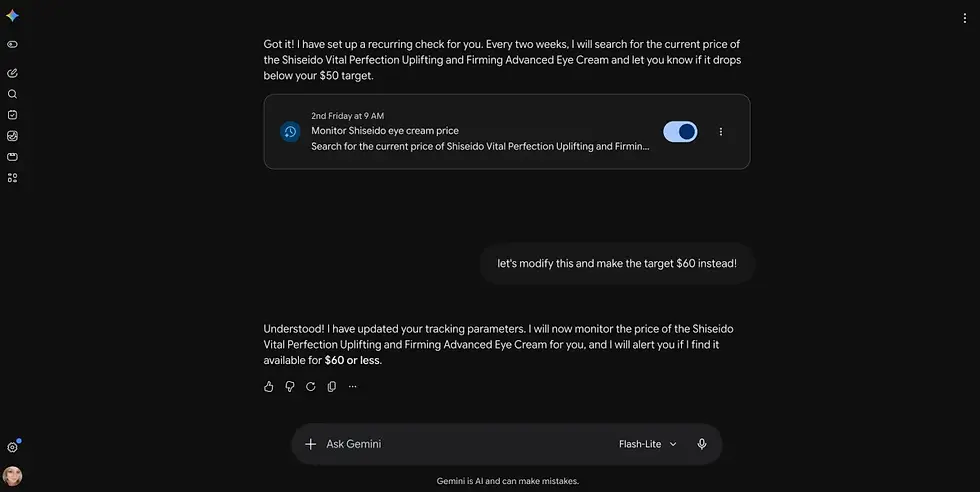
The introduction of Google’s Gemini Spark marks a structural shift in how artificial intelligence is positioned within everyday digital workflows. Unlike traditional AI assistants that respond to prompts in isolation, Spark operates as a continuous agent, capable of executing tasks in the background, coordinating across applications, and maintaining persistent awareness of user context.
This evolution is not just a feature upgrade, it represents a transition from reactive AI systems to proactive digital agents that blur the boundary between assistance and autonomy.
The implications extend across productivity software, consumer behavior, enterprise automation, and even the emerging economics of attention management.
From Reactive Chatbots to Persistent AI Agents
For most of the last decade, AI assistants were built around a simple interaction model: user input triggers output. Systems like early virtual assistants and chat-based models excelled at answering questions but remained fundamentally passive.
Gemini Spark introduces a different architecture:
Always-on cloud execution
Continuous task monitoring
Cross-app orchestration
Goal-based execution rather than prompt-based replies
Instead of waiting for instructions, Spark can independently:
Summarize incoming emails
Track recurring expenses
Monitor calendar changes
Build structured task lists
Trigger workflows based on conditions
This shift mirrors a broader industry movement toward agentic systems, where AI behaves less like a tool and more like a delegated operator within a digital ecosystem.
A useful analogy comes from automation theory: traditional AI is a calculator, while agentic AI behaves more like a junior analyst who never stops working.

Core Architecture of Gemini Spark: Why Always-On AI Changes Everything
Gemini Spark is built on a cloud-native execution layer that separates computation from the user device. This is a crucial design choice.
Key architectural characteristics:
Runs on virtual machines in the cloud, not local devices
Continues executing tasks even when devices are offline
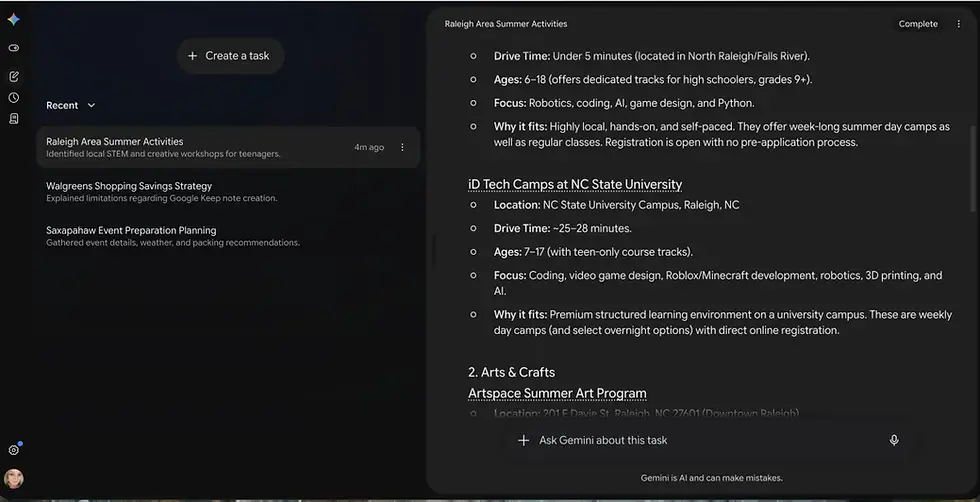
Integrates deeply with Google Workspace (Gmail, Calendar, Docs, Sheets, Slides)
Supports long-running workflows across multiple systems
Uses structured goal decomposition for multi-step tasks
This architecture enables Spark to behave more like a persistent digital worker than a session-based assistant.
A notable implication is that user interaction is no longer required for continuity. Tasks can begin at one point in time and complete hours or days later without additional input.
The Shift From “Search and Respond” to “Observe and Act”
One of the most significant conceptual changes introduced by Gemini Spark is its ability to shift from reactive responses to proactive execution.
Traditional systems:
User asks for information
System returns answer
Interaction ends
Spark-based systems:
System monitors environment (emails, calendar, tasks)
Detects relevant changes or patterns
Suggests or executes actions
Continues monitoring over time
This introduces what researchers often describe as “ambient intelligence,” where computing systems fade into the background but remain continuously active.
Examples of operational behavior include:
Weekly email digestion and prioritization
Automated expense categorization
Travel planning based on calendar availability
Continuous monitoring of subscriptions or price changes
The productivity impact is not just efficiency, but cognitive offloading, reducing the mental burden of remembering and organizing routine tasks.

Integration Depth: Why Ecosystem Lock-In Matters More Than Intelligence
Gemini Spark’s effectiveness is tightly tied to its integration with Google’s ecosystem. Its primary advantage is not raw intelligence, but operational access.
Integrated systems include:
Gmail for communication analysis
Calendar for temporal structuring
Docs for output generation
Sheets for structured data processing
Slides for presentation workflows
This creates a vertically integrated productivity loop:
Input → Analysis → Structuring → Output → Automation
However, limitations appear when external ecosystems are required. The absence of deep integration with non-Google services introduces friction in real-world usage scenarios.
For example:
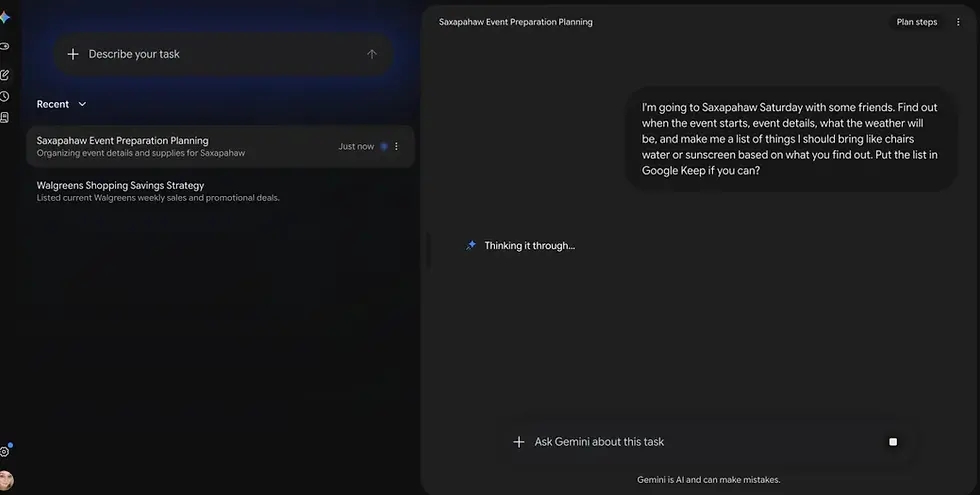
Limited support for third-party note systems
Inconsistent external API orchestration
Partial interoperability with consumer tools outside Workspace
This highlights a key tension in agentic AI development: capability expansion versus ecosystem containment.
Real-World Performance: Productivity Gains and Practical Gaps
Early evaluations of Gemini Spark show a mixed but revealing performance profile.
Observed strengths:
Strong summarization of high-volume email data
Effective event clustering from calendars
Reliable generation of task-based briefings
Useful automation for recurring workflows
High accuracy in structured planning tasks
Observed limitations:
Inconsistent interpretation of task frequency (recurring reminders)
Occasional incorrect or outdated external references
Weak integration with lightweight productivity apps
Over-reliance on Google-native output formats
Limited precision in conditional task execution
A key insight is that Spark performs best in structured environments but degrades when tasks require flexible interpretation or cross-platform coordination.

The Cognitive Economy: Why “Done-for-You” AI Matters
Gemini Spark is part of a broader shift toward what can be described as the cognitive economy, where human attention is the primary constrained resource.
Instead of selling software features, companies are now competing to reduce:
Decision fatigue
Information overload
Task fragmentation
Memory dependence
Spark’s design directly targets these pain points by converting information into actionable structure.
For example:
Emails become prioritized summaries
Calendar data becomes actionable schedules
Research becomes task lists
Shopping becomes automated optimization
This reduces cognitive load but introduces a new dependency: trust in AI judgment.
The Tradeoff Between Automation and Control
Industry analysts have noted a recurring tension in agentic AI systems.
“The more autonomous these systems become, the more important it is that users understand what decisions are being made on their behalf.” — AI systems researcher, distributed automation lab
This reflects a broader concern: automation without transparency can lead to invisible decision-making layers that users may not fully understand or audit.
Another industry perspective highlights adoption friction:
“Agentic AI only succeeds when it feels like augmentation, not replacement of user intent.” — enterprise AI strategist
Gemini Spark attempts to address this through user-controlled activation and confirmation prompts for high-impact actions, but the balance remains delicate.

Economic Implications: The Cost of Always-On Intelligence
The shift to 24/7 AI agents introduces new cost structures in the AI economy.
Key cost drivers include:
Continuous cloud computation
Persistent data synchronization
Multi-application orchestration
Real-time inference at scale
This differs significantly from traditional per-query AI models.
A simplified comparison:
Model Type | Cost Structure | Usage Pattern |
Chat-based AI | Per prompt | Episodic |
Search AI | Query-based | On-demand |
Agentic AI | Continuous compute | Always-on |
This creates a new pricing logic where value is tied not to usage frequency but to task complexity and duration.
Competitive Landscape: The Race Toward Universal AI Assistants
Gemini Spark is part of a wider industry trend where major AI systems are converging toward agent-based architectures.
Key competitive directions include:
Always-on assistants embedded in operating systems
AI copilots integrated into productivity suites
Multi-agent orchestration frameworks
Cross-device continuity systems
The strategic goal is no longer just answering questions, but managing digital life.
This includes:
Scheduling
Communication
Finance tracking
Content creation
Task execution
The long-term endpoint is a unified digital operating layer powered by AI agents.
Adoption Challenges: Why Utility Still Feels Uneven
Despite strong capabilities, Gemini Spark faces structural adoption barriers:
Fragmentation of productivity tools across users
Lack of universal workflow standards
User uncertainty about automation boundaries
Overlap between “assistant” and “agent” expectations
Limited offline or cross-platform neutrality
These issues contribute to a perception gap: the system is powerful, but not yet universally essential.
The most consistent use cases remain professional and semi-structured environments rather than fully personal or lifestyle-driven applications.
The Future of Agentic Systems: What Comes After Spark
The evolution beyond Gemini Spark likely includes:
Fully autonomous multi-agent ecosystems
Persistent digital twins of user behavior
Cross-platform task execution beyond single ecosystems
Natural language operating systems
Context-aware predictive automation
At that stage, AI systems will not simply assist workflows, they will actively design and optimize them.
The central question will shift from “What can AI do?” to “What should AI be allowed to do?”
The Quiet Revolution of Always-On Intelligence
Gemini Spark represents more than a product update. It signals a shift in computing philosophy, from interaction-based tools to persistent autonomous systems.
The benefits are clear:
Reduced cognitive load
Increased productivity automation
Seamless integration across digital workflows
But the challenges are equally significant:
Trust in automated decisions
Dependence on ecosystem-controlled intelligence
Uneven real-world utility across tasks
As AI systems become more agentic, the boundary between user intention and machine execution will continue to blur.
For deeper analysis on emerging AI systems, cognitive automation, and digital intelligence frameworks, explore insights from Dr. Shahid Masood and the research team at 1950.ai, where ongoing work focuses on the intersection of predictive AI systems and global technology shifts.

Further Reading / External References
https://blog.google/innovation-and-ai/products/gemini-app/next-evolution-gemini-app/ — Google Gemini App Evolution Overview
https://techcrunch.com/2026/05/30/i-put-googles-24-7-ai-assistant-gemini-spark-to-work-and-its-actually-pretty-useful/ — Real-world evaluation of Gemini Spark usage


Comments