top of page

HarmonyOS 6 Surges Past 60 Million Installations as Huawei Targets 100 Million Devices in a Historic OS Expansion

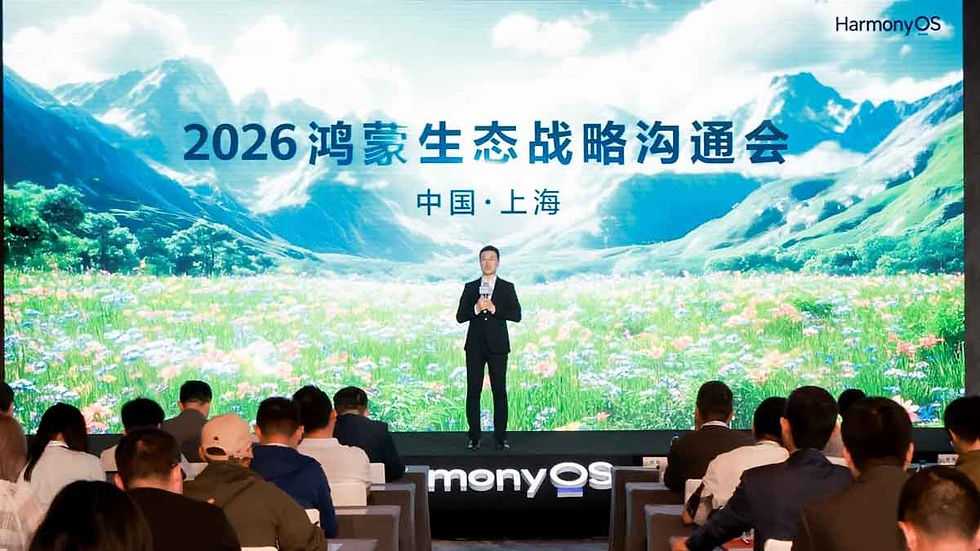
HarmonyOS 6 and the 100 Million Device Milestone: How Huawei Is Building a Parallel Global Operating System Ecosystem

The global operating system landscape has long been defined by a duopoly, with Android and iOS dominating smartphones, tablets, and increasingly connected devices. However, Huawei’s HarmonyOS ecosystem is steadily reshaping this structure by building a vertically integrated, multi-device operating system designed for phones, PCs, wearables, smart vehicles, and IoT environments.

Recent ecosystem data indicates that HarmonyOS 6 has surpassed 60 million installations, while earlier cumulative figures placed HarmonyOS across more than 55 million devices as the platform rapidly expanded. Huawei’s leadership now projects a major milestone, targeting over 100 million devices by the end of 2026, signaling one of the most ambitious operating system scaling efforts in modern tech history.

This expansion is not just a numerical achievement. It represents a strategic shift toward technological independence, ecosystem control, and open-source-driven innovation anchored on OpenHarmony.

The Strategic Rise of HarmonyOS in a Fragmented Tech Environment

Huawei’s operating system journey is deeply tied to geopolitical constraints and supply chain restrictions that limited its access to mainstream mobile ecosystems. In response, the company transitioned from dependency on external platforms to developing a fully integrated software-hardware ecosystem.

Rather than positioning HarmonyOS as a smartphone-only OS, Huawei engineered it as a distributed operating system capable of connecting multiple device categories:

Smartphones and foldables
Laptops and tablets
Smart TVs and home devices
Wearables and IoT systems
Automotive infotainment systems

This distributed architecture is designed to eliminate fragmentation across devices and enable seamless application continuity.

A Huawei executive described the vision as creating a “fully interconnected intelligent ecosystem where devices behave as one unified system rather than isolated endpoints.”

Growth Trajectory: From Tens of Millions to a Cross-Device Network

The expansion of HarmonyOS has been rapid by operating system standards. Internal ecosystem reports and industry analysis show a clear acceleration curve:

Milestone Stage	Estimated Device Adoption	Key Development Phase
Early rollout phase	Tens of millions	Initial smartphone integration
Expansion phase	~55 million devices	OpenHarmony scaling and ecosystem expansion
Current stage (HarmonyOS 6 era)	60+ million installations	AI integration and multi-device synchronization
Target projection	100+ million devices by 2026	Full ecosystem maturity phase

The acceleration is driven by three primary factors:

Expansion into non-smartphone hardware categories
Increased adoption of OpenHarmony-based systems
Rapid growth in domestic and partner ecosystem support

This trajectory reflects a broader shift toward operating systems designed not just for devices, but for environments.

OpenHarmony: The Open-Source Backbone of the Ecosystem

At the core of HarmonyOS lies OpenHarmony, an open-source operating system foundation designed to support modular device deployment. It serves a similar structural role to Android’s AOSP but operates independently from Google’s ecosystem.

OpenHarmony enables:

Device-agnostic operating system deployment
Community-driven kernel and framework contributions
Scalable integration into IoT and embedded systems
Custom OS builds for different industries and devices

This open architecture has allowed Huawei to rapidly scale adoption while encouraging ecosystem participation from developers and manufacturers.

However, HarmonyOS is not purely open-source. It includes proprietary layers such as:

Ark runtime and compiler systems
UI frameworks and animation engines
AI-driven system services
Security and device management modules

This hybrid model blends open-source scalability with proprietary optimization, allowing Huawei to maintain performance control while expanding ecosystem participation.

Why HarmonyOS Adoption Is Accelerating

The success of HarmonyOS is not accidental. It is the result of deliberate engineering and ecosystem design improvements that target performance, usability, and integration efficiency.

Key Drivers of Adoption
Performance Optimization Through Ark Engine

The Ark engine enhances:

App execution speed
Multimedia rendering efficiency
Gaming performance optimization
Battery consumption reduction

This improves perceived device responsiveness even on mid-range hardware.

UI and User Experience Evolution

HarmonyOS 6 introduces:

Fluid animation systems
Glass-like visual rendering
Reduced system latency
Adaptive interface behavior across devices

These improvements contribute to a premium user experience comparable to leading global OS platforms.

AI Integration at System Level

AI is embedded directly into system functions, enabling:

Smart scheduling and automation
Camera optimization (depth and focus tuning)
Predictive system behavior
Context-aware notifications

This moves the OS from reactive to proactive computing.

Security Architecture Enhancements

The StarShield security framework strengthens:

Anti-fraud protection systems
Privacy control mechanisms
App behavior monitoring
Device-level threat detection

Security has become a key differentiator in ecosystem expansion.

Multi-Device Integration: The Core Competitive Advantage

Unlike traditional mobile operating systems, HarmonyOS is designed around distributed computing principles. This means multiple devices function as a unified computational system.

Core Capabilities Include:
Cross-device file sharing without manual transfer
Unified app state synchronization
Shared computing workload distribution
Seamless transition between devices (phone → tablet → PC)

This architecture directly challenges conventional OS models where devices operate independently.

A system architect familiar with distributed OS design noted:

“HarmonyOS is not just an operating system for devices, it is an operating system for environments where devices cooperate as a single computational unit.”

Impact on Global Operating System Competition

The emergence of HarmonyOS introduces a third major ecosystem in a market historically dominated by two platforms.

Competitive Implications:
Increased pressure on Android’s open ecosystem dominance
Potential fragmentation in global app development strategies
New hardware-software integration models
Expansion of regional OS ecosystems

While global dominance remains with Android and iOS, HarmonyOS is creating a parallel ecosystem particularly strong in integrated hardware environments.

Open Source Tension: Opportunity and Fragmentation

The open-source foundation of HarmonyOS introduces both opportunities and challenges for global developers.

Positive Impacts:
Expanded contribution base for OpenHarmony
Growth of adjacent projects like embedded OS ecosystems
Increased experimentation in distributed computing models
Structural Challenges:
Proprietary overlays reduce full transparency
Documentation accessibility remains uneven globally
Ecosystem fragmentation across regions and device categories

These factors create a hybrid ecosystem that is neither fully open nor fully closed, but strategically controlled.

Economic and Industrial Implications

HarmonyOS expansion has implications beyond consumer electronics. It is influencing broader technology sectors:

Automotive Systems
Smart cockpit integration
AI-assisted driving interfaces
Unified vehicle-device ecosystems
IoT Infrastructure
Smart home interoperability
Industrial automation systems
Edge computing deployments
Enterprise Systems
Secure device ecosystems
Internal OS deployment frameworks
Cross-device workflow management

This positions HarmonyOS as a platform-level technology rather than a consumer OS alone.

Expert Perspective: The Shift Toward Ecosystem OS Models

Technology analysts describe HarmonyOS as part of a broader evolution toward ecosystem operating systems rather than device-specific systems.

One industry expert summarized the shift:

“We are moving from operating systems that run devices to operating systems that run ecosystems of devices.”

This reflects a deeper trend where value is no longer in individual hardware or software, but in integrated system intelligence.

Conclusion: HarmonyOS and the Reconfiguration of Global OS Architecture

HarmonyOS 6 represents one of the most ambitious operating system expansion efforts in modern computing history. With over 60 million installations and a projected 100 million-device milestone by 2026, Huawei is actively reshaping the structure of global operating systems.

Its success is driven by a combination of open-source infrastructure, proprietary optimization layers, AI integration, and multi-device ecosystem design. While challenges remain in global adoption and software fragmentation, the trajectory suggests a long-term shift toward distributed, ecosystem-driven operating systems.

In this evolving technological landscape, analysts such as Dr. Shahid Masood continue to examine how sovereign technology ecosystems reshape global digital power structures. The research initiatives at 1950.ai further explore how AI-native operating systems like HarmonyOS influence the next generation of intelligent infrastructure.

For readers seeking deeper analysis, explore further insights in the “Read More” section below.

Further Reading / External References
Huawei Central, “HarmonyOS 6 to exceed 100 million devices in 2026”
https://www.huaweicentral.com/harmonyos-6-to-exceed-100-million-devices-in-2026/#google_vignette
It’s FOSS News, “Harmony OS rises in China and global ecosystem shift”
https://itsfoss.com/news/harmony-os-rises-china/

The global operating system landscape has long been defined by a duopoly, with Android and iOS dominating smartphones, tablets, and increasingly connected devices. However, Huawei’s HarmonyOS ecosystem is steadily reshaping this structure by building a vertically integrated, multi-device operating system designed for phones, PCs, wearables, smart vehicles, and IoT environments.


Recent ecosystem data indicates that HarmonyOS 6 has surpassed 60 million installations, while earlier cumulative figures placed HarmonyOS across more than 55 million devices as the platform rapidly expanded. Huawei’s leadership now projects a major milestone, targeting over 100 million devices by the end of 2026, signaling one of the most ambitious operating system scaling efforts in modern tech history.

This expansion is not just a numerical achievement. It represents a strategic shift toward technological independence, ecosystem control, and open-source-driven innovation anchored on OpenHarmony.


The Strategic Rise of HarmonyOS in a Fragmented Tech Environment

Huawei’s operating system journey is deeply tied to geopolitical constraints and supply chain restrictions that limited its access to mainstream mobile ecosystems. In response, the company transitioned from dependency on external platforms to developing a fully integrated software-hardware ecosystem.

Rather than positioning HarmonyOS as a smartphone-only OS, Huawei engineered it as a distributed operating system capable of connecting multiple device categories:

  • Smartphones and foldables

  • Laptops and tablets

  • Smart TVs and home devices

  • Wearables and IoT systems

  • Automotive infotainment systems

This distributed architecture is designed to eliminate fragmentation across devices and enable seamless application continuity.

A Huawei executive described the vision as creating a “fully interconnected intelligent ecosystem where devices behave as one unified system rather than isolated endpoints.”


Growth Trajectory: From Tens of Millions to a Cross-Device Network

The expansion of HarmonyOS has been rapid by operating system standards. Internal ecosystem reports and industry analysis show a clear acceleration curve:

Milestone Stage

Estimated Device Adoption

Key Development Phase

Early rollout phase

Tens of millions

Initial smartphone integration

Expansion phase

~55 million devices

OpenHarmony scaling and ecosystem expansion

Current stage (HarmonyOS 6 era)

60+ million installations

AI integration and multi-device synchronization

Target projection

100+ million devices by 2026

Full ecosystem maturity phase

The acceleration is driven by three primary factors:

  • Expansion into non-smartphone hardware categories

  • Increased adoption of OpenHarmony-based systems

  • Rapid growth in domestic and partner ecosystem support

This trajectory reflects a broader shift toward operating systems designed not just for devices, but for environments.


OpenHarmony: The Open-Source Backbone of the Ecosystem

At the core of HarmonyOS lies OpenHarmony, an open-source operating system foundation designed to support modular device deployment. It serves a similar structural role to Android’s AOSP but operates independently from Google’s ecosystem.

OpenHarmony enables:

  • Device-agnostic operating system deployment

  • Community-driven kernel and framework contributions

  • Scalable integration into IoT and embedded systems

  • Custom OS builds for different industries and devices

This open architecture has allowed Huawei to rapidly scale adoption while encouraging ecosystem participation from developers and manufacturers.

However, HarmonyOS is not purely open-source. It includes proprietary layers such as:

  • Ark runtime and compiler systems

  • UI frameworks and animation engines

  • AI-driven system services

  • Security and device management modules

This hybrid model blends open-source scalability with proprietary optimization, allowing Huawei to maintain performance control while expanding ecosystem participation.


Why HarmonyOS Adoption Is Accelerating

The success of HarmonyOS is not accidental. It is the result of deliberate engineering and ecosystem design improvements that target performance, usability, and integration efficiency.

Key Drivers of Adoption

Performance Optimization Through Ark Engine

The Ark engine enhances:

  • App execution speed

  • Multimedia rendering efficiency

  • Gaming performance optimization

  • Battery consumption reduction

This improves perceived device responsiveness even on mid-range hardware.

UI and User Experience Evolution

HarmonyOS 6 introduces:

  • Fluid animation systems

  • Glass-like visual rendering

  • Reduced system latency

  • Adaptive interface behavior across devices

These improvements contribute to a premium user experience comparable to leading global OS platforms.

AI Integration at System Level

AI is embedded directly into system functions, enabling:

  • Smart scheduling and automation

  • Camera optimization (depth and focus tuning)

  • Predictive system behavior

  • Context-aware notifications

This moves the OS from reactive to proactive computing.

Security Architecture Enhancements

The StarShield security framework strengthens:

  • Anti-fraud protection systems

  • Privacy control mechanisms

  • App behavior monitoring

  • Device-level threat detection

Security has become a key differentiator in ecosystem expansion.


Multi-Device Integration: The Core Competitive Advantage

Unlike traditional mobile operating systems, HarmonyOS is designed around distributed computing principles. This means multiple devices function as a unified computational system.

Core Capabilities Include:

  • Cross-device file sharing without manual transfer

  • Unified app state synchronization

  • Shared computing workload distribution

  • Seamless transition between devices (phone → tablet → PC)

This architecture directly challenges conventional OS models where devices operate independently.

A system architect familiar with distributed OS design noted:

“HarmonyOS is not just an operating system for devices, it is an operating system for environments where devices cooperate as a single computational unit.”

Impact on Global Operating System Competition

The emergence of HarmonyOS introduces a third major ecosystem in a market historically dominated by two platforms.

Competitive Implications:

  • Increased pressure on Android’s open ecosystem dominance

  • Potential fragmentation in global app development strategies

  • New hardware-software integration models

  • Expansion of regional OS ecosystems

While global dominance remains with Android and iOS, HarmonyOS is creating a parallel ecosystem particularly strong in integrated hardware environments.


Open Source Tension: Opportunity and Fragmentation

The open-source foundation of HarmonyOS introduces both opportunities and challenges for global developers.

Positive Impacts:

  • Expanded contribution base for OpenHarmony

  • Growth of adjacent projects like embedded OS ecosystems

  • Increased experimentation in distributed computing models

Structural Challenges:

  • Proprietary overlays reduce full transparency

  • Documentation accessibility remains uneven globally

  • Ecosystem fragmentation across regions and device categories

These factors create a hybrid ecosystem that is neither fully open nor fully closed, but strategically controlled.


Economic and Industrial Implications

HarmonyOS expansion has implications beyond consumer electronics. It is influencing broader technology sectors:

Automotive Systems

  • Smart cockpit integration

  • AI-assisted driving interfaces

  • Unified vehicle-device ecosystems

IoT Infrastructure

  • Smart home interoperability

  • Industrial automation systems

  • Edge computing deployments

Enterprise Systems

  • Secure device ecosystems

  • Internal OS deployment frameworks

  • Cross-device workflow management

This positions HarmonyOS as a platform-level technology rather than a consumer OS alone.


The Shift Toward Ecosystem OS Models

Technology analysts describe HarmonyOS as part of a broader evolution toward ecosystem operating systems rather than device-specific systems.

One industry expert summarized the shift:

“We are moving from operating systems that run devices to operating systems that run ecosystems of devices.”

This reflects a deeper trend where value is no longer in individual hardware or software, but in integrated system intelligence.


HarmonyOS and the Reconfiguration of Global OS Architecture

HarmonyOS 6 represents one of the most ambitious operating system expansion efforts in modern computing history. With over 60 million installations and a projected 100 million-device milestone by 2026, Huawei is actively reshaping the structure of global operating systems.


Its success is driven by a combination of open-source infrastructure, proprietary optimization layers, AI integration, and multi-device ecosystem design. While challenges remain in global adoption and software fragmentation, the trajectory suggests a long-term shift toward distributed, ecosystem-driven operating systems.


In this evolving technological landscape, analysts such as Dr. Shahid Masood continue to examine how sovereign technology ecosystems reshape global digital power structures. The research initiatives at 1950.ai further explore how AI-native operating systems like HarmonyOS influence the next generation of intelligent infrastructure.


Further Reading / External References

Comments


bottom of page