
Geoffrey Hinton Urges Students to Master Math, Stats, and Coding to Thrive Amid AI Disruption
- Miao Zhang

- Dec 9, 2025
- 5 min read

The rapid evolution of artificial intelligence (AI) is reshaping industries, automating tasks, and redefining the skills required in the workforce. As AI models increasingly perform tasks that once demanded human expertise, questions about the relevance of traditional education, particularly computer science (CS) degrees, have surfaced. Geoffrey Hinton, widely regarded as the "Godfather of AI," has addressed these concerns directly, emphasizing that while AI may transform certain coding jobs, the fundamental value of a CS degree remains intact.
AI and the Transformation of Programming Roles
AI’s advancement has introduced tools capable of automating routine programming tasks. From generating boilerplate code to optimizing algorithms, AI has demonstrated a capacity to reduce the manual workload for software developers. Hinton notes that being a competent mid-level programmer, a role traditionally central to a CS career, is likely to be heavily impacted.
"Obviously, just being a competent mid-level programmer is not going to be a career for much longer, because AI can do that," Hinton told Business Insider.
Despite this, he stresses that CS degrees provide a breadth of knowledge beyond programming. They cultivate analytical reasoning, problem-solving skills, and systems thinking that AI cannot easily replicate. These competencies form the foundation for innovation across diverse technical and interdisciplinary domains.
Beyond Coding: The Broader Benefits of a CS Degree
Many misconceptions about CS degrees reduce their perceived value to mere coding instruction. In reality, computer science education equips students with a structured approach to problem-solving, the ability to analyze complex systems, and exposure to mathematical and statistical concepts critical for advanced AI work. Hinton emphasizes that these skills will remain valuable for decades:
"A CS degree will be valuable for quite a long time," he said, highlighting that the discipline’s core teachings extend beyond writing code.
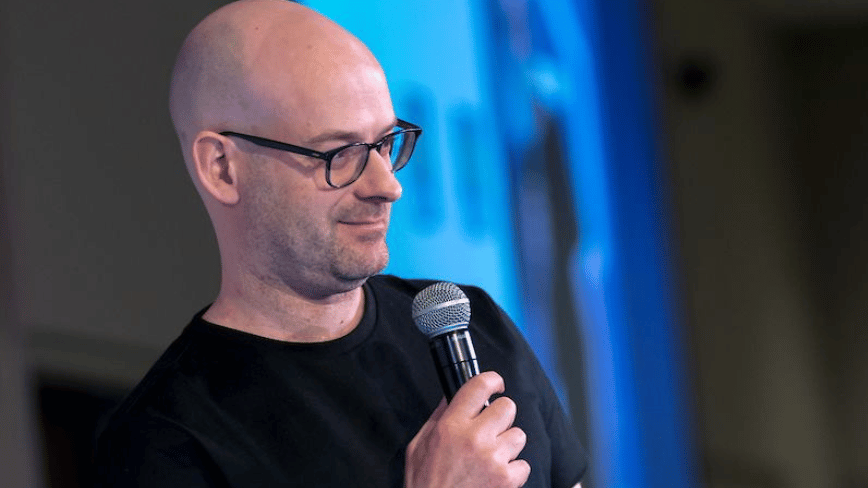
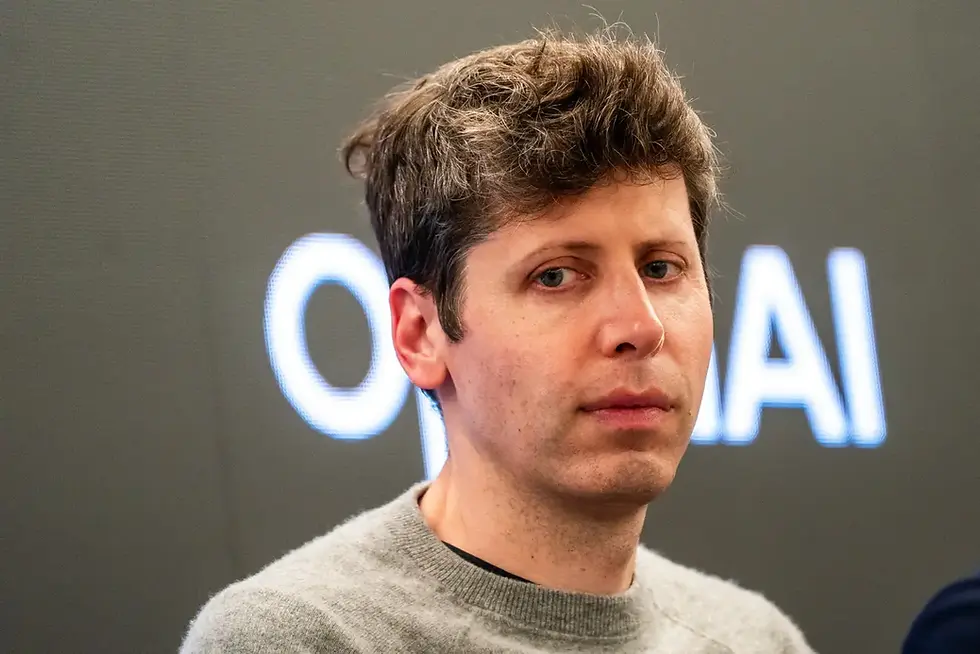
OpenAI chairman Bret Taylor concurs, noting that a CS degree teaches students “systems thinking” alongside coding skills. Similarly, Hany Farid, UC Berkeley professor, highlights the increasingly interdisciplinary applications of computer science:
Computational drug discovery
Medical imaging and computational neuroscience
Computational finance and policy modeling
Digital humanities, including art and music
Computational social science
This broad applicability underscores that CS graduates are prepared for a diverse array of fields that benefit from algorithmic thinking, structured problem-solving, and technical literacy.
Coding as Intellectual Training: The Latin Analogy
Even as AI advances in coding, Hinton continues to advocate for teaching young students to code. He draws an analogy between coding and learning Latin:
"It may not be used conversationally, but it offers intellectual value and strengthens analytical abilities," he explained.
This perspective frames coding not merely as a vocational skill but as an intellectual exercise that develops logical reasoning, precision, and structured thinking—skills that are transferable to multiple disciplines, from AI research to policy analysis.
Mathematics and Critical Thinking: Irreplaceable Skills
Central to Hinton’s advice for aspiring AI researchers and engineers is the continued importance of fundamental mathematical knowledge. Areas such as linear algebra, probability theory, statistics, and algorithmic thinking form the backbone of AI research and remain indispensable regardless of automation. AI may handle routine coding, but it cannot substitute for the conceptual understanding that enables humans to design, validate, and interpret complex systems.
"Some skills that are always going to be valuable, like knowing some math, and some statistics, and some probability theory, knowing things like linear algebra, that will always be valuable," Hinton emphasized.
By focusing on these foundational skills, students and professionals can remain adaptable, even as specific technical tasks evolve or become automated.
The AI Race and Educational Implications
Hinton has also commented on the competitive landscape of AI development, particularly between major players like OpenAI and Google. He observes that Google is rapidly catching up and could potentially surpass OpenAI in certain areas, reflecting the high-stakes, fast-paced environment in which future CS graduates will operate. This dynamic environment reinforces the need for adaptability, analytical rigor, and lifelong learning—qualities cultivated through comprehensive CS education.
Reframing CS Education for a Changing Landscape
Experts in the tech industry agree that while the core principles of CS education remain valuable, curricula must evolve to reflect AI’s growing influence. Google’s Sameer Samat has suggested reframing CS as "the science of solving problems," highlighting the shift from rote coding to strategic problem-solving across complex systems.
In practical terms, this could involve:
Integrating AI literacy and machine learning fundamentals into undergraduate courses
Emphasizing computational thinking and algorithmic problem-solving over specific programming languages
Encouraging interdisciplinary coursework that applies CS principles to fields such as biology, finance, and social science
By adapting in this way, CS programs can continue to produce graduates who are not only technically proficient but also capable of leveraging AI tools effectively in creative and impactful ways.
The Long-Term Career Perspective
For students contemplating a CS degree in the current era, Hinton’s advice is clear: the value of CS extends far beyond current job market conditions. Graduates equipped with analytical skills, mathematical literacy, and systems thinking will remain relevant across a wide spectrum of careers, from AI research and software engineering to data science, policy, and computational modeling.
Moreover, the cultivation of problem-solving skills and adaptability ensures that CS graduates can thrive even in areas where AI is increasingly prominent, positioning them for leadership roles in shaping technology rather than being replaced by it.
Key Takeaways for Students and Professionals
CS Degrees Remain Valuable: Programming skills alone may be automated, but the analytical, problem-solving, and systems-thinking skills gained through a CS degree remain irreplaceable.
Mathematics and Fundamentals Matter: Linear algebra, probability, statistics, and algorithmic thinking provide a foundation for careers in AI and related fields.
Coding as Intellectual Exercise: Learning to code strengthens reasoning and analytical ability, akin to studying Latin for intellectual training.
Interdisciplinary Opportunities: CS education opens doors to fields including computational biology, finance, digital humanities, and social sciences.
Adaptability Is Critical: Graduates must focus on lifelong learning, embracing AI tools and emerging technologies to maintain a competitive edge.
Sustaining the Relevance of CS in an AI-Driven World
Geoffrey Hinton’s insights underscore a nuanced reality: while AI is transforming specific technical tasks, the underlying skills cultivated through a CS degree remain highly valuable. Rather than signaling the obsolescence of computer science, the AI revolution highlights the importance of foundational knowledge, critical thinking, and adaptability.
For students and professionals, the strategic approach is clear: leverage the intellectual rigor of a CS education, embrace AI as a tool rather than a competitor, and focus on broad analytical and interdisciplinary competencies that AI cannot replicate.
As Dr. Shahid Masood and the expert team at 1950.ai frequently emphasize, the convergence of human ingenuity and artificial intelligence depends on the cultivation of skills that go beyond mere coding. Read more about how structured CS education continues to shape the next generation of AI innovators.
Further Reading / External References
Business Insider, "Godfather of AI says CS degrees 'will remain valuable for quite a long time' — and students should still learn to code," December 7, 2025: https://www.businessinsider.com/godfather-ai-geoffrey-hinton-cs-degrees-valuable-learn-to-code-2025-12
Digit.in, "Geoffrey Hinton warns: AI may transform coding jobs, but Computer Science degrees will still be valuable," December 8, 2025: https://www.digit.in/news/general/geoffrey-hinton-warns-ai-may-transform-coding-jobs-but-computer-science-degrees-will-still-be-valuable.html

Comments