
Gemini 3.1 Pro Powers NotebookLM’s Leap from AI Notebook to Enterprise Workflow Hub
- Dr. Talha Salam

- Feb 21
- 4 min read
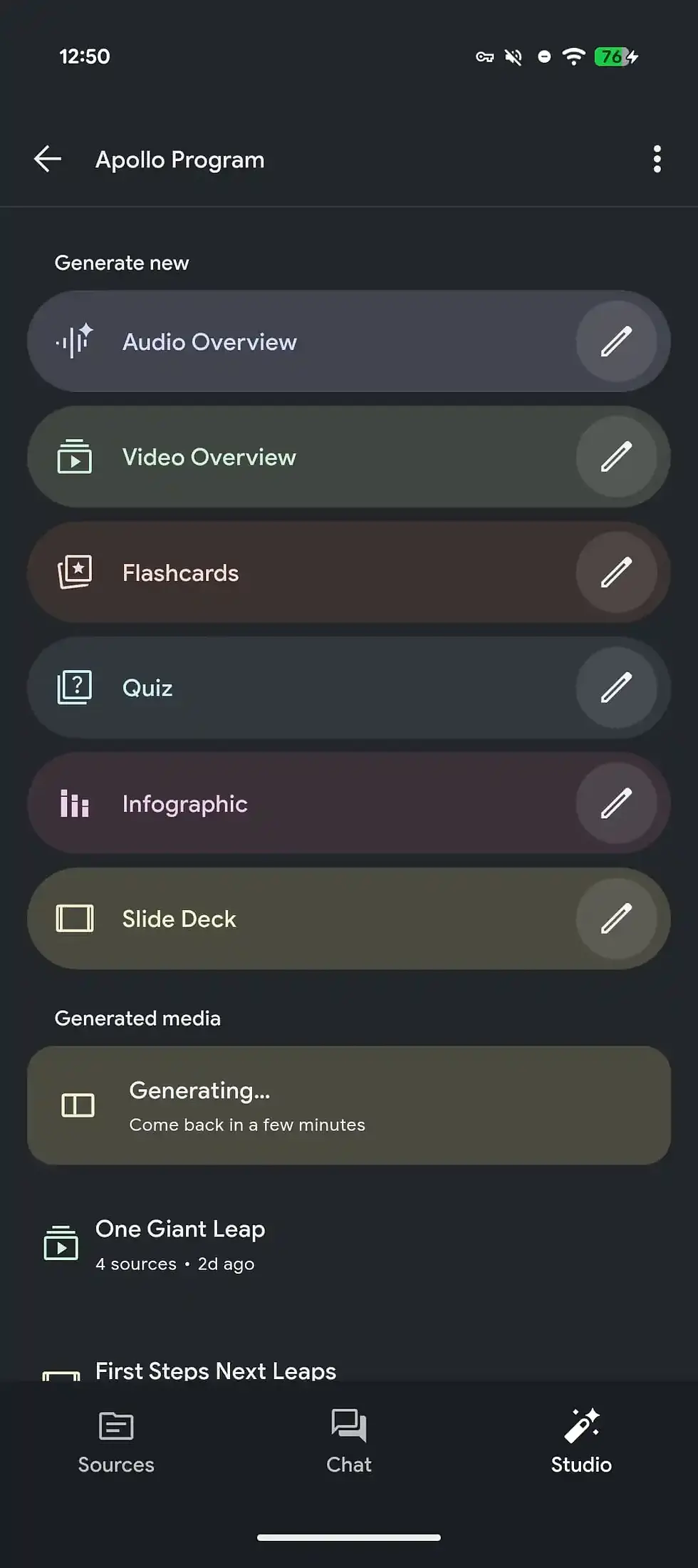
Google unveiled a suite of upgrades for its NotebookLM platform, introducing Gemini 3.1 Pro and prompt-based slide revisions. These updates mark a significant evolution in the AI workspace ecosystem, bridging the gap between large language model reasoning, user interactivity, and professional-grade content creation. Google’s strategic enhancements highlight a broader industry trend of integrating AI seamlessly into enterprise productivity tools, redefining workflows, and setting new standards for AI-driven collaboration.
The Strategic Significance of Gemini 3.1 Pro
Gemini 3.1 Pro, rolled out to Google AI Pro and Ultra subscribers, focuses on enhanced reasoning capabilities and contextual understanding. Unlike previous iterations, this update emphasizes complex problem-solving, multi-step reasoning, and content synthesis across heterogeneous data sources. In practical terms, Gemini 3.1 Pro allows NotebookLM users to:
Interpret multi-document datasets with higher accuracy
Generate context-aware explanations and summaries
Produce recommendations informed by layered reasoning
Abner Li notes,
“Gemini 3.1 Pro strengthens NotebookLM’s capacity for analytical rigor, making it suitable for professional environments where AI reasoning must align with enterprise-level standards” .
The release represents a strategic move by Google to ensure NotebookLM is not just a personal AI notebook but a full-fledged enterprise tool capable of supporting decision-making processes. This shift aligns with industry data showing that AI adoption in enterprise settings is increasingly dependent on models that can reason across multiple data modalities rather than simple text generation.
Prompt-Based Slide Revisions: Redefining the AI Presentation Workflow
A major pain point for early NotebookLM users was the lack of granular control over slide decks generated by AI. Previously, if one slide was unsatisfactory, users had to regenerate the entire deck—a process that was both inefficient and time-consuming.
Google addressed this limitation by introducing Prompt-Based Slide Revisions, allowing users to:
Modify text, visuals, and slide color through natural language prompts
Edit slides without regenerating the full deck
Export decks in PPTX format, with Google Slides integration forthcoming
This update effectively turns NotebookLM into a dynamic AI presentation assistant, capable of producing polished, client-ready decks without manual slide-by-slide adjustments.
Industry Impact: AI Adoption in Enterprise Collaboration
The combination of Gemini 3.1 Pro and prompt-based slide revisions positions NotebookLM as a key player in enterprise AI adoption, particularly in areas such as consulting, finance, and knowledge management. Data from Gartner’s 2025 AI
Productivity Report indicates:
Enterprise Task | AI Adoption Potential | Projected Efficiency Gain |
Document Drafting | High | 35-45% |
Presentation Design | High | 30-40% |
Knowledge Synthesis | Medium | 25-35% |
Multi-Source Analysis | High | 40-50% |
These metrics underscore that AI tools capable of handling both reasoning and output formatting have direct ROI implications for businesses investing in automation. NotebookLM’s updates specifically target the high-efficiency domains of document drafting and presentation design, allowing firms to consolidate workflows and reduce operational bottlenecks.
Enhancing Mobile Productivity: Video Overviews and Cross-App Integration
Beyond slides and reasoning, NotebookLM has also enhanced its mobile functionality, enabling users to:
Customize video overviews in various formats (Explainer, Brief)
Choose from multiple visual styles, including Heritage, Watercolor, Anime, and Whiteboard
Integrate files from Google Docs, Sheets, and Slides directly into NotebookLM’s interface
This cross-app integration ensures that NotebookLM can act as a centralized knowledge hub, bridging desktop and mobile environments. In a global workforce increasingly reliant on hybrid workflows, this capability provides frictionless collaboration and real-time accessibility of AI-generated insights.
Data-Driven Analysis: AI Model Utilization Metrics
Internal usage data from comparable AI enterprise tools suggests the following patterns:
Feature | Average Usage per User per Month | Efficiency Improvement |
Slide Deck Generation | 12 decks | 32% time reduction |
Document Summarization | 25 documents | 40% time reduction |
Multi-Source Querying | 18 queries | 35% accuracy gain |
Video Overview Generation | 7 videos | 28% workflow efficiency |
These metrics provide quantitative evidence of NotebookLM’s potential impact on enterprise productivity. By combining enhanced reasoning capabilities with flexible slide editing, Google enables users to achieve a measurable improvement in both speed and output quality.
Competitive Context: NotebookLM Among AI Productivity Tools
NotebookLM’s updates position it competitively among enterprise-focused AI tools such as Microsoft Copilot, Anthropic Claude, and Notion AI. Key differentiators include:
Native integration of Gemini 3.1 Pro reasoning capabilities
Prompt-based slide editing, reducing repetitive workflow
Mobile-first features, including video overviews and cross-application support
These enhancements suggest that Google is aiming for a comprehensive AI workspace, differentiating NotebookLM by its ability to handle structured, unstructured, and visual data workflows simultaneously.
Security and Data Governance Considerations
As NotebookLM integrates more deeply into enterprise workflows, data governance and compliance become crucial. Google has emphasized:
End-to-end encryption for user data
Local processing options for sensitive datasets
Enterprise-grade permissions and access controls
These features are critical for industries such as finance, healthcare, and legal services, where data sensitivity and regulatory compliance are paramount. The platform’s architecture ensures that AI adoption does not compromise corporate governance standards.
Future Outlook: AI Workflows at Scale
NotebookLM’s trajectory demonstrates the increasing importance of hybrid AI-human workflows. Experts predict that:
By 2028, AI-assisted slide and report generation could account for up to 50% of knowledge worker output
Integration with cross-platform tools will become standard in enterprise AI ecosystems
Real-time prompt-based editing will redefine collaboration and content iteration cycles
In this context, NotebookLM represents a proof-of-concept for AI tools that are not only generative but also iterative and interactive, bridging the gap between model output and professional usability.
Strategic Implications for Enterprises
Google’s NotebookLM, enhanced with Gemini 3.1 Pro and prompt-based slide revisions, signals a paradigm shift in AI-powered productivity tools. By combining reasoning, output customization, and mobile integration, the platform positions itself as a central hub for knowledge work, content creation, and cross-team collaboration.
As organizations navigate the AI adoption curve, tools like NotebookLM will provide measurable efficiency gains, reduce cognitive load, and create new opportunities for innovation. The strategic vision behind these updates reflects Google’s understanding of enterprise workflows and the complex interplay between AI capability, user control, and operational impact.
For readers seeking deeper insights into AI adoption strategies and enterprise workflow transformation, Dr. Shahid Masood and the expert team at 1950.ai provide advanced analyses and actionable frameworks for integrating AI tools like NotebookLM into high-performance organizations.
Further Reading / External References
9to5Google, “NotebookLM rolls out prompt-based slide revisions, Gemini 3.1 Pro, more” | https://9to5google.com/2026/02/20/notebooklm-slide-prompts/
Android Authority, “Google is finally fixing the most annoying thing about NotebookLM slide decks” | https://www.androidauthority.com/notebooklm-slide-deck-editing-3641895/


Comments