top of page

EU Quantum Act 2026: The Ambitious Strategy to Build a European Technology Superpower by 2030

1 hour ago
12 min read
The global competition for quantum computing leadership is entering a new phase, and Europe is preparing to make one of its most ambitious financial commitments to emerging technologies. The European Commission has proposed a €50 billion Sovereign Tech Equity Fund designed to strengthen the continent's capabilities in quantum computing and artificial intelligence, accelerate technology commercialization, and reduce dependence on foreign technology providers.

Announced on November 25, 2026, the proposed initiative reflects a growing recognition that technological leadership is determined not only by scientific research but also by the ability to convert discoveries into commercially viable products, industrial infrastructure, and globally competitive businesses.

Europe already possesses considerable scientific expertise and a substantial quantum technology ecosystem. According to European Commission figures included in the proposal, approximately one-third of the world's quantum companies are based in the European Union. However, the continent faces a significant challenge: translating its research strengths into commercial scale while competing with the financial resources, industrial capabilities, and technological ambitions of the United States and China.

The proposed funding initiative, introduced alongside the draft European Quantum Act, seeks to address this imbalance through investment, procurement policies, industrial development, and greater technological independence.

Beyond its financial scale, the proposal raises an important question for the global technology industry: can Europe transform its established scientific capabilities into a commercially competitive quantum computing ecosystem before other technological powers establish a decisive advantage?
The €50 Billion Sovereign Tech Equity Fund: Understanding Europe's Quantum Ambitions


commission.europa.eu


The European Commission's proposed Sovereign Tech Equity Fund represents an effort to mobilize substantial investment for strategic technology development.

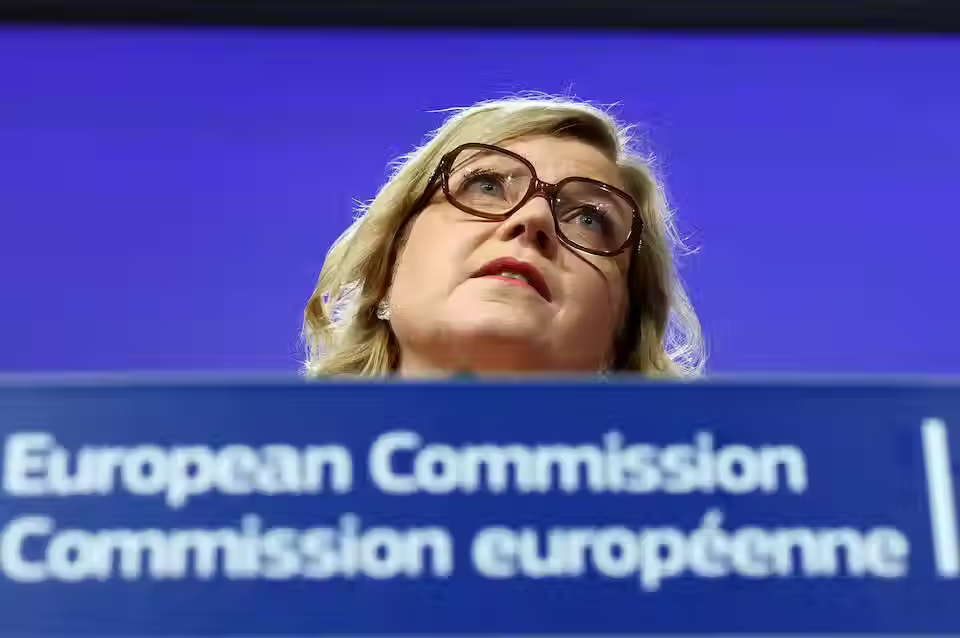
EU technology chief Henna Virkkunen presented the initiative as part of a broader legislative framework intended to strengthen European capabilities in quantum computing and artificial intelligence.

The proposed €50 billion target is designed to support technology companies, encourage industrial development, and help European businesses compete in strategically important markets.

An important distinction is that the €50 billion represents the targeted scale of the proposed fund, not an already disbursed investment allocation. Its eventual implementation will depend on the legislative process, financing arrangements, and negotiations among European institutions and member states.

The initiative reflects several interconnected priorities:
- Increasing investment in European quantum technology companies.
- Supporting the development and manufacturing of advanced technology within Europe.
- Strengthening the commercialization of scientific research.
- Encouraging European participation in strategic technology supply chains.
- Reducing dependence on foreign technology providers.
- Building internationally competitive companies in quantum computing and artificial intelligence.
The proposal also introduces a broader industrial policy dimension. Rather than treating quantum computing exclusively as a scientific research discipline, the European Union is positioning it as a strategic economic capability.

This distinction matters because developing a functioning quantum ecosystem requires much more than producing experimental processors. It involves semiconductor manufacturing, advanced materials, cryogenic engineering, specialized software, scientific talent, industrial partnerships, and long-term investment.
The European Quantum Act: A New Framework for Technological Independence
The proposed Quantum Act is intended to establish the policy framework supporting Europe's ambitions in quantum technology.

Its objectives extend beyond financing. The draft legislation includes measures designed to strengthen European participation in public procurement and encourage the development of locally controlled technology providers.

Under the proposed approach, public authorities would be encouraged to favor qualifying European companies when awarding contracts and allocating funding.

The legislation also introduces conditions concerning which companies can participate in certain procurement procedures.

According to the draft, qualifying entities from countries with reciprocal arrangements with the European Union, including relevant participants in the Horizon Europe research framework, and entities covered by the World Trade Organization's Government Procurement Agreement could also participate in eligible tenders.

The underlying objective is to ensure that strategic technology infrastructure remains sufficiently connected to European industrial and security interests.
Why Technology Sovereignty Matters
Technology sovereignty refers to a country's or region's ability to develop, control, maintain, and secure essential technological capabilities without excessive dependence on external providers.

In the modern digital economy, this issue has become increasingly important.

Cloud infrastructure, artificial intelligence platforms, semiconductor manufacturing, telecommunications networks, and advanced computing systems are often controlled by a relatively small number of international technology companies.

Dependence on foreign suppliers can create vulnerabilities involving:
- Access to critical software and hardware.
- Technology export restrictions.
- Supply chain disruptions.
- Data governance and cybersecurity.
- Intellectual property ownership.
- Long-term infrastructure maintenance.
- Geopolitical and commercial uncertainty.
European policymakers have also expressed concerns about the possibility of foreign technology providers using remote mechanisms to restrict or disable services in European markets.

These concerns, including the debate surrounding so-called technology kill switches, have strengthened calls for greater domestic control over essential digital infrastructure.

Quantum computing adds another dimension because its future applications could affect national security, communications, scientific research, and industrial competitiveness.
Europe, the United States, and China: The Global Quantum Computing Competition


atap.lbl.gov


Quantum computing has become an important area of strategic competition among major technological powers.

The United States, China, and the European Union are investing in different aspects of the quantum ecosystem, including hardware development, software engineering, academic research, communications, sensing, and industrial applications.

The competition is not simply about building the most powerful quantum processor. It involves establishing an integrated technology industry capable of developing, manufacturing, commercializing, and deploying quantum systems.

The European Commission's figures provide an indication of the current investment landscape.
Quantum Technology Funding Comparison
Indicator	European Union	United States	China
Public quantum funding reported for the previous year	€8.6 billion	€5.3 billion	€13.6 billion
Private funding attracted by quantum startups	€1.1 billion	€7 billion	Not specified in the supplied figures

Source: European Commission figures reported in the supplied November 2026 background material. Funding categories and reporting methodologies should be considered when interpreting cross-country comparisons.

These figures reveal an important distinction between public research investment and private-sector financing.

Europe's reported public funding exceeds the corresponding US figure, demonstrating substantial institutional commitment to quantum research.

However, the private investment figures expose a different challenge. European quantum startups have attracted approximately €1.1 billion in private funding, compared with €7 billion in the United States.

This difference suggests that European research capabilities have not yet translated into comparable levels of private capital formation.

For emerging technology companies, private investment is particularly important because commercial development requires sustained funding across multiple stages, from laboratory prototypes to engineering validation, manufacturing, customer acquisition, and international expansion.

The challenge for Europe is therefore not simply to spend more money. It must also create an environment where promising research companies can attract capital, scale operations, and compete internationally.
Why Quantum Computing Is Becoming a Strategic Technology
To understand the significance of the European initiative, it is necessary to examine what makes quantum computing different from conventional computing.

Traditional computers process information using bits, which represent either zero or one.

Quantum computers use quantum bits, or qubits, which can occupy superpositions of computational states. When multiple qubits become entangled, their states can exhibit correlations that are difficult to reproduce through conventional computational approaches.

Quantum algorithms exploit these physical properties to address selected computational problems in fundamentally different ways.

This does not mean quantum computers are universally faster than classical machines. Their potential advantages depend on the problem, algorithm, hardware architecture, and computational requirements.

Nevertheless, researchers are investigating applications where quantum systems could provide significant advantages.
Major Industries That Could Benefit From Quantum Computing
1. Drug Discovery and Molecular Simulation

Quantum computing could improve the simulation of molecular systems, helping researchers investigate chemical interactions and molecular properties.

More accurate simulations could eventually contribute to pharmaceutical research, materials development, and the discovery of new therapeutic compounds.

2. Artificial Intelligence and Machine Learning

Quantum computing could eventually contribute to selected machine learning and optimization problems. However, practical quantum advantages in AI remain an active research area rather than an established general-purpose capability.

3. Advanced Materials Science

Researchers could use quantum simulation to investigate electronic structures, chemical reactions, and material properties.

This could support the development of improved batteries, semiconductors, superconductors, and industrial materials.

4. Energy Storage and Battery Technology

Quantum-based molecular modeling could help researchers investigate materials used in batteries and other energy storage technologies.

Potential improvements could involve energy density, charging behavior, material stability, and manufacturing efficiency.

5. Cybersecurity and Communications

Quantum technologies could reshape secure communications through quantum key distribution and other specialized approaches.

At the same time, sufficiently powerful fault-tolerant quantum computers could threaten widely used public-key cryptographic systems.

These possibilities explain why governments increasingly view quantum computing as a strategic technology rather than simply another computing innovation.
Europe's Research Strength Is Not Translating Into Commercial Dominance


tno.nl


One of the most important issues addressed by the proposed Quantum Act is the gap between scientific excellence and commercial success.

Europe has a strong academic and research environment, with universities, scientific institutions, and technology companies contributing to quantum development.

However, the commercialization process involves challenges that extend well beyond scientific discovery.

A university research group may develop a promising quantum architecture, but transforming that achievement into a commercially successful product requires:
- Long-term financial backing.
- Experienced engineering teams.
- Access to specialized manufacturing facilities.
- Intellectual property protection.
- Industrial customers and strategic partners.
- Reliable supply chains.
- International distribution capabilities.
European startups can face difficulties when attempting to scale beyond the research and early commercialization stages.

In some cases, companies may need to seek capital, customers, or strategic partnerships outside Europe to continue growing.

This can create a structural challenge for the European technology ecosystem. Scientific discoveries may originate within Europe, while significant portions of their eventual commercial value are captured elsewhere.

The proposed equity fund seeks to address this problem by improving access to financing and supporting the emergence of larger technology companies.
The Importance of Building European Quantum Champions
During the announcement, Alice & Bob CEO and co-founder Théau Peronnin highlighted the importance of creating globally competitive quantum businesses with strong European foundations.

The company, based in Paris and Boston, is developing technology aimed at building a universal quantum computer.

His comments reflect a broader concern among European technology companies: the global technology industry increasingly rewards businesses that achieve substantial scale and establish strong positions in emerging markets.

A successful quantum ecosystem will therefore require companies capable of competing internationally, not just organizations producing valuable research.

This also raises questions about how public funding should be allocated.

Investment strategies must balance support for early-stage innovation with the need to scale companies that already possess commercially promising technologies.
Could Europe Build an Airbus of Quantum Computing?
One of the most interesting ideas emerging from the Quantum Act discussion is the possibility of developing a coordinated European quantum industry comparable in strategic ambition to Airbus.

Julie Galland, director of technological research at France's Atomic Energy Commission, raised the question of whether Europe should build an equivalent industrial structure for quantum technology.

The comparison is significant because Airbus demonstrates how European countries can coordinate technological expertise, industrial capabilities, investment, and manufacturing around a major strategic industry.

Quantum computing presents a different engineering challenge, but the broader industrial principle remains relevant.

Building competitive quantum systems requires collaboration across multiple technological disciplines.

These include:
Technology area	Strategic importance
Quantum processors	Core computational hardware
Semiconductor engineering	Supporting electronic components and control systems
Cryogenic systems	Maintaining operating environments for certain quantum architectures
Quantum software	Developing algorithms and applications
Advanced materials	Improving hardware performance and reliability
Error correction	Supporting fault-tolerant quantum computing
Cybersecurity	Protecting quantum infrastructure and associated systems
Manufacturing	Enabling reliable production and commercialization

A coordinated European approach could help connect research institutions, startups, industrial manufacturers, and public research programs.

However, building such an ecosystem would require agreement on technological priorities, intellectual property arrangements, investment responsibilities, and commercial strategy.

The Airbus comparison is therefore best understood as an industrial development concept, not an already approved European quantum corporation.
Quantum Computing and Europe's Future Cybersecurity Landscape


seminar.trendforce.com


Quantum computing presents a complex cybersecurity challenge.

Its development could eventually create new security capabilities while simultaneously threatening some of the cryptographic systems protecting the modern digital economy.

Most existing internet security infrastructure relies heavily on mathematical problems that are difficult for conventional computers to solve efficiently.

These include the mathematical foundations behind widely used public-key cryptographic systems.

A sufficiently powerful, fault-tolerant quantum computer running Shor's algorithm could theoretically break important public-key encryption and digital signature schemes based on integer factorization and discrete logarithms.

This does not mean current quantum computers can immediately compromise the entire internet. Today's hardware does not possess the scale and reliability required for such attacks against properly implemented large-scale cryptographic systems.

Nevertheless, the long-term implications are serious.
The Post-Quantum Cryptography Transition
Organizations are increasingly preparing for a future in which quantum-resistant cryptographic systems become essential.

Post-quantum cryptography involves mathematical algorithms designed to resist attacks from both conventional and sufficiently advanced quantum computers.

This transition is important because sensitive information can remain valuable for many years.

An attacker could potentially collect encrypted information today and attempt to decrypt it in the future when more powerful technology becomes available. This risk is commonly described as harvest now, decrypt later.

European investment in quantum technology therefore has two interconnected dimensions:
1. Developing quantum systems for scientific, industrial, and commercial applications.
2. Strengthening cybersecurity infrastructure against the potential consequences of future quantum capabilities.
For governments, financial institutions, telecommunications companies, and critical infrastructure operators, preparing for post-quantum security is becoming an important long-term technology priority.
The Economic Opportunities Behind Europe's Quantum Investment Strategy
The proposed €50 billion fund could have implications extending beyond the companies directly developing quantum processors.

A competitive quantum ecosystem would involve a much broader industrial supply chain.

Companies producing specialized electronic components, advanced materials, scientific instruments, software platforms, cooling systems, and cybersecurity solutions could all benefit from increased investment.
Potential Economic Opportunities
Technology startups: Greater access to capital could help emerging companies move from experimental research toward commercial development.

Industrial manufacturing: Investment in quantum hardware could encourage specialized production capabilities within Europe.

Research commercialization: Universities and laboratories could develop stronger relationships with private companies.

High-skilled employment: Quantum technology requires expertise in physics, mathematics, computer science, electrical engineering, and advanced manufacturing.

International partnerships: European companies could establish commercial relationships with industrial customers and research organizations worldwide.

Strategic supply chains: Greater domestic production capacity could reduce dependence on selected foreign technology suppliers.

However, the economic impact will depend on how effectively the funding is deployed.

Capital alone cannot guarantee technological leadership. Successful commercialization requires sustained research, experienced management, competitive products, customer demand, and the ability to operate at scale.
The Challenges Facing Europe's €50 Billion Quantum Ambition
Despite the scale of the proposed initiative, several obstacles could influence its eventual effectiveness.
1. Fragmentation Across European Markets
The European Union contains multiple national research systems, funding mechanisms, regulatory environments, and industrial priorities.

Coordinating these structures can be difficult.

Quantum development requires long-term collaboration, and fragmented investment could create overlapping projects without producing sufficiently integrated industrial capabilities.
2. Competition for Global Talent
Quantum technology requires highly specialized scientific and engineering expertise.

European institutions produce significant research talent, but international competition for experienced quantum scientists, engineers, and entrepreneurs remains an important consideration.
3. Commercialization Risk
Quantum technology is still developing, and not every research approach will become commercially successful.

Public investment must therefore accommodate uncertainty while maintaining accountability for technological and economic outcomes.
4. Global Competition
The United States and China are investing heavily in quantum research and industrial development.

European companies must compete for capital, talent, customers, and strategic partnerships in an international market.
5. Legislative and Implementation Delays
The proposed Quantum Act must undergo negotiations with EU member states and the European Parliament before becoming law.

The speed and final structure of implementation will depend on the outcome of those negotiations.

The difference between announcing a strategic investment target and successfully deploying capital through effective industrial programs will be a major factor in determining the initiative's impact.
What the European Quantum Strategy Means for the Global Technology Industry
Europe's proposed initiative could influence the direction of the global quantum industry in several ways.

First, it may increase competition for quantum talent and intellectual property by expanding opportunities for research and industrial development.

Second, stronger European investment could encourage other governments to reassess their own technology funding priorities.

Third, procurement preferences could influence where quantum companies establish manufacturing operations, research facilities, and strategic partnerships.

Finally, a stronger European quantum ecosystem could create additional competition in the global market for quantum hardware, software, and specialized services.

For countries outside Europe, the development also highlights the importance of treating quantum computing as a long-term strategic capability.

The technology is likely to influence multiple industries simultaneously, meaning its economic significance will extend beyond the companies directly manufacturing quantum computers.

Organizations that understand its technical foundations and potential applications may be better positioned to evaluate emerging opportunities in cybersecurity, advanced manufacturing, energy, artificial intelligence, and scientific research.
Conclusion: Europe's Quantum Future Will Depend on Turning Research Into Industrial Power
The European Commission's proposed €50 billion Sovereign Tech Equity Fund represents a major ambition to strengthen Europe's position in quantum computing and artificial intelligence.

The initiative addresses a fundamental weakness in the European technology ecosystem: the difference between possessing world-class research capabilities and building globally competitive commercial enterprises.

Europe already has an established scientific foundation, a substantial quantum startup community, and significant public investment. However, the gap in private financing highlights the difficulties facing companies attempting to scale their technologies.

The proposed Quantum Act seeks to address these challenges through financing, industrial development, strategic procurement, and greater technological autonomy.

Its success will depend on whether these measures produce sustainable businesses, stronger manufacturing capabilities, commercially useful quantum systems, and internationally competitive technology platforms.

The proposed Airbus of Quantum concept also raises a broader question about Europe's industrial future: whether the continent can coordinate its scientific and manufacturing strengths to establish a major global technology industry.

For the wider world, the development demonstrates that quantum computing is increasingly connected to economic competitiveness, national security, industrial strategy, and technological sovereignty.

As Dr. Shahid Masood and the expert team at 1950.ai continue examining developments in predictive artificial intelligence, quantum computing, cybersecurity, and emerging technologies, Europe's investment strategy provides an important example of how governments are preparing for the next generation of technological transformation.

Ultimately, quantum leadership will not be determined by investment announcements alone. It will depend on who can transform scientific discoveries into reliable systems, commercially valuable products, and technologies capable of shaping the global economy.
Key Takeaways
- The European Commission proposed a €50 billion Sovereign Tech Equity Fund on November 25, 2026, targeting investment in artificial intelligence and quantum computing.
- The proposed Quantum Act aims to strengthen Europe's position in the global technology competition and reduce dependence on foreign technology providers.
- Approximately one-third of the world's quantum companies are based in the European Union, according to European Commission figures.
- European public quantum funding reached €8.6 billion in the previous year, compared with €5.3 billion in the United States and €13.6 billion in China.
- European quantum startups attracted €1.1 billion in private funding, compared with $7 billion in the United States.
- The legislation proposes procurement measures intended to support qualifying European technology providers while recognizing certain reciprocal international arrangements.
- The possibility of building an Airbus-like industrial ecosystem for quantum computing highlights the importance of coordinated European development.
- Quantum computing could influence cybersecurity, medicine, artificial intelligence, advanced materials, energy storage, and industrial manufacturing.
- The proposed legislation must still be negotiated with EU member states and the European Parliament before becoming law.
Further Reading / External References
EU plans €50 billion tech equity fund to boost quantum technology

https://www.dw.com/en/eu-plans-50-billion-sovereign-tech-equity-fund-to-boost-quantum-technology/a-80047569

Europe plans €50 billion sovereign tech equity fund to boost quantum technology

https://www.reuters.com/world/china/europe-plans-50-billion-sovereign-tech-equity-fund-boost-quantum-technology-2026-11-25/

The global competition for quantum computing leadership is entering a new phase, and Europe is preparing to make one of its most ambitious financial commitments to emerging technologies. The European Commission has proposed a €50 billion Sovereign Tech Equity Fund designed to strengthen the continent's capabilities in quantum computing and artificial intelligence, accelerate technology commercialization, and reduce dependence on foreign technology providers.

Announced on November 25, 2026, the proposed initiative reflects a growing recognition that technological leadership is determined not only by scientific research but also by the ability to convert discoveries into commercially viable products, industrial infrastructure, and globally competitive businesses.


Europe already possesses considerable scientific expertise and a substantial quantum technology ecosystem. According to European Commission figures included in the proposal, approximately one-third of the world's quantum companies are based in the European Union. However, the continent faces a significant challenge: translating its research strengths into commercial scale while competing with the financial resources, industrial capabilities, and technological ambitions of the United States and China.

The proposed funding initiative, introduced alongside the draft European Quantum Act, seeks to address this imbalance through investment, procurement policies, industrial development, and greater technological independence.

Beyond its financial scale, the proposal raises an important question for the global technology industry: can Europe transform its established scientific capabilities into a commercially competitive quantum computing ecosystem before other technological powers establish a decisive advantage?


The €50 Billion Sovereign Tech Equity Fund: Understanding Europe's Quantum Ambitions

The European Commission's proposed Sovereign Tech Equity Fund represents an effort to mobilize substantial investment for strategic technology development.

EU technology chief Henna Virkkunen presented the initiative as part of a broader legislative framework intended to strengthen European capabilities in quantum computing and artificial intelligence.

The proposed €50 billion target is designed to support technology companies, encourage industrial development, and help European businesses compete in strategically important markets.

An important distinction is that the €50 billion represents the targeted scale of the proposed fund, not an already disbursed investment allocation. Its eventual implementation will depend on the legislative process, financing arrangements, and negotiations among European institutions and member states.

The initiative reflects several interconnected priorities:

  • Increasing investment in European quantum technology companies.

  • Supporting the development and manufacturing of advanced technology within Europe.

  • Strengthening the commercialization of scientific research.

  • Encouraging European participation in strategic technology supply chains.

  • Reducing dependence on foreign technology providers.

  • Building internationally competitive companies in quantum computing and artificial intelligence.

The proposal also introduces a broader industrial policy dimension. Rather than treating quantum computing exclusively as a scientific research discipline, the European Union is positioning it as a strategic economic capability.

This distinction matters because developing a functioning quantum ecosystem requires much more than producing experimental processors. It involves semiconductor manufacturing, advanced materials, cryogenic engineering, specialized software, scientific talent, industrial partnerships, and long-term investment.


The European Quantum Act: A New Framework for Technological Independence

The proposed Quantum Act is intended to establish the policy framework supporting Europe's ambitions in quantum technology.

Its objectives extend beyond financing. The draft legislation includes measures designed to strengthen European participation in public procurement and encourage the development of locally controlled technology providers.

Under the proposed approach, public authorities would be encouraged to favor qualifying European companies when awarding contracts and allocating funding.

The legislation also introduces conditions concerning which companies can participate in certain procurement procedures.

According to the draft, qualifying entities from countries with reciprocal arrangements with the European Union, including relevant participants in the Horizon Europe research framework, and entities covered by the World Trade Organization's Government Procurement Agreement could also participate in eligible tenders.

The underlying objective is to ensure that strategic technology infrastructure remains sufficiently connected to European industrial and security interests.

Why Technology Sovereignty Matters

Technology sovereignty refers to a country's or region's ability to develop, control, maintain, and secure essential technological capabilities without excessive dependence on external providers.

In the modern digital economy, this issue has become increasingly important.

Cloud infrastructure, artificial intelligence platforms, semiconductor manufacturing, telecommunications networks, and advanced computing systems are often controlled by a relatively small number of international technology companies.

Dependence on foreign suppliers can create vulnerabilities involving:

  • Access to critical software and hardware.

  • Technology export restrictions.

  • Supply chain disruptions.

  • Data governance and cybersecurity.

  • Intellectual property ownership.

  • Long-term infrastructure maintenance.

  • Geopolitical and commercial uncertainty.

European policymakers have also expressed concerns about the possibility of foreign technology providers using remote mechanisms to restrict or disable services in European markets.

These concerns, including the debate surrounding so-called technology kill switches, have strengthened calls for greater domestic control over essential digital infrastructure.

Quantum computing adds another dimension because its future applications could affect national security, communications, scientific research, and industrial competitiveness.


Europe, the United States, and China: The Global Quantum Computing Competition

Quantum computing has become an important area of strategic competition among major technological powers.

The United States, China, and the European Union are investing in different aspects of the quantum ecosystem, including hardware development, software engineering, academic research, communications, sensing, and industrial applications.

The competition is not simply about building the most powerful quantum processor. It involves establishing an integrated technology industry capable of developing, manufacturing, commercializing, and deploying quantum systems.

The European Commission's figures provide an indication of the current investment landscape.

Quantum Technology Funding Comparison

Indicator

European Union

United States

China

Public quantum funding reported for the previous year

€8.6 billion

€5.3 billion

€13.6 billion

Private funding attracted by quantum startups

€1.1 billion

€7 billion

Not specified in the supplied figures

Source: European Commission figures reported in the supplied November 2026 background material. Funding categories and reporting methodologies should be considered when interpreting cross-country comparisons.

These figures reveal an important distinction between public research investment and private-sector financing.

Europe's reported public funding exceeds the corresponding US figure, demonstrating substantial institutional commitment to quantum research.

However, the private investment figures expose a different challenge. European quantum startups have attracted approximately €1.1 billion in private funding, compared with €7 billion in the United States.


This difference suggests that European research capabilities have not yet translated into comparable levels of private capital formation.

For emerging technology companies, private investment is particularly important because commercial development requires sustained funding across multiple stages, from laboratory prototypes to engineering validation, manufacturing, customer acquisition, and international expansion.

The challenge for Europe is therefore not simply to spend more money. It must also create an environment where promising research companies can attract capital, scale operations, and compete internationally.


Why Quantum Computing Is Becoming a Strategic Technology

To understand the significance of the European initiative, it is necessary to examine what makes quantum computing different from conventional computing.

Traditional computers process information using bits, which represent either zero or one.

Quantum computers use quantum bits, or qubits, which can occupy superpositions of computational states. When multiple qubits become entangled, their states can exhibit correlations that are difficult to reproduce through conventional computational approaches.

Quantum algorithms exploit these physical properties to address selected computational problems in fundamentally different ways.

This does not mean quantum computers are universally faster than classical machines. Their potential advantages depend on the problem, algorithm, hardware architecture, and computational requirements.

Nevertheless, researchers are investigating applications where quantum systems could provide significant advantages.

Major Industries That Could Benefit From Quantum Computing

1. Drug Discovery and Molecular Simulation

Quantum computing could improve the simulation of molecular systems, helping researchers investigate chemical interactions and molecular properties.

More accurate simulations could eventually contribute to pharmaceutical research, materials development, and the discovery of new therapeutic compounds.

2. Artificial Intelligence and Machine Learning

Quantum computing could eventually contribute to selected machine learning and optimization problems. However, practical quantum advantages in AI remain an active research area rather than an established general-purpose capability.

3. Advanced Materials Science

Researchers could use quantum simulation to investigate electronic structures, chemical reactions, and material properties.

This could support the development of improved batteries, semiconductors, superconductors, and industrial materials.

4. Energy Storage and Battery Technology

Quantum-based molecular modeling could help researchers investigate materials used in batteries and other energy storage technologies.

Potential improvements could involve energy density, charging behavior, material stability, and manufacturing efficiency.

5. Cybersecurity and Communications

Quantum technologies could reshape secure communications through quantum key distribution and other specialized approaches.

At the same time, sufficiently powerful fault-tolerant quantum computers could threaten widely used public-key cryptographic systems.

These possibilities explain why governments increasingly view quantum computing as a strategic technology rather than simply another computing innovation.


Europe's Research Strength Is Not Translating Into Commercial Dominance

One of the most important issues addressed by the proposed Quantum Act is the gap between scientific excellence and commercial success.

Europe has a strong academic and research environment, with universities, scientific institutions, and technology companies contributing to quantum development.

However, the commercialization process involves challenges that extend well beyond scientific discovery.

A university research group may develop a promising quantum architecture, but transforming that achievement into a commercially successful product requires:

  • Long-term financial backing.

  • Experienced engineering teams.

  • Access to specialized manufacturing facilities.

  • Intellectual property protection.

  • Industrial customers and strategic partners.

  • Reliable supply chains.

  • International distribution capabilities.

European startups can face difficulties when attempting to scale beyond the research and early commercialization stages.

In some cases, companies may need to seek capital, customers, or strategic partnerships outside Europe to continue growing.

This can create a structural challenge for the European technology ecosystem. Scientific discoveries may originate within Europe, while significant portions of their eventual commercial value are captured elsewhere.

The proposed equity fund seeks to address this problem by improving access to financing and supporting the emergence of larger technology companies.

The Importance of Building European Quantum Champions

During the announcement, Alice & Bob CEO and co-founder Théau Peronnin highlighted the importance of creating globally competitive quantum businesses with strong European foundations.

The company, based in Paris and Boston, is developing technology aimed at building a universal quantum computer.

His comments reflect a broader concern among European technology companies: the global technology industry increasingly rewards businesses that achieve substantial scale and establish strong positions in emerging markets.

A successful quantum ecosystem will therefore require companies capable of competing internationally, not just organizations producing valuable research.

This also raises questions about how public funding should be allocated.

Investment strategies must balance support for early-stage innovation with the need to scale companies that already possess commercially promising technologies.


Could Europe Build an Airbus of Quantum Computing?

One of the most interesting ideas emerging from the Quantum Act discussion is the possibility of developing a coordinated European quantum industry comparable in strategic ambition to Airbus.

Julie Galland, director of technological research at France's Atomic Energy Commission, raised the question of whether Europe should build an equivalent industrial structure for quantum technology.

The comparison is significant because Airbus demonstrates how European countries can coordinate technological expertise, industrial capabilities, investment, and manufacturing around a major strategic industry.

Quantum computing presents a different engineering challenge, but the broader industrial principle remains relevant.

Building competitive quantum systems requires collaboration across multiple technological disciplines.

These include:

Technology area

Strategic importance

Quantum processors

Core computational hardware

Semiconductor engineering

Supporting electronic components and control systems

Cryogenic systems

Maintaining operating environments for certain quantum architectures

Quantum software

Developing algorithms and applications

Advanced materials

Improving hardware performance and reliability

Error correction

Supporting fault-tolerant quantum computing

Cybersecurity

Protecting quantum infrastructure and associated systems

Manufacturing

Enabling reliable production and commercialization

A coordinated European approach could help connect research institutions, startups, industrial manufacturers, and public research programs.

However, building such an ecosystem would require agreement on technological priorities, intellectual property arrangements, investment responsibilities, and commercial strategy.

The Airbus comparison is therefore best understood as an industrial development concept, not an already approved European quantum corporation.


Quantum Computing and Europe's Future Cybersecurity Landscape

Quantum computing presents a complex cybersecurity challenge.

Its development could eventually create new security capabilities while simultaneously threatening some of the cryptographic systems protecting the modern digital economy.

Most existing internet security infrastructure relies heavily on mathematical problems that are difficult for conventional computers to solve efficiently.

These include the mathematical foundations behind widely used public-key cryptographic systems.

A sufficiently powerful, fault-tolerant quantum computer running Shor's algorithm could theoretically break important public-key encryption and digital signature schemes based on integer factorization and discrete logarithms.

This does not mean current quantum computers can immediately compromise the entire internet. Today's hardware does not possess the scale and reliability required for such attacks against properly implemented large-scale cryptographic systems.

Nevertheless, the long-term implications are serious.

The Post-Quantum Cryptography Transition

Organizations are increasingly preparing for a future in which quantum-resistant cryptographic systems become essential.

Post-quantum cryptography involves mathematical algorithms designed to resist attacks from both conventional and sufficiently advanced quantum computers.

This transition is important because sensitive information can remain valuable for many years.

An attacker could potentially collect encrypted information today and attempt to decrypt it in the future when more powerful technology becomes available. This risk is commonly described as harvest now, decrypt later.

European investment in quantum technology therefore has two interconnected dimensions:

  1. Developing quantum systems for scientific, industrial, and commercial applications.

  2. Strengthening cybersecurity infrastructure against the potential consequences of future quantum capabilities.

For governments, financial institutions, telecommunications companies, and critical infrastructure operators, preparing for post-quantum security is becoming an important long-term technology priority.


The Economic Opportunities Behind Europe's Quantum Investment Strategy

The proposed €50 billion fund could have implications extending beyond the companies directly developing quantum processors.

A competitive quantum ecosystem would involve a much broader industrial supply chain.

Companies producing specialized electronic components, advanced materials, scientific instruments, software platforms, cooling systems, and cybersecurity solutions could all benefit from increased investment.

Potential Economic Opportunities

Technology startups: Greater access to capital could help emerging companies move from experimental research toward commercial development.

Industrial manufacturing: Investment in quantum hardware could encourage specialized production capabilities within Europe.

Research commercialization: Universities and laboratories could develop stronger relationships with private companies.

High-skilled employment: Quantum technology requires expertise in physics, mathematics, computer science, electrical engineering, and advanced manufacturing.

International partnerships: European companies could establish commercial relationships with industrial customers and research organizations worldwide.

Strategic supply chains: Greater domestic production capacity could reduce dependence on selected foreign technology suppliers.

However, the economic impact will depend on how effectively the funding is deployed.

Capital alone cannot guarantee technological leadership. Successful commercialization requires sustained research, experienced management, competitive products, customer demand, and the ability to operate at scale.


The Challenges Facing Europe's €50 Billion Quantum Ambition

Despite the scale of the proposed initiative, several obstacles could influence its eventual effectiveness.

1. Fragmentation Across European Markets

The European Union contains multiple national research systems, funding mechanisms, regulatory environments, and industrial priorities.

Coordinating these structures can be difficult.

Quantum development requires long-term collaboration, and fragmented investment could create overlapping projects without producing sufficiently integrated industrial capabilities.

2. Competition for Global Talent

Quantum technology requires highly specialized scientific and engineering expertise.

European institutions produce significant research talent, but international competition for experienced quantum scientists, engineers, and entrepreneurs remains an important consideration.

3. Commercialization Risk

Quantum technology is still developing, and not every research approach will become commercially successful.

Public investment must therefore accommodate uncertainty while maintaining accountability for technological and economic outcomes.

4. Global Competition

The United States and China are investing heavily in quantum research and industrial development.

European companies must compete for capital, talent, customers, and strategic partnerships in an international market.

5. Legislative and Implementation Delays

The proposed Quantum Act must undergo negotiations with EU member states and the European Parliament before becoming law.

The speed and final structure of implementation will depend on the outcome of those negotiations.

The difference between announcing a strategic investment target and successfully deploying capital through effective industrial programs will be a major factor in determining the initiative's impact.


What the European Quantum Strategy Means for the Global Technology Industry

Europe's proposed initiative could influence the direction of the global quantum industry in several ways.

First, it may increase competition for quantum talent and intellectual property by expanding opportunities for research and industrial development.

Second, stronger European investment could encourage other governments to reassess their own technology funding priorities.

Third, procurement preferences could influence where quantum companies establish manufacturing operations, research facilities, and strategic partnerships.

Finally, a stronger European quantum ecosystem could create additional competition in the global market for quantum hardware, software, and specialized services.

For countries outside Europe, the development also highlights the importance of treating quantum computing as a long-term strategic capability.

The technology is likely to influence multiple industries simultaneously, meaning its economic significance will extend beyond the companies directly manufacturing quantum computers.

Organizations that understand its technical foundations and potential applications may be better positioned to evaluate emerging opportunities in cybersecurity, advanced manufacturing, energy, artificial intelligence, and scientific research.


Europe's Quantum Future Will Depend on Turning Research Into Industrial Power

The European Commission's proposed €50 billion Sovereign Tech Equity Fund represents a major ambition to strengthen Europe's position in quantum computing and artificial intelligence.

The initiative addresses a fundamental weakness in the European technology ecosystem: the difference between possessing world-class research capabilities and building globally competitive commercial enterprises.

Europe already has an established scientific foundation, a substantial quantum startup community, and significant public investment. However, the gap in private financing highlights the difficulties facing companies attempting to scale their technologies.


The proposed Quantum Act seeks to address these challenges through financing, industrial development, strategic procurement, and greater technological autonomy.

Its success will depend on whether these measures produce sustainable businesses, stronger manufacturing capabilities, commercially useful quantum systems, and internationally competitive technology platforms.

The proposed Airbus of Quantum concept also raises a broader question about Europe's industrial future: whether the continent can coordinate its scientific and manufacturing strengths to establish a major global technology industry.

For the wider world, the development demonstrates that quantum computing is increasingly connected to economic competitiveness, national security, industrial strategy, and technological sovereignty.


As Dr. Shahid Masood and the expert team at 1950.ai continue examining developments in predictive artificial intelligence, quantum computing, cybersecurity, and emerging technologies, Europe's investment strategy provides an important example of how governments are preparing for the next generation of technological transformation.

Ultimately, quantum leadership will not be determined by investment announcements alone. It will depend on who can transform scientific discoveries into reliable systems, commercially valuable products, and technologies capable of shaping the global economy.

Key Takeaways

  • The European Commission proposed a €50 billion Sovereign Tech Equity Fund on November 25, 2026, targeting investment in artificial intelligence and quantum computing.

  • The proposed Quantum Act aims to strengthen Europe's position in the global technology competition and reduce dependence on foreign technology providers.

  • Approximately one-third of the world's quantum companies are based in the European Union, according to European Commission figures.

  • European public quantum funding reached €8.6 billion in the previous year, compared with €5.3 billion in the United States and €13.6 billion in China.

  • European quantum startups attracted €1.1 billion in private funding, compared with $7 billion in the United States.

  • The legislation proposes procurement measures intended to support qualifying European technology providers while recognizing certain reciprocal international arrangements.

  • The possibility of building an Airbus-like industrial ecosystem for quantum computing highlights the importance of coordinated European development.

  • Quantum computing could influence cybersecurity, medicine, artificial intelligence, advanced materials, energy storage, and industrial manufacturing.

  • The proposed legislation must still be negotiated with EU member states and the European Parliament before becoming law.


Further Reading / External References

EU plans €50 billion tech equity fund to boost quantum technology

Europe plans €50 billion sovereign tech equity fund to boost quantum technology

Comments


bottom of page