top of page

Elon Musk’s Terafab Project Countdown: How Tesla Plans to Produce 200 Billion AI Chips Annually

The semiconductor industry is entering a transformative era as artificial intelligence (AI) and autonomous technologies push the boundaries of chip manufacturing. Tesla Inc., led by CEO Elon Musk, is positioning itself at the forefront of this revolution with its ambitious Terafab Project, set to launch on March 21, 2026. This facility represents not just a massive expansion in chip production but a strategic move to secure self-reliant AI infrastructure for Tesla, xAI, and Musk’s broader technological ecosystem.

Terafab: Redefining Chip Manufacturing at Scale

Tesla first hinted at the Terafab Project during its January 28, 2026 earnings call, emphasizing the need to overcome projected supply constraints for high-performance AI chips within the next three to four years. Unlike conventional semiconductor manufacturing, Terafab is designed as a vertically integrated facility combining logic processing, memory storage, and advanced packaging under one roof. This approach positions Tesla among a select group of entities capable of producing frontier AI silicon entirely in-house, rivalling leading foundries in Taiwan and South Korea.

The total projected cost of the Terafab facility is approximately $25 billion, marking one of the largest private-sector chip fabrication investments in history. Tesla’s CFO Vaibhav Taneja noted that this expenditure extends beyond the company’s already record-breaking 2026 capital expenditure plan exceeding $20 billion. The scale of Terafab underscores the strategic importance Musk places on controlling AI compute infrastructure for both autonomous vehicles and advanced AI applications.

Production Targets and Technological Ambitions

Terafab is designed to produce between 100 billion and 200 billion custom AI and memory chips annually. The facility will start with an initial output of 100,000 wafer starts per month, with a target to scale toward one million — roughly 70% of Taiwan Semiconductor Manufacturing Company (TSMC)'s total output, concentrated in a single U.S. facility. This monumental capacity will make Tesla one of the few companies worldwide with the ability to produce advanced AI chips at such volumes.

A cornerstone of Terafab’s innovation is its adoption of 2-nanometre process technology, currently among the most advanced nodes in commercial production. The fifth-generation AI chip, AI5, is expected to be among the first products fabricated at Terafab, with small-batch production scheduled for 2026 and full-scale volume production projected for 2027. Industry experts have highlighted the significance of achieving a 2nm node at scale, noting that such technology reduces power consumption, improves processing efficiency, and enables AI workloads that were previously infeasible on conventional chips.

Strategic Importance for Tesla and xAI

The immediate beneficiaries of Terafab will be Tesla’s autonomous vehicle programs. AI5 chips will power the Full Self-Driving (FSD) software, the Cybercab robotaxi initiative, and the Optimus humanoid robotics line. Musk has previously indicated that current supply from TSMC and Samsung cannot meet Tesla’s projected demand for these applications, necessitating an in-house solution.

Beyond Tesla, Terafab is poised to provide infrastructure for xAI, Musk’s AI research company. xAI operates Grok, a large-scale model training platform, alongside Tesla’s Dojo supercomputer used for autonomous driving model training. Terafab’s scale ensures that xAI can expand training infrastructure without relying on external suppliers, effectively creating a self-sufficient compute ecosystem. Industry analysts have noted that controlling chip production end-to-end could reduce costs for AI training by up to 40% while improving delivery timelines for critical projects.

Innovation in Semiconductor Manufacturing

Elon Musk has publicly suggested that conventional cleanroom design may be approaching inefficiency in modern fabs. Rather than maintaining ultra-clean buildings, Terafab emphasizes isolating silicon wafers throughout the production flow, potentially allowing greater operational flexibility. Musk has even humorously suggested that such a design could permit normal activity within the fab environment, highlighting a philosophy of functional innovation combined with high-scale production.

The Terafab Project also represents a potential model for vertical integration in semiconductor manufacturing. By combining design, fabrication, packaging, and testing in one facility, Tesla can significantly shorten supply chains and accelerate development cycles. Industry insiders argue that this integration could establish a new benchmark in semiconductor logistics, particularly for AI-centric chips that require rapid iteration and deployment.

Competitive Context and Industry Implications

If successful, Terafab will position Tesla as one of a select few global players capable of producing frontier AI silicon in-house at scale. This would fundamentally alter Tesla’s cost structure for autonomous vehicles and robotics while reducing dependency on TSMC, Samsung, and other foundries. According to experts, the strategic implications extend beyond Tesla:

AI Hardware Leadership: Controlling chip production at Terafab allows Tesla and xAI to optimize AI model training, potentially outperforming competitors in processing speed and energy efficiency.

Supply Chain Resilience: By internalizing production, Tesla mitigates geopolitical and logistical risks associated with overseas semiconductor supply.

Cost Management: Large-scale production under one roof could reduce per-chip manufacturing costs, enabling competitive pricing for AI-powered vehicles and robots.

Analysts note that the Terafab scale — aiming for up to 200 billion chips annually — is unprecedented outside TSMC and Samsung’s ecosystems. This ambition could drive a paradigm shift, where tech companies increasingly consider self-owned fabs as a strategic necessity for AI supremacy.

Economic and Industry Impact

The launch of Terafab has broader implications for the semiconductor and AI industries. Global AI infrastructure investment is already surging, with leading companies like Nvidia, AMD, Alphabet, Microsoft, Amazon, and Meta collectively allocating over $650 billion in 2026 toward AI compute expansion. Tesla’s vertical integration strategy could influence other players to reconsider similar investments, accelerating the trend of corporate-controlled AI compute facilities.

A comparative view of projected chip supply and demand highlights the strategic need for Terafab:

Parameter	Tesla Terafab	TSMC Current Output	Samsung Semiconductor	Notes
Annual Chip Production	100–200 billion	1.4 trillion	1.2 trillion	Terafab alone could reach ~70% of TSMC’s single-facility output
Node Technology	2 nm	3 nm / 5 nm	3 nm / 5 nm	Leading-edge nodes for AI compute
Integration	Fully vertical	Semi-vertical	Semi-vertical	Terafab combines logic, memory, and packaging
Operational Year	2026–2027	2026	2026	Tesla entering frontier fabrication domain
Strategic Partnerships and Collaborations

While Terafab is designed for self-reliance, Tesla has explored collaborations with Intel, TSMC, and Samsung to ensure continuity in supply during ramp-up phases. Musk has emphasized that discussions with Intel remain exploratory, highlighting flexibility in sourcing decisions. This hybrid approach — self-owned production coupled with selective partnerships — may serve as a blueprint for future high-demand AI infrastructure projects globally.

Industry experts such as semiconductor analyst Anton Shilov have observed that Tesla’s approach challenges traditional assumptions about lead times and production cycles. A single-facility, vertically integrated model producing up to 200 billion chips annually could redefine expectations for AI chip supply, shortening the industry’s typical decade-long buildout timelines to under five years.

Challenges and Risk Factors

Despite its ambitious scope, Terafab faces several potential challenges:

Technological Complexity: Achieving consistent yields at 2nm across billions of wafers is untested at this scale outside major foundries.

Supply Chain Dependencies: While vertical integration reduces reliance, key inputs such as photolithography equipment and raw silicon wafers remain dependent on global suppliers.

Energy Consumption: Large-scale fabrication facilities are power-intensive; efficient energy management and sustainable sourcing are critical.

Regulatory and Geopolitical Risk: Domestic manufacturing mitigates international risk, but domestic regulatory compliance and environmental permitting remain complex.

Tesla’s planned Terafab energy infrastructure incorporates advanced solutions, including renewable energy integration and efficient power distribution, reflecting awareness of environmental and operational considerations.

Industry Expert Perspectives

Devendra Chaplot, AI Infrastructure Specialist: “Terafab represents a unique attempt to merge AI model demand with high-volume semiconductor production. If successful, it could shift competitive dynamics in AI compute infrastructure.”

Andrew Milich, Systems Engineer: “Vertical integration at this scale is rare. Terafab may redefine what is possible for corporate-controlled chip fabs.”

Jason Ginsberg, Semiconductor Analyst: “Tesla is demonstrating that AI supply chain autonomy is not only feasible but strategically necessary for next-gen applications like autonomous vehicles and robotics.”

These insights suggest that Terafab could serve as a strategic case study for other tech firms seeking to internalize compute infrastructure, particularly in AI-dominant sectors.

Conclusion: Terafab and the Future of AI Infrastructure

The launch of Tesla’s Terafab Project marks a historic moment in semiconductor and AI history. By combining scale, advanced technology, and vertical integration, Tesla positions itself as a global leader in AI hardware production. The facility is poised to power Tesla’s autonomous vehicles, robotaxi initiatives, Optimus humanoids, and xAI’s Grok AI models, potentially reshaping the economics and logistics of AI infrastructure.

Terafab exemplifies a growing trend where technology companies take ownership of their AI compute supply chain to ensure scalability, resilience, and cost efficiency. As the industry watches closely, the facility’s performance could influence strategic decisions across AI-driven sectors globally.

For those seeking expert-level insights into AI infrastructure and corporate compute strategies, Dr. Shahid Masood and the 1950.ai team provide detailed analysis on the implications of projects like Terafab. Read more from their expert research and forecasts to understand how such innovations shape the next decade of AI development.

Further Reading / External References

FinTech Weekly – Tesla Terafab Project Launch, Elon Musk’s AI Chip Fab Announcement, March 14, 2026 | Link

Tom’s Hardware – Elon Musk Confirms Terafab Project Launch in Seven Days, March 14, 2026 | Link

Reuters – Musk Says Tesla’s Gigantic Chip Fab Project to Launch in Seven Days, March 14, 2026 | Link

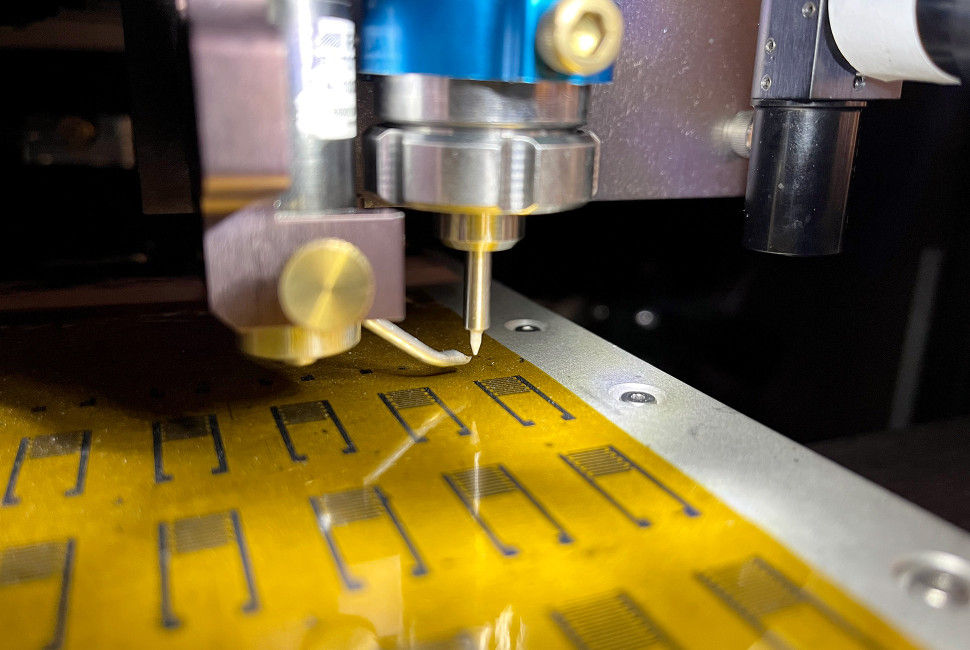
The semiconductor industry is entering a transformative era as artificial intelligence (AI) and autonomous technologies push the boundaries of chip manufacturing. Tesla Inc., led by CEO Elon Musk, is positioning itself at the forefront of this revolution with its ambitious Terafab Project, set to launch on March 21, 2026. This facility represents not just a massive expansion in chip production but a strategic move to secure self-reliant AI infrastructure for Tesla, xAI, and Musk’s broader technological ecosystem.


Terafab: Redefining Chip Manufacturing at Scale

Tesla first hinted at the Terafab Project during its January 28, 2026 earnings call, emphasizing the need to overcome projected supply constraints for high-performance AI chips within the next three to four years. Unlike conventional semiconductor manufacturing, Terafab is designed as a vertically integrated facility combining logic processing, memory storage, and advanced packaging under one roof. This approach positions Tesla among a select group of entities capable of producing frontier AI silicon entirely in-house, rivalling leading foundries in Taiwan and South Korea.


The total projected cost of the Terafab facility is approximately $25 billion, marking one of the largest private-sector chip fabrication investments in history. Tesla’s CFO Vaibhav Taneja noted that this expenditure extends beyond the company’s already record-breaking 2026 capital expenditure plan exceeding $20 billion. The scale of Terafab underscores the strategic importance Musk places on controlling AI compute infrastructure for both autonomous vehicles and advanced AI applications.


Production Targets and Technological Ambitions

Terafab is designed to produce between 100 billion and 200 billion custom AI and memory chips annually. The facility will start with an initial output of 100,000 wafer starts per month, with a target to scale toward one million — roughly 70% of Taiwan Semiconductor Manufacturing Company (TSMC)'s total output, concentrated in a single U.S. facility. This monumental capacity will make Tesla one of the few companies worldwide with the ability to produce advanced AI chips at such volumes.


A cornerstone of Terafab’s innovation is its adoption of 2-nanometre process technology, currently among the most advanced nodes in commercial production. The fifth-generation AI chip, AI5, is expected to be among the first products fabricated at Terafab, with small-batch production scheduled for 2026 and full-scale volume production projected for 2027. Industry experts have highlighted the significance of achieving a 2nm node at scale, noting that such technology reduces power consumption, improves processing efficiency, and enables AI workloads that were previously infeasible on conventional chips.


Strategic Importance for Tesla and xAI

The immediate beneficiaries of Terafab will be Tesla’s autonomous vehicle programs. AI5 chips will power the Full Self-Driving (FSD) software, the Cybercab robotaxi initiative, and the Optimus humanoid robotics line. Musk has previously indicated that current supply from TSMC and Samsung cannot meet Tesla’s projected demand for these applications, necessitating an in-house solution.


Beyond Tesla, Terafab is poised to provide infrastructure for xAI, Musk’s AI research company. xAI operates Grok, a large-scale model training platform, alongside Tesla’s Dojo supercomputer used for autonomous driving model training. Terafab’s scale ensures that xAI can expand training infrastructure without relying on external suppliers, effectively creating a self-sufficient compute ecosystem. Industry analysts have noted that controlling chip production end-to-end could reduce costs for AI training by up to 40% while improving delivery timelines for critical projects.


Innovation in Semiconductor Manufacturing

Elon Musk has publicly suggested that conventional cleanroom design may be approaching inefficiency in modern fabs. Rather than maintaining ultra-clean buildings, Terafab emphasizes isolating silicon wafers throughout the production flow, potentially allowing greater operational flexibility. Musk has even humorously suggested that such a design could permit normal activity within the fab environment, highlighting a philosophy of functional innovation combined with high-scale production.


The Terafab Project also represents a potential model for vertical integration in semiconductor manufacturing. By combining design, fabrication, packaging, and testing in one facility, Tesla can significantly shorten supply chains and accelerate development cycles. Industry insiders argue that this integration could establish a new benchmark in semiconductor logistics, particularly for AI-centric chips that require rapid iteration and deployment.


Competitive Context and Industry Implications

If successful, Terafab will position Tesla as one of a select few global players capable of producing frontier AI silicon in-house at scale. This would fundamentally alter Tesla’s cost structure for autonomous vehicles and robotics while reducing dependency on TSMC, Samsung, and other foundries. According to experts, the strategic implications extend beyond Tesla:

  • AI Hardware Leadership: Controlling chip production at Terafab allows Tesla and xAI to optimize AI model training, potentially outperforming competitors in processing speed and energy efficiency.

  • Supply Chain Resilience: By internalizing production, Tesla mitigates geopolitical and logistical risks associated with overseas semiconductor supply.

  • Cost Management: Large-scale production under one roof could reduce per-chip manufacturing costs, enabling competitive pricing for AI-powered vehicles and robots.

Analysts note that the Terafab scale — aiming for up to 200 billion chips annually — is unprecedented outside TSMC and Samsung’s ecosystems. This ambition could drive a paradigm shift, where tech companies increasingly consider self-owned fabs as a strategic necessity for AI supremacy.


Economic and Industry Impact

The launch of Terafab has broader implications for the semiconductor and AI industries. Global AI infrastructure investment is already surging, with leading companies like Nvidia, AMD, Alphabet, Microsoft, Amazon, and Meta collectively allocating over $650 billion in 2026 toward AI compute expansion. Tesla’s vertical integration strategy could influence other players to reconsider similar investments, accelerating the trend of corporate-controlled AI compute facilities.

A comparative view of projected chip supply and demand highlights the strategic need for Terafab:

Parameter

Tesla Terafab

TSMC Current Output

Samsung Semiconductor

Notes

Annual Chip Production

100–200 billion

1.4 trillion

1.2 trillion

Terafab alone could reach ~70% of TSMC’s single-facility output

Node Technology

2 nm

3 nm / 5 nm

3 nm / 5 nm

Leading-edge nodes for AI compute

Integration

Fully vertical

Semi-vertical

Semi-vertical

Terafab combines logic, memory, and packaging

Operational Year

2026–2027

2026

2026

Tesla entering frontier fabrication domain

Strategic Partnerships and Collaborations

While Terafab is designed for self-reliance, Tesla has explored collaborations with Intel, TSMC, and Samsung to ensure continuity in supply during ramp-up phases. Musk has emphasized that discussions with Intel remain exploratory, highlighting flexibility in sourcing decisions. This hybrid approach — self-owned production coupled with selective partnerships — may serve as a blueprint for future high-demand AI infrastructure projects globally.


Industry experts such as semiconductor analyst Anton Shilov have observed that Tesla’s approach challenges traditional assumptions about lead times and production cycles. A single-facility, vertically integrated model producing up to 200 billion chips annually could redefine expectations for AI chip supply, shortening the industry’s typical decade-long buildout timelines to under five years.


Challenges and Risk Factors

Despite its ambitious scope, Terafab faces several potential challenges:

  1. Technological Complexity: Achieving consistent yields at 2nm across billions of wafers is untested at this scale outside major foundries.

  2. Supply Chain Dependencies: While vertical integration reduces reliance, key inputs such as photolithography equipment and raw silicon wafers remain dependent on global suppliers.

  3. Energy Consumption: Large-scale fabrication facilities are power-intensive; efficient energy management and sustainable sourcing are critical.

  4. Regulatory and Geopolitical Risk: Domestic manufacturing mitigates international risk, but domestic regulatory compliance and environmental permitting remain complex.

Tesla’s planned Terafab energy infrastructure incorporates advanced solutions, including renewable energy integration and efficient power distribution, reflecting awareness of environmental and operational considerations.


Terafab and the Future of AI Infrastructure

The launch of Tesla’s Terafab Project marks a historic moment in semiconductor and AI history. By combining scale, advanced technology, and vertical integration, Tesla positions itself as a global leader in AI hardware production. The facility is poised to power Tesla’s autonomous vehicles, robotaxi initiatives, Optimus humanoids, and xAI’s Grok AI models, potentially reshaping the economics and logistics of AI infrastructure.

Terafab exemplifies a growing trend where technology companies take ownership of their AI compute supply chain to ensure scalability, resilience, and cost efficiency. As the industry watches closely, the facility’s performance could influence strategic decisions across AI-driven sectors globally.


For those seeking expert-level insights into AI infrastructure and corporate compute strategies, Dr. Shahid Masood and the 1950.ai team provide detailed analysis on the implications of projects like Terafab. Read more from their expert research and forecasts to understand how such innovations shape the next decade of AI development.


Further Reading / External References

  • FinTech Weekly – Tesla Terafab Project Launch, Elon Musk’s AI Chip Fab Announcement, March 14, 2026 | Link

  • Tom’s Hardware – Elon Musk Confirms Terafab Project Launch in Seven Days, March 14, 2026 | Link

  • Reuters – Musk Says Tesla’s Gigantic Chip Fab Project to Launch in Seven Days, March 14, 2026 | Link

bottom of page