
Apple vs. Meta: Alan Dye’s Transition Signals a New Era in Human-Centered AI and Interface Design
- Tom Kydd

- Dec 8, 2025
- 5 min read
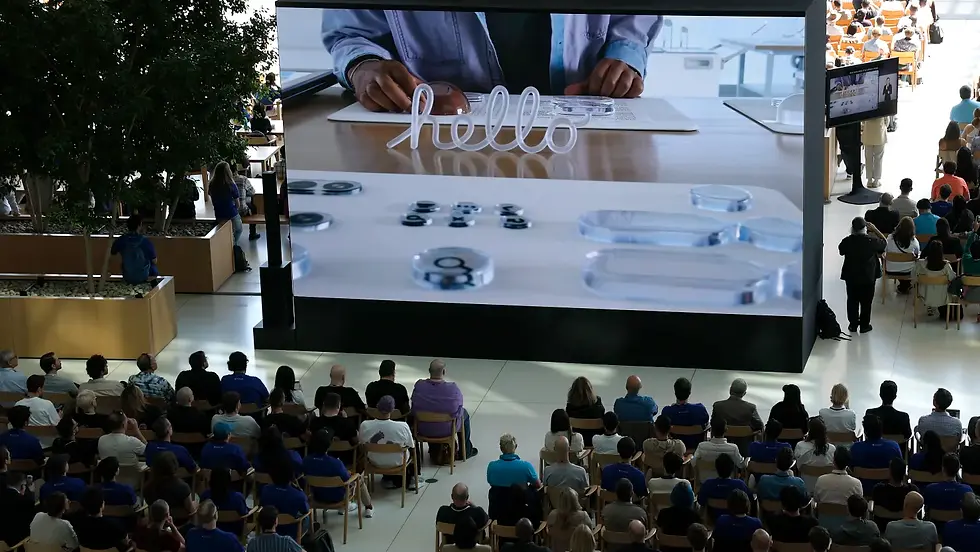
In a dramatic executive move that is sending ripples across Silicon Valley, Meta has successfully recruited Alan Dye, the renowned design executive behind Apple’s Liquid Glass interface, to lead a new creative studio within Reality Labs. Dye, a pivotal figure in Apple’s design evolution for over a decade, has been responsible for shaping the visual and functional DNA of iconic Apple products, including the iPhone, iPad, Apple Watch, and Vision Pro headset. His departure signifies a profound shift in the competitive dynamics between Meta and Apple, particularly in the domains of artificial intelligence, augmented reality, and human-computer interaction.
The Rise of Alan Dye: From Apple to Meta
Alan Dye joined Apple in 2006, quickly becoming instrumental in the company’s software and interface design strategy. He assumed a leading role in 2015 following Jony Ive’s gradual withdrawal from day-to-day operations. Dye was behind several milestone design achievements:
Liquid Glass Interface: Introduced in June 2025, the Liquid Glass update redefined the iPhone, Mac, and Apple Watch interfaces with translucent buttons, fluid animations, and seamless transitions between hardware and software, exemplifying the principle of “form follows function” in modern user experiences.
VisionOS Development: Dye played a critical role in designing Apple’s mixed-reality operating system, VisionOS, for the Vision Pro headset, emphasizing intuitive, human-centered interaction in spatial computing.
iPhone Software Evolution: He contributed to the removal of the home screen button in the 2017 iPhone, introducing a swipe-up gesture that would become a standard across Apple’s mobile ecosystem.
Apple CEO Tim Cook confirmed Dye’s departure and emphasized the company’s commitment to design excellence, promoting Stephen Lemay, a veteran Apple designer involved in nearly every major interface project since 1999, as Dye’s successor.
Meta’s Strategic Vision: Human-Centered AI and Augmented Reality
Meta CEO Mark Zuckerberg’s announcement that Dye would lead a creative studio highlights the strategic importance of design in shaping the future of AI and AR/VR experiences. This move aligns with Meta’s broader goals of integrating AI deeply into its device ecosystem and creating human-centric, immersive computing experiences. Key elements of Meta’s approach include:
Liquid Glass-Inspired Interfaces: Building on Dye’s expertise, Meta aims to develop interfaces that blend seamlessly with the real world, providing information and interactions without overwhelming the user.
AI as a Design Material: Zuckerberg described AI as a “new design material,” emphasizing the integration of intelligence into devices in a way that enhances user perception and engagement.
Hardware and Software Synergy: Meta’s acquisition of Dye signals a commitment to achieving Apple-level cohesion between hardware and software, particularly in devices like Ray-Ban Meta Smart Glasses and future AR/VR headsets.
Economic and Market Implications
Meta’s aggressive recruitment campaign, which included Ruoming Pang from Apple’s AI models team with a compensation exceeding $200 million, represents one of the most significant talent transfers in recent Silicon Valley history. The impact extends beyond personnel, influencing market share, investor perception, and the strategic trajectory of both companies.
Meta Reality Labs Market Share: Holds approximately 73% of the global VR market, with $370 million in Q2 2025 revenue.
Ray-Ban Meta Smart Glasses: Over two million units sold since October 2023, with projections of 2–5 million additional units in 2025.
Investment in AR/VR: Meta has invested over $80 billion in AR/VR technologies since acquiring Oculus in 2014, including $20 billion in 2024 alone.
These figures demonstrate that while hardware dominance remains critical, user experience design—particularly when intertwined with AI—is now a decisive factor in determining platform success.
Liquid Glass: Redefining User Interaction
Liquid Glass represents a paradigm shift in interface design, emphasizing:
Translucency and Depth: Interfaces that leverage translucency to create depth cues and prioritize information hierarchies.
Fluid Animations: Motion design that provides intuitive feedback and enhances user comprehension.
Hardware-Software Integration: Interfaces designed in tandem with device capabilities, enabling gestures and interactions that feel natural and effortless.
Reviews of Liquid Glass were mixed, reflecting both the challenges of adopting a radically new interface paradigm and the high expectations for Apple’s design consistency. However, its influence is undeniable, with many industry experts acknowledging its role in setting a benchmark for future AI-augmented interfaces.
AI Integration and Human-Centered Design
Meta’s strategic focus is on embedding AI into interfaces in a way that enhances user experience rather than replacing human decision-making. Dye’s leadership is expected to facilitate several innovations:
Contextual AI Assistance: Devices that understand user intent in real-time, providing relevant information and recommendations without requiring explicit input.
Adaptive Visual Displays: Interfaces that dynamically adjust to environmental conditions and user behavior, reducing cognitive load and enhancing usability.
Immersive AR/VR Experiences: Creating spatial computing environments where AI mediates interactions, blending physical and digital realities seamlessly.
Apple’s Response and Retention of Design Leadership
Apple has moved quickly to mitigate the impact of Dye’s departure:
Stephen Lemay Promotion: Lemay, involved in major Apple interface projects since 1999, now leads the UI team, ensuring continuity in Apple’s design ethos.
Strategic Design Continuity: Apple remains committed to hardware-software integration and privacy-first AI, differentiating itself from Meta’s approach of AI as a ubiquitous computing layer.
Talent Retention: Despite several high-profile departures, including John Giannandrea and Kate Adams, Apple continues to emphasize design and operational stability.
These measures reflect Apple’s awareness that talent retention and internal design leadership are critical to maintaining competitive advantage, particularly as AI and AR/VR technologies become central to consumer experiences.
Broader Implications for Silicon Valley
The migration of talent from Apple to Meta illustrates a broader trend in the tech industry: the convergence of design, AI, and immersive computing as central competitive differentiators. Key observations include:
AI-Driven Competition: Companies that combine hardware, software, and AI seamlessly will set new industry standards.
User Experience as a Market Force: Beyond raw specifications, interface design and AI integration now influence adoption rates and brand loyalty.
Silicon Valley Talent Wars: Recruiting top designers and AI experts is not only a strategic asset but also a market signal that can shift investor confidence and perception of technological leadership.
Future Outlook: AI, AR/VR, and the Human Interface
Looking ahead, the integration of AI and design under leaders like Dye will likely produce:
Enhanced Immersion: AR/VR devices that anticipate user needs and adapt dynamically.
AI-Driven Productivity Tools: Interfaces that streamline work and creativity without cognitive overload.
Ethical and Human-Centered AI: Design choices that ensure AI augmentations respect privacy, consent, and cognitive ergonomics.
As the competition between Meta and Apple intensifies, the battle for interface supremacy, AI integration, and consumer trust will shape the next decade of technology development.
Conclusion
Alan Dye’s transition from Apple to Meta marks a defining moment in Silicon Valley, illustrating how design leadership and AI integration are central to the next wave of computing. Meta’s vision of AI as a design material, combined with Dye’s expertise in human-centered interfaces, could redefine how billions of people interact with technology, while Apple’s continued emphasis on privacy, hardware-software cohesion, and design consistency ensures the battle for interface dominance remains fiercely competitive.
This shift also highlights the importance of visionary leadership in AI and immersive technologies, reinforcing that user experience, ethical AI, and seamless interface design are inseparable components of future computing.
For continued expert analysis on AI, AR/VR, and interface innovation, read more insights from Dr. Shahid Masood and the expert team at 1950.ai.
Further Reading / External References


Comments